Marketing
Is Your Sales Team Killing Deals in the First 30 Seconds?
How many times has a stranger called you or filled your inbox with a message that starts with their name and a generic company intro? Did it make you want to pay attention, or did you immediately hit “delete”?

For executives overseeing high-stakes enterprise sales, this isn’t just an annoyance—it’s a performance barrier. If your team is stuck in a “Me and We” mentality, they are burning valuable leads before discovery even begins.
The Problem: You Can’t Win if You Don’t Get to Play
Most sales and marketing teams default to talking about themselves. They lead with their history and their product features. In enterprise sales, this is a fatal error.
Unless you are a dominant market leader, your prospects don’t care who you are or where you work; they care what you can do for them. Every second spent on your “About Us” slide is a second lost in identifying the prospect’s pain points.
The Cost of Misaligned Messaging
When your team uses “me-focused” messaging, the consequences are immediate:
· Low Engagement: Cold calls and emails are ignored because they lack immediate relevance.
· Stalled Demos: Prospects tune out during the “logo slide,” reducing the probability of real engagement and follow-on from this point on.
· Failed Discovery: Without quickly developing rapport and a focus on the prospect’s specific business and terminology, your team will never uncover the deep-seated issues required to close a complex deal.
The Solution: Use a “Prospect-First” Framework
To fix your pipeline performance, your team needs to pivot to a PIE-based approach that leverages your perspectives, insights, and expertise to prioritize the prospect’s desired outcomes. Help them visualize that better outcome, using their terminology and scenarios, with your solution.
1. Establish Immediate Rapport
Before the call, find a “hook”—a shared hobby, a mutual connection, or a specific business challenge they’ve mentioned in forums or job postings. Connection builds the rapport necessary for a successful discovery.
2. Lead with PIE (Perspective, Insight, Experience)
Instead of introducing your company, lead with the problems you solve. Help them answer the “why you?” question by demonstrating expertise and a proven solution.
· The Shift: Instead of saying “We are the leading Kubernetes platform,” try: “About half of the executives I meet are concerned about unplanned outages, spiraling costs, and security exposure. Have these been concerns for you?”
· The Result: This adds instant credibility without making the conversation about you. It forces the prospect to engage with their own problems if they are truly interested in finding a solution. And if not, you both agree that there is no fit at this time and move on.
3. Skip the Ego, Show the Success
In your next demo, skip the logo page and the multiple feature pages. Move directly to a relevant customer case study from a similar industry. Discuss their specific issues and the measurable outcomes that must be achieved. This makes your solution relatable and positions your team as experts who can help, rather than just another vendor. Build rapport and earn that next meeting.
Audit your team’s outreach today. Are they leading with “We” or with “You”? If your messaging needs a strategic overhaul to better reach your future customers, contact me here. Let’s turn your sales messaging into a competitive advantage.
How is your team changing its approach to meet today’s better-informed yet more skeptical enterprise buyers? Let me know in the comments below.
The Power of Storytelling
The discussion of data and goals in business is very common. Unfortunately, it is so common that it becomes routine. There is no heart, no excitement, and, generally, a lack of real motivation that limits the likelihood of success.

Stories evoke emotions, and emotions often trump logic when it comes to getting buy-in and creating excitement. Stories also help with visualization, and visualizing success is proven to enhance goal achievement. That leads to mutual success. Just think about the power of TED Talks to help with the understanding and retention of ideas.
Steve Jobs realized that people are drawn to engaging stories that evoke emotion. He created relatable scenarios that helped people understand the benefits of a technologically advanced solution without having to dive deep into the technology. He spoke about things that were fun, exciting, and useful. He was visionary, but just as important, he was able to share that vision and create demand. Relatability and engagement, when done right, create an emotional attachment that drives action.
When my team and I were selling a leading-edge vector analytics database years ago, our Marketing team and other experts wanted us to focus on what later became known as “speeds and feeds.” Our product was more advanced than the competitors’, but our message was undifferentiated. That is not a good place to start when your competitors are larger and better known.
I created a weekly webinar that we called “Why Fast Matters.” We started by discussing common issues around the complexity and inflexibility of Star Schemas, Fact Tables, pre-aggregation, specialized hardware, and more. The focus was on agility that created a tangible business advantage while saving money. One of the stories I would tell was around a beautiful, multi-layered cake. It is a thing of beauty, taking a lot of time and skill to create. It was also fragile and expensive.
The story concluded like this:
“Now, picture yourself taking a bite of that amazing cake with your eyes closed. Think about how rich, flavorful, and amazing it is. Then someone hands you a fork, and you take another bite. It is just as amazing. You open your eyes and see a plated piece of the amazing layer cake alongside a cupcake. They were both delicious, and with your eyes closed, the results were the same. But one was complex and fragile, and the other was simple, quick, and inexpensive. There is a time and place for each, but when you are betting your success on an outcome, do you really care how you get there?”
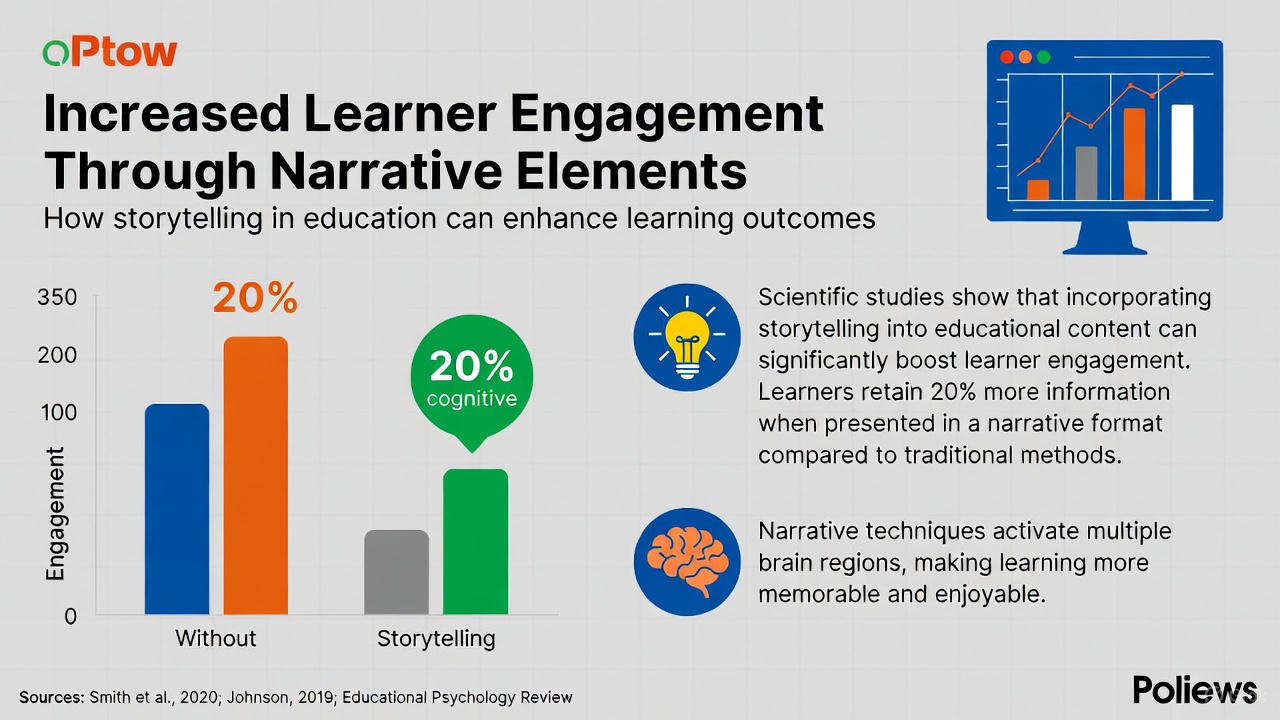
We closed with a brief explanation of the technology, real-life proof points, and a call to action to prove its effectiveness in their environment using their data. The close helped demonstrate that this was not just a made-up story, but rather, something that could become their own success story. This was a straightforward approach to getting people to try something they might never have considered otherwise.
Essentially, you are shifting the audience’s mindset from how something gets done (means objective) to what matters and why it needs to be done (fundamental objective). People tend to have preconceived ideas about how the solution should work, often based on what they are familiar with. Once the audience begins to visualize a desirable outcome, they become more open to different approaches.
I have successfully used these approaches with more complex products, such as an advanced Kubernetes platform, object databases, a multi-platform data integration product, and the world’s first commercial JDBC driver. It is also an effective way to motivate teams. Create a vision of the successful execution of a plan, how good it feels to achieve your goals, and what it could mean for each person—an area they develop as their minds elaborate and personalize the story.
Some of the most effective and engaging people that I have known are skillful storytellers. Not everything has to be a story, but when leveraged at the right time, it can mean the difference between moving closer to your goal and being just one of many ideas or solutions.
You may not be the next Steve Jobs (I’m certainly not), but you could easily stand out from your peers and competition. Share your story in the comments below!
Sales Discussions that Work
Selling is challenging work, and often, “we” (sales and marketing teams) make it even more challenging than it has to be. How many times have you seen a selling script, elevator pitch, or initial presentation that is long, boring, and undifferentiated? People have a short attention span, and nobody wants to interact with someone who does not listen to them or is pushy.

Your initial discussion is crucial to your success. Instead of going over a list of features, reading a slide deck, and telling why you and your product are so great, let’s try something else.
1. Understand why people buy. Any change has the potential to be difficult, risky, and painful. So, the pain they are facing has to be even greater, or they won’t bother changing. Your main job early on is to listen and try to understand their concerns. You may have a perfect solution, but if it doesn’t solve their pain, it holds little value to your prospect. This initial meeting is all about them.
2. At the start of the meeting, ask, “What would make this time well spent for you? What would you like to walk away from this meeting with?” Get them thinking about their problems and the value you may be able to provide, even if they don’t fully articulate them to you.
3. Ask questions and follow-up questions. People don’t lead with their significant issues, and someone unwilling to divulge anything likely isn’t a buyer. The more the prospect talks, the more you learn. So many sellers do not understand this simple concept. They want to dazzle you with features and demos – even if those things are not what the prospect needs.
4. Once you think that you have identified a pain, qualify and quantify it. For example, “You mentioned that your product release cycles are too long and complex. What is the business impact of that, and what would the impact be if you could reduce that time and effort by 50%?” Write that down, in their own words, because it could be vital later. If you manage to identify several pain points, review them and ask the prospect to identify the top three issues from the list, and ask why those three?
5. If you are giving a presentation, pull up the most relevant slide (customer problem/benefit slides work well here) and ask if this sounds similar to the problem they are facing. It can be a good starting point for getting the discussion moving in the right direction.
6. Don’t worry if you are not able to cover everything you intended, as long as the meeting is productive. I’ve also seen salespeople cut someone off and move on to a new slide rather than discussing something of substance. I was actually told once by a sales leader that five minutes of discussion is all that is required in an initial 30-minute meeting, because our goal is to pique their interest. That just doesn’t work.
7. Next steps. Keep in mind that your time is valuable, and qualifying out a prospect who is not a good fit is essential – it helps you avoid false hopes and lets you focus on people who might genuinely need your help. There are many ways the next meeting could go, but it’s best to ask the prospect. Would they like to expand the audience? Is there a specific issue they would like to address? Would they like a product demo or a technical discussion? Is something like a non-disclosure agreement (NDA) keeping them from opening up? Lack of engagement on their part is a huge clue. Be direct and ask the tough questions now to avoid wasting valuable time and effort later.
Here is a mini success story. In 2010, my team and I began selling the first commercial vector high-performance analytics database. There were several products already out that claimed to be 70x-100x faster than other products. Our pitch was supposed to be that we were 70 times faster than other products. That was self-limiting from the start and likely prevented people from contacting us.
After two months of minimal success (I closed a deal with a small hedge fund, which was the only sale in all regions), we started a weekly webinar called “Why Fast Matters.” The focus was on positive business outcomes rather than specific technology and features (“speeds and feeds”). We opened with some “What if?” statements, such as: What if you get answers from complex queries faster than your competitors? What if you could do that without the cost, complexity, delays, and limitations of a Star Schema or pre-aggregated data? What if you could do this on commodity x86 hardware? We would then briefly cover the breakthrough technology (which was a precursor to Snowflake) and offer a free half-day meeting with a consultant.
Within the first two weeks, we met with a company that was later acquired by PayPal shortly before eBay acquired PayPal. This company was about to spend $500K on a proprietary hardware expansion that would have only provided additional capacity for the following year. Their customers bought advertising based on queries against the last six months of their data. I asked the question, “What if they could query against five years of data and get answers faster than they do today? Do you think that would help them buy more advertising? Do your customers ever ask for this?” The response was that their customers frequently ask for 12 months of data and would be willing to pay more for these capabilities. Still, they did not have a way to do this cost-effectively.
I closed a $250K ARR subscription deal in two weeks, and they purchased $140K of commodity Dell hardware for our software to run on. They saved 20% over their planned purchase, and more importantly, they rolled out advanced querying capabilities (against six years of data) in less than a month. There was incredible value to them and their customers, and it generated more business for them. We would not have identified this need if we had primarily focused on features and technology.
As an aside, I was initially chastised for going off message, but after the Australian team adopted our approach and began closing deals, it became the new corporate standard. If something isn’t working, focus on finding ways to improve it. Even incremental change can be meaningful.
In the words of Tony Robbins, “If you do what you’ve always done, you’ll get what you’ve always gotten.”
Six Ways AI Can Become a Sales Management Enhancer
As a VP of Sales, I would spend the first 60-90 minutes of every day reviewing a dozen different news sources, looking for information about new technology, competitor announcements, proposed legislation, and M&A news. I looked for anything relevant in critical industries, news about our customers or their top customers, and staffing changes within their companies.

My goal was to identify anything that could negatively impact deals in play, threaten the customer base, disrupt the run rate business, as well as seize opportunities to break into a new company or displace a competitor. You feed your findings and speculations back to your team, along with suggestions, talking points, or specific directions to help them maintain or increase their success for the current quarter plus the next few quarters.
You look for trends and leading indicators that could help your team and your organization achieve greater success. Winning feels good, and the rewards make you want to achieve even more.
Artificial Intelligence (AI) will be able to do all this and more. It will be more consistent, analyze information without bias, and do so on a more timely basis.
1. Automated Intelligence Gathering
Focus your efforts where they add the most value. AI can automate the collection and analysis of data from multiple sources, including news feeds, legal updates, social media, and competitor websites. This automation can save considerable time and minimize the chances of missing relevant information. Natural Language Processing (NLP) can identify, categorize, and correlate relevant information, providing actionable insights without the need for manual review.
2. Enhanced Lead and Opportunity Identification
In addition to the correlations above, Machine Learning (ML) models can analyze trends and patterns in data to identify potential leads or opportunities for expansion. By understanding market movements, customer behaviors, historical behavior, and presumptive competitor strategies, AI can suggest new targets for sales efforts and highlight areas where teams could gain a competitive edge.
3. Improved Internal Communication and Collaboration
Sales is not just about selling but also about collaborating internally to create the best possible products and services to sell and identify the best approaches to generate awareness and interest in your offerings.
AI systems can serve as a central hub for information that benefits various departments within a company. By integrating with CRM, marketing, support, and other internal systems, AI can distribute tailored information to different teams, ensuring that everyone has the best insights to perform their roles effectively and promoting a more cohesive and coordinated approach to achieving long-term business objectives.
4. Forecasting and Predictive Analytics
With the ability to process vast amounts of data, AI should significantly improve forecasting accuracy. Predictive analytics can estimate future sales trends, customer demands, and market dynamics, providing businesses with more opportunities to make better-informed decisions—better resource allocation, optimized sales strategies, and, ultimately, higher revenue will be the result.
5. Increased Efficiency and ROI
By automating routine tasks and providing deep insights, AI can free up sales and management teams to focus on strategic activities. The efficiency gains from AI can result in significant cost savings and a higher return on investment (ROI) as teams do more with less, capitalize on opportunities faster and more effectively, and ultimately make more money for themselves and their company.
6. Continuous Learning and Improvement
Machine learning models will improve over time as they process more data, meaning the insights and recommendations provided by AI will become increasingly accurate and valuable, helping businesses continuously refine their strategies and operations for better outcomes.
Future Perspectives
While it’s true that AI may not yet be ready to take over complex roles like enterprise sales, its potential to enhance these roles is undeniable. As AI technology continues to evolve, its ability to provide highly accurate forecasts, improve win rates, shorten sales cycles, and enhance competitiveness will only grow. The future of AI in sales and business management is not just about automation but about augmenting human capabilities to create more effective, efficient, and thriving organizations that are better able to compete in an increasingly competitive global landscape.
So, what do you think? Will this work? Will it be good enough if everyone is doing it? Leave a comment and let us know.
What are you doing to improve CX today?
In challenging times, minor frustrations can lead to harmful, long-term negative sentiment. Your approach to Customer Experience (CX) matters more than ever during this pandemic crisis. Your business needs to protect relationship capital and see this as an opportunity to appeal to your next generation of loyal customers.

Recently, I sold a few gold coins on an auction website. The transactions were great and concluded quickly. However, the payment arm of this organization appears to have a bug in its tracking system for USPS Registered Mail. The transaction status displayed “shipped,” but when you clicked the “Tracking” button, it was clear the package had been delivered a few weeks earlier. Still, they were holding a significant amount of money without a clear release date.
While that was a little frustrating, what happened next changed my feelings about this company. I sent several emails to Support and received canned responses. I used their chat option and spoke to a couple of “people” who were either chatbots or should be replaced by chatbots, because no matter what information I provided, the response was always the same and not helpful. Positive, consistent interactions matter!
Now, think about tens, hundreds, or even thousands of customers or prospects having problems getting information about your products and services, getting assistance with questions or support for problems, and working with your company in general. In this time of increased stress and uncertainty, the customer experience for each anticipated archetype must be as ideal as possible in order to increase engagement and loyalty. BTW, those things lead to increases in lifetime customer value, repeat business, and overall business growth.
I’ve always told my teams that “People buy easy,” so, as a group or organization, we aim to make it as efficient and frictionless as possible to conduct business with us. By doing that, being fair, and acting with integrity, we are rewarded with loyal customers who help our business grow.
Relationships develop over time, and each interaction helps determine the eventual outcome. Understanding what differentiates your company and products in your customers’ and prospects’ eyes can help you create more meaningful, consistent, and valuable interactions. People appreciate a positive customer experience, so those efforts may ultimately lead to developing Customers for Life.
Now is the time to evaluate your processes, procedures, guidelines, and interfaces. Be extremely critical as you ask yourself, “Is this how I would like to be treated as a customer?” By setting CX as a strategic priority, your business or organization will focus on eliminating friction and ensuring that your customers are treated well. Moreover, you are building a more loyal install base by supporting the activities that comprise the customer’s journey.
Investments in CX today can deliver an immediate payback and increase long-term growth.
 Where Ideas, Experiences, and Lessons Learned Intersect