
Month: November 2025
Lessons Learned from GTM Consulting
For the past two years, I have performed part-time, contract go-to-market consulting. My wife had a surgery that went wrong 18 months ago, so I needed something that would allow me to take care of her, stay sharp, earn money, and help companies grow. What I encountered was quite different from what I expected, so I thought I would pass it along.

Most of the work was with small to midsize companies, but the problems and needs mirrored what I have encountered at larger companies. The main difference is that large companies tend to look to software to address problems. In contrast, smaller companies often lack the budget for what they view as a solution that increases complexity.
Here are my Top 5 findings:
- GTM plans are often developed at the highest levels, often in isolation, without market testing and validation.
- An interesting aside is that the company is often really seeking sales optimization but believes it is doing things “well enough” today and therefore needs to focus on new offerings and revenue streams.
- New perspectives on past performance and failures are well received but more surprising than anticipated. This leads to a better understanding of needs, which builds consensus moving forward.
- Sales teams are sometimes pitted against one another, rather than working together to help everyone achieve more (Coopetition – “A rising tide lifts all boats.”)
- Sometimes the competing team isn’t sales, but support. The team wants to help the customer (which is great), but works outside its defined scope instead of bringing in the services and sales teams to work jointly to solve the customer’s problem.
- Sales teams are focused on selling features rather than solving business problems.
- Training those teams on solution selling and understanding the prospect’s needs pays off.
- CRMs are not consistently used and often reflect idealized fiction rather than reality.
- Old, dead, or unqualified opportunities; lack of recent contact or interaction; deals that have slipped more than once; and a lack of understanding (company, needs, players, business environment) all point to an unrealistic pipeline.
- Sales management and teams are not leveraging AI to help focus their efforts.
- Conversely, they may view AI as a panacea, investing time and money in tools that supplement a strong team rather than focusing on strengthening the team.
Here are the related Lessons Learned:
- Selling is a byproduct of problem-solving. You can’t solve problems if you don’t know what they are. Every interaction with a prospect should focus on gathering information, building trust and relationships, and leveraging prior interactions to demonstrate that your solution will solve their problem and ease their pain.
- Here’s solution sales again. Teaching teams to ask better questions, listen more, and validate their understanding increases their standing with prospects.
- Identifying common business problems and describing how your product or service solves them should be the foundation of the plan.
- Perform market analysis. How do other companies describe those problems? Their terminology, often found in job postings by competitors and your target audience, can help create effective messaging that resonates. Work to become the natural fit for what your prospects are seeking and the problems they are likely dealing with.
- Individual contributors get paid to win, but sales management needs to create incentives for collaborative efforts that lead to both wins and ongoing customer growth.
- Paying sales teams for net new business only causes them to ignore install base expansion opportunities. And, if another vendor solves their problems, it is only a matter of time before they replace you.
- For one company, I convinced them to implement a 2% SPIV (like a SPIFF, but team-focused) for every team member who actively contributed to team improvement. SPIV payments were quarterly, and there was a running total so the team could see the fund growth. Initial indications of a positive impact are good.
- Another benefit of collaboration is that it helps teams focus on approaches that work due to ongoing testing and refinement. Collaboration also helps teams focus on a more accurate ICP (ideal customer profile). Sales management can then feed their findings back to Marketing to tailor and fine-tune their efforts.
- CRMs often either lack information or are full of wishful thinking. They focus on activities, and not progress and next steps.
- Using MEDPICC as a foundation for qualification is a much better start.
- Sales managers need to validate the information independently to ensure their teams are upfront and honest. Trust, coaching, and collaboration work together for the win.
- Chasing deals that are unlikely to close wastes valuable resources.
- AI is not a panacea, but it is very effective for research, market validation, prospecting, and meeting preparation.
- Going in prepared builds respect and credibility, saves time, and helps you quickly qualify prospects in or out.
- There may be opportunities to nurture prospects who have potential but aren’t qualified for immediate deals, seeding the pipeline for future opportunities. This could be a great place to leverage AI for personalized journeys with highly relevant curated content.
So, what are your thoughts? Have you seen some of these problems yourself? How did you handle them? Let me know in the comments below.
And if you are looking for assistance with your business, contact me.
The Power of Storytelling
Discussions of data and goals in business are common, but not always engaging. Worse, they become routine and are ignored. Without a vision, heart, and excitement, motivation wanes, and the likelihood of success diminishes.

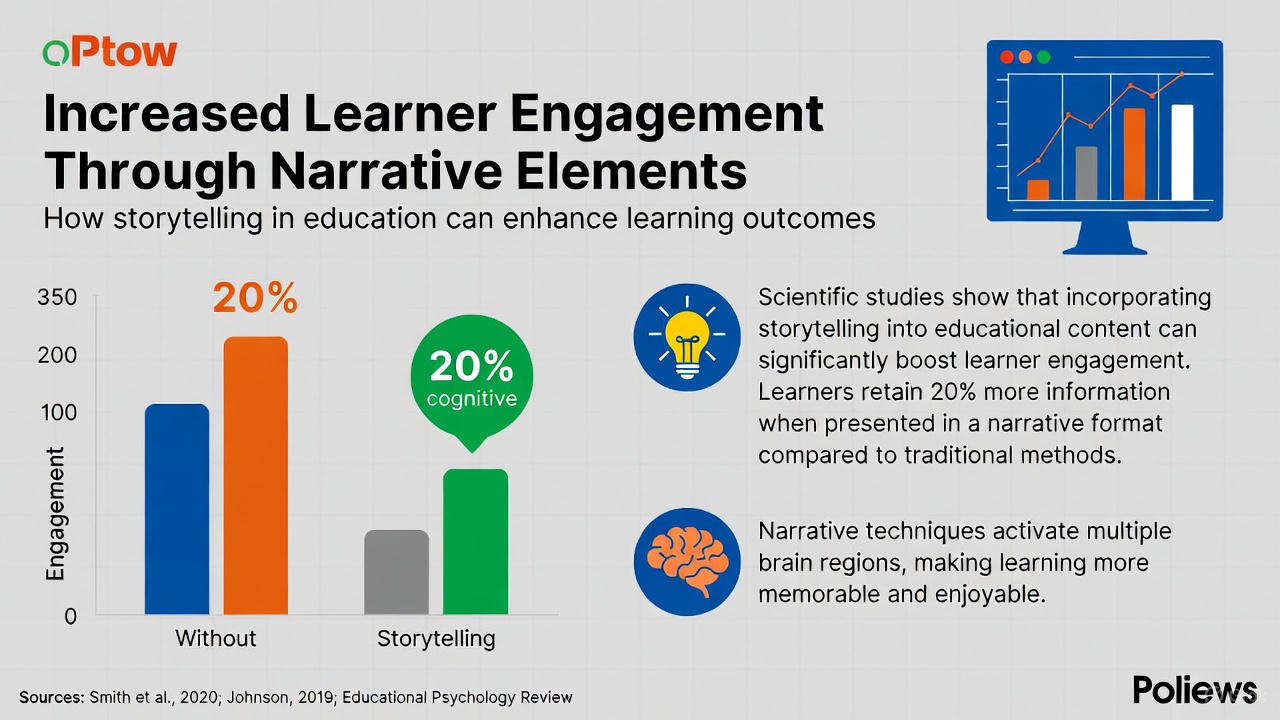
Stories evoke emotions, and emotions often trump logic when it comes to getting buy-in and creating excitement. Stories help with visualization, and visualizing success has been shown to enhance goal achievement. Think about the power of good TED Talks to help you understand and retain ideas.
Steve Jobs realized that people are drawn to engaging stories that evoke emotion. He created relatable scenarios that helped people understand the benefits of a technologically advanced solution without having to dive deep into the technology. He spoke about things that were fun, exciting, and useful. He was visionary, but just as important, he could share that vision and create demand. Relatability and engagement, when done right, create an emotional attachment that drives action.
When my team and I were selling a leading-edge vector analytics database years ago, our Marketing team and other experts wanted us to focus on what later became known as “speeds and feeds.” Our product was faster and more advanced than our competitors’, but our message was undifferentiated from theirs. That is not a good place to start when your competitors are larger and better known.
I created a weekly webinar that we called “Why Fast Matters.” We started by discussing common issues around the complexity and inflexibility of Star Schemas, Fact Tables, pre-aggregation, specialized hardware, and more. The focus was on agility that created a tangible business advantage while saving money. One of the stories I would tell was around a beautiful, multi-layered cake. It is a thing of beauty, taking a lot of time and skill to create. It was also fragile and expensive.
The story concluded like this:
“Now, picture yourself taking a bite of that amazing cake with your eyes closed. Think about how rich, flavorful, and amazing it is. Then someone hands you a fork, and you take another bite. It is just as amazing. You open your eyes and see a plated piece of the amazing layer cake alongside a cupcake. They were both delicious, and with your eyes closed, the results were the same. But one was complex and fragile, and the other was simple, quick, and inexpensive. There is a time and place for each, but when you are betting your success on an outcome, do you really care how you get there?”
We closed with a brief explanation of the technology, real-life proof points, and a call to action to prove its effectiveness in their environment using their data. The close helped demonstrate that this was not just a made-up story, but rather, something that could become their own success story. This was a straightforward approach to getting people to try something they might never have considered otherwise.
Essentially, you are shifting the audience’s mindset from how something gets done (means objective) to what matters and why it needs to be done (fundamental objective).
People tend to have preconceived ideas about how the solution should work, often based on what they are familiar with. Once the audience visualizes their desired outcome, they become more open to different approaches.
I have successfully used these approaches with more complex products, such as an advanced Kubernetes platform, object databases, a multi-platform data integration product, and the world’s first commercial JDBC driver. It is also an effective way to motivate teams. Create a vision of successfully executing a plan, how good it feels to achieve your goals, and what it could mean for each person—an area they develop as their minds elaborate and personalize the story.
Some of the most effective and engaging people that I have known are skillful storytellers. Not everything has to be a story, but when you use it at the right time, it can mean the difference between moving closer to your goal and being just one of many ideas or solutions.
You may not be the next Steve Jobs (I’m certainly not), but you could easily stand out from your peers and competition. Share your story in the comments below!

