
Doing it like Mike
My son is playing basketball this year (he previously played football and soccer), and we recently went shopping for new shoes. Each store had pictures of Michael Jordan. I used to love watching MJ play with the Chicago Bulls. He was the epitome of skill and professionalism. To this day, he inspires me.
Some people are naturally talented but must still work hard to achieve their full potential. Hard work is an important aspect of being the best at anything, but it takes more than that. It takes doing things in a way that allows you to continuously improve, along with a positive mindset and a commitment to success. Once people reach that high-performance level, their jobs look easy, and they may even appear to be a “natural” – just like Mike. But that is just the tip of the iceberg.
Most of my career changes have been unplanned. For example, in 2010, our VP of Sales was fired, and the guy intended to fill the slot quit to go work for Salesforce.com. We had our sales kickoff less than five days away, and nothing was planned yet. The SVP of Sales told me that if I wanted the job, he would give me six months. But if I didn’t cut it at the end of six months, no other job would be waiting for me.
Opportunities presented themselves, the job seemed interesting, and before I knew it, I was fully immersed in something related but different. The potential reward outweighed the real risk.
Many of these things have not come naturally to me. Each time, I focused on understanding the requirements for doing the job well, then looked for examples of exceptional performance, and finally created a systematic approach that let me measure performance and identify areas for improvement on an ongoing basis. From then on, I analyzed my results, thought daily about even the smallest improvements I could make, and tried to do even better the next day.
Good enough was never good enough. Introspection can be challenging, so one thing that I have done is to take time to celebrate wins and intentionally focus on remembering how that feels. Those memories can be motivational in times of stress or frustration and help you get back on track quickly.
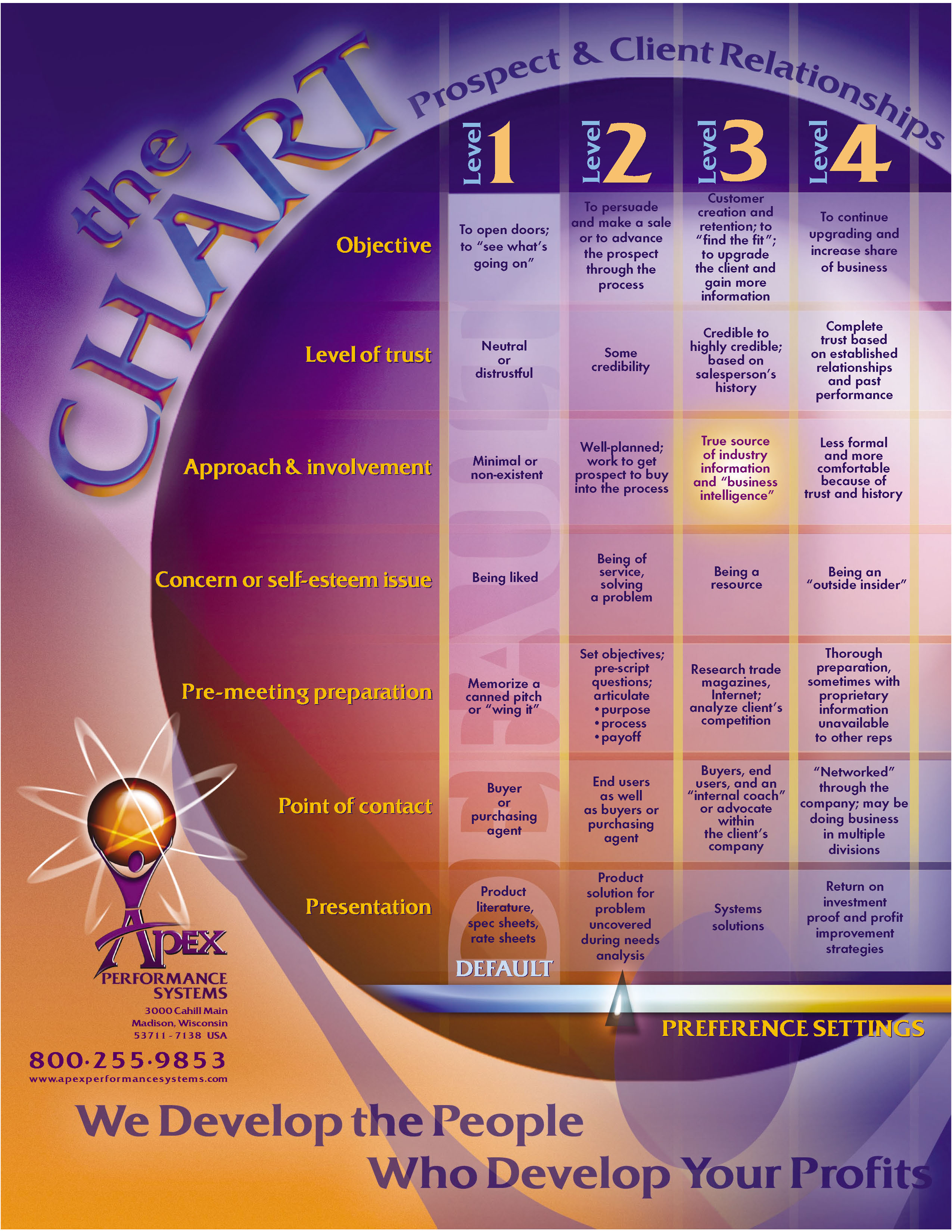
Sales has been a major part of my consulting and management jobs since the mid-1990s, but it wasn’t until I owned my own company that it became a true priority. I ran across a good book, The Accidental Salesperson, by Chris Lytle. Back then, Chris Lytle had “MAX Training,” and a large part of their focus was on increasing your “level” in prospect and client relationships. The training was good and complemented systems like Miller Heiman.
Each of these systems helps you prepare, plan, and execute to the best of your ability. And just like basketball, it takes practice to master. With mastery comes success and the illusion that something is easy (or you are lucky). The Seneca quote, “Luck is what happens when preparation meets opportunity,” is so true.
Regardless of the system you use, what matters most is that you try to be the best at examining both positive and negative examples to learn from them. There are lessons to be learned everywhere – especially when you make mistakes! Understanding what makes it good or bad helps you improve as part of an ongoing improvement process.
Incorporating new tools and techniques into what has already been proven to work will help you improve your game. Returning to the sports analogy, this could be part of what made Michael Jordon so good. He would see something interesting, improve it, and then make it his own.
For example, I get many horrible sales calls and emails. The people have obviously not done any preparation, do not know anything about the company I work for or about me, and often remind me why I stopped listening to them by citing how many times they have tried to contact me.
On the other hand, some talented sales professionals have done their homework, understand their products and the competition, and understand why what they are selling should matter to me – and can articulate that quickly and confidently. I will speak with them and occasionally buy from them. And in either case, I provide my team with real-life examples of good and bad sales techniques.
So, focus on becoming the best example of whatever it is you do, learn from others, and never stop improving. This isn’t about imitation; it’s about uncovering the secrets of their success and learning from them. And if you are lucky, you will have some fun doing it!

