decision making
One Successful Approach to Innovation that worked for an SMB
When I owned a consulting company, we viewed innovation as an imperative. It was the main thing that created differentiation, credibility, and opportunity. We had an innovation budget, solicited ideas from the team, and evaluated those ideas quarterly.
Almost as important to me was that this was fun. It allowed everyone on the team to suggest ideas and participate in the process. That was meaningful and supported the collaborative, high-performance culture that had developed. The team was inspired and empowered to make a difference, and that led to an ever-increasing sense of ownership for each employee.
The team also had a vested interest in having the process work, as quarterly bonuses were paid based on their contributions to the company’s profitability. There was a direct cause-and-effect correlation with tangible benefits for every member of the team.
We developed the following 10 questions to qualify & quantify the potential of new ideas:
- What will this new thing do?
- It is important to be very detailed as this was used to create a common vision of success based on the presented idea.
- What problem(s) does this solve, and how so?
- This seems obvious, but selling this new product will be an uphill challenge if you are not solving a problem (which could be something like “lack of organic expansion”) or addressing a pain point.
- What type of organizations have those problems and why?
- This was fundamental to understanding if a fix was possible from a practical perspective, what the value of that fix might be for the target buyer, and how much market potential existed to scale this new offering.
- What other companies have created solutions or are working on solutions to this problem?
- The lack of competition today does not mean you are the first to attack this problem. Due diligence can help avoid repeating the failure of others, potentially providing lessons learned by others and helping you avoid similar pitfalls.
- Will this expand our existing business, or does it have the potential to open up a new market for us?
- Each answer has upsides and downsides, but breaking into a new market can take more time and be more difficult, time-consuming, and expensive to achieve.
- Is this Strategic, Tactical, or Opportunistic?
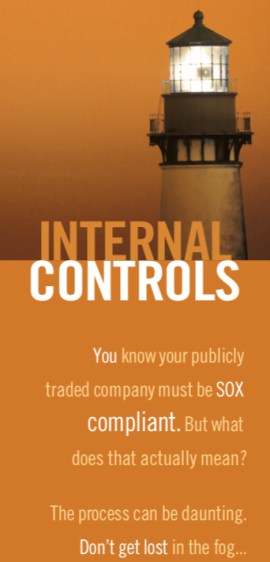
- An idea may fall into multiple categories. When the Sarbanes-Oxley (SOX) Act became law, we viewed a new service offering as a tactical means to protect our managed services business and an opportunistic means to acquire new customers and grow the business. While this is not true innovation, IMO, it was an offering that flowed from this defined process.
- What are the Cost, Time, and Skill estimates for developing a Minimally Viable Product (MVP) or Service?
- What are the Financial Projections for the first year?
- Cost to develop and go to market.
- Target selling price, factoring in early adopter discounts.
- Estimated Contribution Margin Ratio (for comparison with other ideas being considered).
- Break-even point.
- Would we be able to get an existing customer to pre-purchase this?
- A company willing to provide a PO that commits to purchasing that MVP within a specific timeframe increased our confidence in the viability of the idea.
- What are the specific Critical Success Factors to be used for evaluation purposes?
- This important lesson learned over time helped minimize emotional attachment to the idea or project and provided objective milestones for critical go / no-go decision-making.
This process was purposeful, agile, lean, and somewhat aggressive. We believed it gave our company a competitive advantage over larger companies that tended to respond slower to new opportunities and smaller competitors that did not want to venture outside their wheelhouse.
With each project, we learned and became more efficient and effective and made better investment decisions that positively impacted our success. We monitored progress on an ongoing basis relative to our defined success criteria and adjusted or sunset an offering if it stopped providing the required value.
The process was not perfect…
For example, we passed on some leading-edge ideas, such as a “Support Robot” in 2003, an interactive program that used a machine-learning algorithm. It was to be trained using historical log files, could quickly and safely be tested in a production environment, refined as needed, and ultimately validated.
This automation could have been used with our existing managed services and Remote DBA customers to further mitigate the risk of unplanned outages. Most importantly, it would have provided leverage to take on new business without jeopardizing quality or adding staff – thereby increasing revenue and profit margin.
At the time, we believed this would be too difficult to sell to prospective customers (“pipe dream” and “snake oil” were some of the adjectives we envisioned), so it appeared to lack a few items required by the process. Live and learn.
In summary, having a defined approach for something as important as business needs innovation to grow and prosper, as best demonstrated by market leaders like Amazon and Google (read the 10-K Annual Reports to gain a better understanding of their competitive growth strategies that are largely based on innovation).
Implementing this type of approach within a larger organization requires additional steps, such as getting the buy-in from a variety of stakeholders and aligning with existing product roadmaps, but it is still the key to scalable growth for most businesses.
What’s the prize if I win?

In consulting and in business, there is a tendency to believe that if you show someone how to find that proverbial “pot of gold at the end of the rainbow,” they will be motivated to do so. Seasoned professionals will tend to ask, “What problem are you trying to solve?” to understand whether there is a real opportunity. If you cannot quickly, clearly, and concisely articulate the problem, and why this helps solve it, it is often game over then and there (N.B. It pays to be prepared). But, having the right answer is not a guarantee of moving forward.
Unfortunately, sometimes a mere pot of gold just isn’t enough to motivate. Sometimes it takes something different, and usually something personal. It’s more, “What’s in this for me?” No, I am not talking about bribes, kickbacks, or anything illegal or unethical. This is about determining what is really important to the decision maker and in what priority, and then demonstrating that the proposed solution will bring them closer to achieving their personal goals. What’s in it for them?
Case in point. Several years ago I was trying to sell a packaged Business Intelligence (BI) system developed on our database platform to customers most likely to have a need. Qualification performed – check. Interested – check. Proof of value – check. Quick ROI – check. Close the deal – not so fast…
This application was a set of dashboards with 150-200 predefined KPIs (key performance indicators). The premise was that you could quickly tailor and deploy the new BI system with little risk (finding and validating the data needed was available to support the KPI was the biggest risk, but one that could be identified up-front) and about half the cost of what a similar typical implementation would cost. Who wouldn’t want one?
I spent several days onsite with the prospect, identified areas of concern and opportunity, and used their data to quantify the potential benefit. Before the end of the week, I was able to show the potential to get an 8x ROI in the first year. Remember, this was estimated using their data, not figures I just created. Being somewhat conservative, I suggested that even half that amount would be a big success. Look – we found the pot of gold!
Despite this, the deal never closed. This company had a lot of money, and this CIO had a huge budget. Saving $500K+ would be nice but was not essential. What I learned later was that this person was pushing forward an initiative of his own that was highly visible. This new system had the potential to become a distraction, and he did not need that. Had I made this determination sooner, I could have easily repositioned it to align with his agenda.
For example, the focus of the system could have shifted from financial savings to project and risk management for his higher priority initiative. The KPIs could be on earned value, scheduling, and deliverables. This probably would have sold as it would have been far more appealing to this CIO and supported what was important to him (i.e., his prize if he wins). The additional financial savings initially identified would be the icing on the cake, to be applied later.
There were several lessons learned from this effort. In this instance, I focused on my personal pot of gold (based on logic and common sense) rather than on my customer’s priorities and prize for winning. That mistake cost me this deal, but it is one I have not made since – helping me win many other deals.
 Where Ideas, Experiences, and Lessons Learned Intersect