innovation
Apollo 11 50th Anniversary – Interesting photos & article link
I still remember my parents letting me stay up late to watch the first moonwalk. It was 9:30 pm, I was 5 years old, and we were huddled around an old “black and white” television with a circular viewing area. My parents tried to convey how important and monumental that moment was – telling me I would tell my children this story someday.
What I remember most was being amazed at seeing the astronauts hop around easily  and not understating how that could be. We had watched the launch on TV and were getting updates nightly from Walter Cronkite on the evening news. Normally my dad would sit at a TV table to eat dinner and watch the news as my mom sat with my sister and me at our kitchen table, but this week was different.
With all of the news this past week on the 50th  Anniversary of the first moonwalk, it triggered a couple of memories. One of them was that I purchased a collectible item in 2005 at the annual Children’s Circle of Care leadership conference in San Diego, CA. A luncheon was held on the USS Midway Museum deck, and afterward, I took a tour. It is an incredible place to visit if you are ever near San Diego.
Before leaving that day, I went to the gift shop to get my wife and children a few trinkets. What I found was a beautiful display, which I immediately purchased and shipped home. This display was taken to school a couple of times for “show and tell.” It hung on my office wall for 3 years and then went into storage with other artwork. It then sat for the past decade, and I almost forgot it.
To me, this display is both beautiful to see and very inspirational as well. Human creativity is an incredible thing! As an aside, I have never seen anything like this display, so I thought I would share it with you.
Today I also ran across a good article regarding this event that provided information I had not seen before. It is very interesting and can be found here: https://go.usa.gov/xyVGh
Edit: This was another good article that discusses the advanced flight control computer used at the time – https://www.linkedin.com/pulse/apollo-11-moon-landings-fourth-crew-member-computer-far-fishman/
This anniversary is a great reminder of the power of individuals, teams, and partnerships when they are mission-focused. I find people like the men and women of NASA to be extremely motivational, and the few I have met have all been very friendly people. They are the humble heroes!

Commentary on an HBR article about Start-ups & Entrepreneurship
A friend posted this article on LinkedIn.com. Due to character limitations for comments, I decided to post my response here. Below is a link to the article referenced: https://hbr.org/2019/07/building-a-startup-that-will-last
The article is interesting, but emphasizing “second and third acts” assumes that the start-up will successfully navigate the first act. Even with addressing what the author views as key points this is still a very big assumption. The reasons for Longevity and Success are far more complex and multi-dimensional, but it highlights some of the more important areas of focus.
Long-term success requires several things: The right combination of having a unique goal that has the potential to make a big impact (think “No software” from Salesforce.com); Innovative ideas to achieve that goal; A diverse team to build the product (a mix of visionaries, insightful “translators,” technical experts, designers, planners, adept doers, etc.); Very good sales / business development / marketing to describe a better way of doing things and converting that to new business; and ultimately a management team focused on sustainable and scalable growth.
The point about the need to “Articulate a value framework oriented toward societal impact, not just financial achievement” seems superficial and too tactical.
First, there are unintended consequences to most new technologies. Social Media is a recent example, but Genetic Editing and AI are two areas that are likely to provide more examples over the next decade. Not every societal impact will be positive, and having a negative impact could very well lead to the untimely demise of that company.
Second, the two ideas (societal impact and financial achievement) are not mutually exclusive. When I owned my consulting company, we aimed to fund $1M of medical research to find a cure for Arthritis. We allocated half of our net profits to this goal. Every employee was on board with this because there was a tangible example of why it mattered (my daughter). We invested $500K and helped launch a few careers for some brilliant MD/Ph. Ds and at least one national protocol came out of their research.
Mission and Vision are important to a company, yet many fail to view this as anything more than a marketing effort. Those companies fail to realize that this is as much to motivate and inspire their employees as it is to grab a prospective customer’s attention. These should be inspirational and aspirational, such as the “BHAG” (Big Hairy Audacious Goals) Collins and Porras wrote about 25 years ago.

Regarding Endurance and the assertion that “…the best businesses are intrinsically aligned with the long-term interests of society,” my take is slightly different. The best businesses are always looking for trends and opportunities in an ever-changing global competitive landscape instead of looking to their competitors and trying to ride on their coattails. Companies with a culture of fostering innovation as a way to learn and grow (Amazon and Google are two great examples) are able to find that intersection of “good business” and “positive societal impact.” It is much more complex than a simple one-dimensional outlook.
But it was a good article to help reframe ideas and assumptions around growth.
One Successful Approach to Innovation that worked for an SMB
When I owned a consulting company, we viewed innovation as an imperative. It was the main thing that created differentiation, credibility, and opportunity. We had an innovation budget, solicited ideas from the team, and evaluated those ideas quarterly.
Almost as important to me was that this was fun. It allowed everyone on the team to suggest ideas and participate in the process. That was meaningful and supported the collaborative, high-performance culture that had developed. The team was inspired and empowered to make a difference, and that led to an ever-increasing sense of ownership for each employee.
The team also had a vested interest in having the process work, as quarterly bonuses were paid based on their contributions to the company’s profitability. There was a direct cause-and-effect correlation with tangible benefits for every member of the team.
We developed the following 10 questions to qualify & quantify the potential of new ideas:
- What will this new thing do?
- It is important to be very detailed as this was used to create a common vision of success based on the presented idea.
- What problem(s) does this solve, and how so?
- This seems obvious, but selling this new product will be an uphill challenge if you are not solving a problem (which could be something like “lack of organic expansion”) or addressing a pain point.
- What type of organizations have those problems and why?
- This was fundamental to understanding if a fix was possible from a practical perspective, what the value of that fix might be for the target buyer, and how much market potential existed to scale this new offering.
- What other companies have created solutions or are working on solutions to this problem?
- The lack of competition today does not mean you are the first to attack this problem. Due diligence can help avoid repeating the failure of others, potentially providing lessons learned by others and helping you avoid similar pitfalls.
- Will this expand our existing business, or does it have the potential to open up a new market for us?
- Each answer has upsides and downsides, but breaking into a new market can take more time and be more difficult, time-consuming, and expensive to achieve.
- Is this Strategic, Tactical, or Opportunistic?

- An idea may fall into multiple categories. When the Sarbanes-Oxley (SOX) Act became law, we viewed a new service offering as a tactical means to protect our managed services business and an opportunistic means to acquire new customers and grow the business. While this is not true innovation, IMO, it was an offering that flowed from this defined process.
- What are the Cost, Time, and Skill estimates for developing a Minimally Viable Product (MVP) or Service?
- What are the Financial Projections for the first year?
- Cost to develop and go to market.
- Target selling price, factoring in early adopter discounts.
- Estimated Contribution Margin Ratio (for comparison with other ideas being considered).
- Break-even point.
- Would we be able to get an existing customer to pre-purchase this?
- A company willing to provide a PO that commits to purchasing that MVP within a specific timeframe increased our confidence in the viability of the idea.
- What are the specific Critical Success Factors to be used for evaluation purposes?
- This important lesson learned over time helped minimize emotional attachment to the idea or project and provided objective milestones for critical go / no-go decision-making.
This process was purposeful, agile, lean, and somewhat aggressive. We believed it gave our company a competitive advantage over larger companies that tended to respond slower to new opportunities and smaller competitors that did not want to venture outside their wheelhouse.
With each project, we learned and became more efficient and effective and made better investment decisions that positively impacted our success. We monitored progress on an ongoing basis relative to our defined success criteria and adjusted or sunset an offering if it stopped providing the required value.
The process was not perfect…
For example, we passed on some leading-edge ideas, such as a “Support Robot” in 2003, an interactive program that used a machine-learning algorithm. It was to be trained using historical log files, could quickly and safely be tested in a production environment, refined as needed, and ultimately validated.
This automation could have been used with our existing managed services and Remote DBA customers to further mitigate the risk of unplanned outages. Most importantly, it would have provided leverage to take on new business without jeopardizing quality or adding staff – thereby increasing revenue and profit margin.
At the time, we believed this would be too difficult to sell to prospective customers (“pipe dream” and “snake oil” were some of the adjectives we envisioned), so it appeared to lack a few items required by the process. Live and learn.
In summary, having a defined approach for something as important as business needs innovation to grow and prosper, as best demonstrated by market leaders like Amazon and Google (read the 10-K Annual Reports to gain a better understanding of their competitive growth strategies that are largely based on innovation).
Implementing this type of approach within a larger organization requires additional steps, such as getting the buy-in from a variety of stakeholders and aligning with existing product roadmaps, but it is still the key to scalable growth for most businesses.
The Downside of Easy (or, the Upside of a Good Challenge)
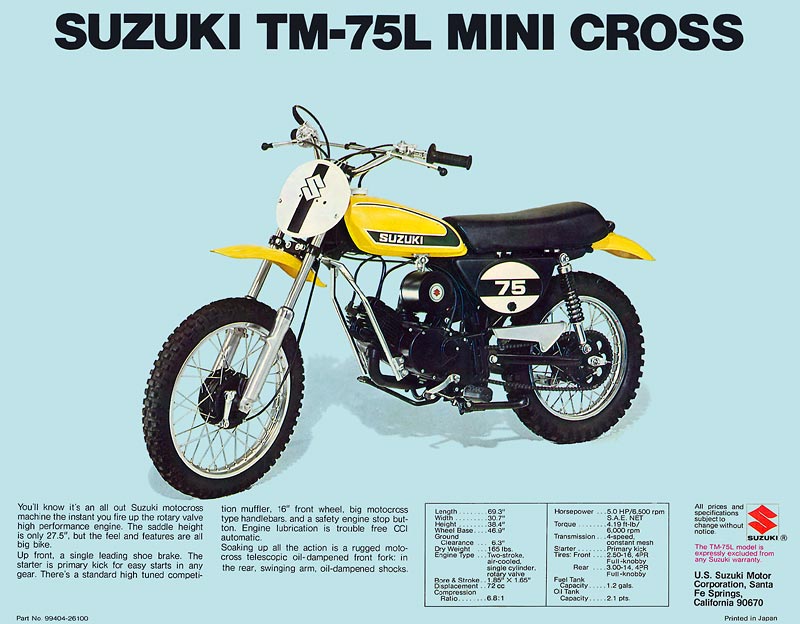
As a young boy, I was “that kid” who would take everything apart, often leaving a formerly functional alarm clock in a hundred pieces in a shoe box. I loved figuring out how things worked and how components worked together as a system. When I was 10, I spent one winter completely disassembling and reassembling my Suzuki TM75 motorcycle in my bedroom (my parents must have had so much more patience and understanding than I do as a parent). It was rebuilt by spring and ran like a champ. Beginners luck?
By then, I was hooked – I enjoyed working with my hands and fixing things. That was a valuable skill to have while growing up, as it provided an income and led to the first company I started at the age of 18. There was always a fair degree of trial and error involved with learning, but experience and experimentation led to simplification and standardization. That became the hallmark of the programs I wrote, and later, the application systems I designed and developed. It is a trait that has served me well over the years.
Today, I still enjoy doing many things myself, especially if I can spend a little time and save hundreds of dollars (which I usually invest in more tools). Finding examples and tutorials on YouTube is usually easy, and after watching a few videos for reference, the task is generally manageable. There is also a sense of satisfaction that comes with a job well done. And most of all, it is a great distraction from everything else that keeps your mind racing at 100 mph.
My wife’s 2011 Nissan Maxima needed a Cabin Air Filter, and instead of paying $80 again to have this done, I decided to do it myself. I purchased the filter for $15 and was ready to go. This shouldn’t take more than 5 or 10 minutes. I went to YouTube to find a video, but no luck. Then, I started searching various forums for guidance. There were plenty of posts complaining about the cost of replacement, but not much about how to do the work. I finally found a post that showed where the filter door was. I could already begin to feel that sense of accomplishment I was expecting in the next few minutes.
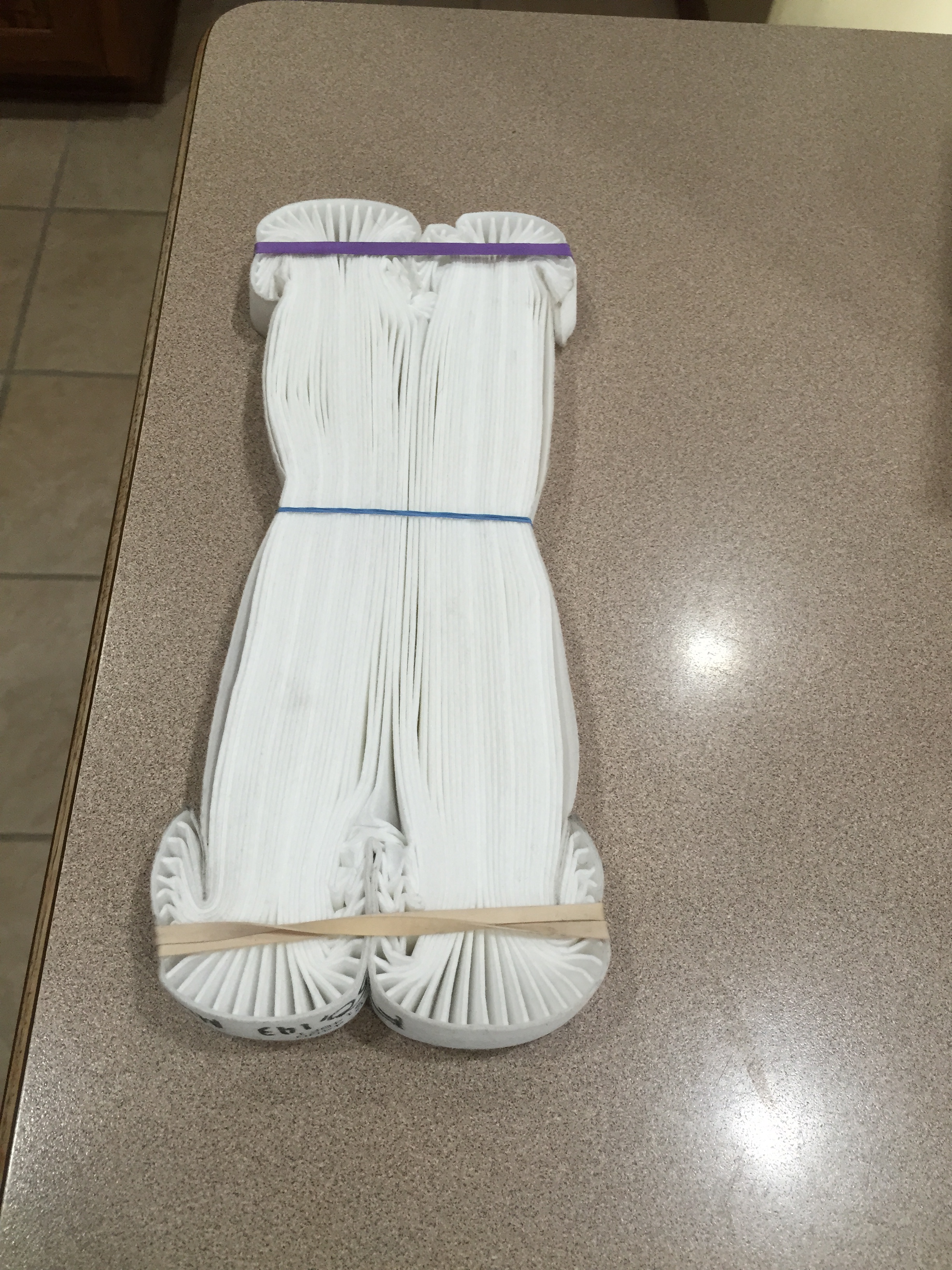
But fate and apparently a few sadistic Nissan Engineers had other plans. First, you needed to be a contortionist in order to reach the filter once the door was removed. Then, the old filter was nearly impossible to remove. And then, once the old filter was removed, I realized that the width of the filter entry slot was approximately 50% of the width of the filter. Man, what a horrible design!
A few fruitless Google searches later, I was more determined than ever to make this work. I tried several things and ultimately found a way to fold the filter where it was small enough to get through the door and would fully open once released. A few minutes later, I was finally savoring my victory over that hellish filter change.
This experience brought back memories of “the old days.” In 1989, I was working for a marketing company as a Systems Analyst and was assigned the project to create the “Mitsubishi Bucks” salesperson incentive program. Salespeople would earn points for sales and could later redeem those points on Mitsubishi Electronics products. It was a very popular and successful incentive program.
Creating the forms and reports was straightforward, but tracking the points (which included generating past reports and adjusting activity from previous periods) presented a problem. I finally considered how a banking system would work (remember, there were no books on the topic before the Internet, so this was essentially reinventing the wheel) and designed my own. It was very exciting and rock solid. Statements could be accurately reproduced at any time, and an audit trail was maintained for all activity.
Next, I needed to create validation processes and a fraud detection system for incoming data. This was rock solid, but instead of being a good thing, it became a real headache and source of frustration.
Salespeople would not always provide complete information, might have sloppy penmanship, or engage in other legitimate but unusual practices (such as bundling and adjusting prices among items in the bundle). Despite that, they expected immediate rewards, and having their submissions rejected apparently created more frustration than incentive.
So, I was instructed to turn the fraud detection dial way back. I let everyone know that while this would minimize rejections, it would increase the potential for fraud and the volume of rewards. I created a few reports to identify potentially fraudulent activity. It was amazing how creative people could be when trying to cheat the system, and how you could quickly identify patterns based on similar types of activities. By the third month, the system was trouble-free.
It was a great learning experience from beginning to end. It ran for several years after I left – something I know because I was still receiving the sample mailing with new sales promotions and “Spiffs” (sales incentives) every month. My later reflection made me wonder how many things are not being created or improved today because it is easier and less risky to follow an existing template.
We used to align fields and columns in byte order to minimize record size, overload operators, and other optimizations to maximize space utilization and performance. Our code was optimized for maximum efficiency because memory was scarce and processors were slow. Profiling and benchmarking programs brought you to the next level of performance. In a nutshell, you were forced to understand and become proficient with the technology used out of necessity. Today, these concepts have become somewhat of a lost art.
There are many upsides to being easy.
- My team sells more and closes deals faster because we make it easy for our customers to buy, implement, and start receiving value from the software we sell.
- Hobbyists like me can accomplish many tasks after watching just a short video or two.
- People are willing to try things they may not have tried before if getting started were not so easy.
However, there may also be downsides for innovation and continuous improvement, simply because ‘easy’ is often considered ‘good enough‘.
What will the impact be on human behavior once Artificial Intelligence (AI) becomes a reality and is in everyday use? It would be great to look ahead for 25, 50, or 100 years and see the full impact of emerging technologies, but my guess is that I will see many of the effects in my own lifetime.
Discussions that Seed the Roots of Creativity
A few months ago I purchased Fitbit watches for my children and myself. My goals were twofold. First, I was hoping that they would motivate all of us to be more active. Second, I wanted to foster a sense of competition (including fair play and winning) within my children. Much of their pre-High School experiences focused on “participation,” as many schools feel that competition is bad. Unfortunately, competition is everywhere in life, so if don’t play to win you may not get the opportunity to play at all.
It is fun seeing them push to be the high achiever for the day, and to continually push themselves to do better week-by-week and month-by-month. I believe this creates a wonderful mindset that makes you want to do more, learn more, achieve more, and make an overall greater impact with everything they do. People who do that are also more interesting to spend time with, so that is a bonus.
Recently my 14 year-old son and I went for a long walk at night. It was a cold, windy, and fairly dark night. We live in fairly rural area so it is not uncommon to see and hear various wild animals on a 3-4 mile walk. I’m always looking for opportunities to teach my kids things in a way that is fun and memorable, and in a way that they don’t realize they are being taught. Retention of the concepts is very high when I am able to make it relevant to something we are doing.
That night we started talking about the wind. It was steady with occasional gusts, and at times it changed direction slightly. I pointed out the movement on bushes and taller grass on the side of the road. We discussed direction, and I told him to think about the wind like an invisible arrow, and then explained how those arrows traveled in straight lines or vectors until they met some other object. We discussed which object would “win,” and how the force of one object could impact another object. My plan was to discuss Newton’s three laws of motion.
My son asked if that is why airplanes sometimes appear to be flying at an angle but are going straight. He seemed to be grasping the concept. He then asked me if drones would be smart enough to make those adjustments, which quickly led to me discussing the use potential future of “intelligent” AI-based drones by the military. When he was 9 he wanted to be a Navy SEAL, but once he saw how much work that was he decided that he would rather be Transformer (which I explained was not a real thing). My plan was to use this example to discuss robotics and how you might program a robot to do various tasks, and then move to how it could learn from the past tasks and outcomes. I wanted him to logically break down the actions and think about managing complexity. But, no such luck that night.
His mind jumped to “Terminator” and “I, Robot.” I pointed out that Science Fiction does occasionally become Science Fact, which makes this type of discussion even more interesting. I also pointed out that there is spectrum between the best possible outcome – Utopia, and the worst possible outcome – Dystopia, and asked him what he thought could happen if machines could learn and become smarter on their own.
His response was that things would probably fall somewhere in the middle, but that there would be people at each end trying to pull the technology in their direction. That seemed like a very enlightened estimation. He asked me what I thought and I replied that I agreed with him. I then noted how some really intelligent guys like Stephen Hawking and Elon Musk are worried about the dystopian future and recently published a letter to express their concerns about potential pitfalls of AI (artificial intelligence). This is where the discussion became really interesting…
We discussed why you would want a program or a robot to learn and improve – so that it could continue to become better and more efficient, just like a person. We discussed good and bad, and how difficult it could be to control something that doesn’t have morals or understand social mores (which he felt if this robot was smart enough to learn on its own that it would also learn those things based on observations and interactions). That was an interesting perspective.
I told him about my discussions with his older sister, who wants to become a Physician, about how I believe that robotics, nanotechnology, and pharmacology will become the future of medicine. He and I took the logical next step and thought about a generic but intelligent medicine that identified and fixed problems independently, and then sent the data and lessons learned for others to learn from.
I’m sure that we will have an Internet of Things (IoT) discussion later, but for now I will tie this back to our discussion and Fitbit wearable technology.
After the walk I was thinking about what just happened, and was pleased because it seemed to spark some genuine interest in him. I’m always looking for that perfect recipe for innovation, but it is elusive and so far lacks repeatability. It may be possible to list many of the “ingredients” (intelligence, creativity, curiosity, confidence (to try and accept and learn from failure), multi-disciplinary experiences and expertise) and “measurements” (such as a mix of complementary skills, a mix of roles, and a special environment (i.e., strives to learn and improve, rewards both learning and success but doesn’t penalize failure, and creates a competitive environment that understands that in most cases the team is more important than any one individual)).
That type of environment is magical when you can create it, but it takes so much more than just having people and a place that seem to match the recipe. A critical “activation” component or two is missing. Things like curiosity, creativity, ingenuity, and a bit of fearlessness.

I tend to visualize things, so while I was thinking about this I pictured a tree with multiple “brains” (my mental image looked somewhat like broccoli) that had visible roots. Those roots were creative ideas that went off in various directions. Trees with more roots that were bigger and went deeper would stand out in a forest of regular trees.
Each major branch (brain/person) would have a certain degree of independence, but ultimately everything on the tree worked as a system. To me, this description makes so much more sense than the idea of a recipe, but it still doesn’t bring me closer to being able map the DNA of this imaginary tree.
At the end of our long walk it seemed that I probably learned as much as my son did. We made a connection that will likely lead to more walks and more discussions.
And in a strange way, I can thank the purchase of these Fitbit watches for being the motivation for an activity that led to this amazing discussion. From that perspective alone this was money well spent.
 Where Ideas, Experiences, and Lessons Learned Intersect