
strategy
Lessons Learned from GTM Consulting
For the past two years, I have performed part-time, contract go-to-market consulting. My wife had a surgery that went wrong 18 months ago, so I needed something that would allow me to take care of her, stay sharp, earn money, and help companies grow. What I encountered was quite different from what I expected, so I thought I would pass it along.

Most of the work was with small to midsize companies, but the problems and needs mirrored what I have encountered at larger companies. The main difference is that large companies tend to look to software to address problems. In contrast, smaller companies often lack the budget for what they view as a solution that increases complexity.
Here are my Top 5 findings:
- GTM plans are often developed at the highest levels, often in isolation, without market testing and validation.
- An interesting aside is that the company is often really seeking sales optimization but believes it is doing things “well enough” today and therefore needs to focus on new offerings and revenue streams.
- New perspectives on past performance and failures are well received but more surprising than anticipated. This leads to a better understanding of needs, which builds consensus moving forward.
- Sales teams are sometimes pitted against one another, rather than working together to help everyone achieve more (Coopetition – “A rising tide lifts all boats.”)
- Sometimes the competing team isn’t sales, but support. The team wants to help the customer (which is great), but works outside its defined scope instead of bringing in the services and sales teams to work jointly to solve the customer’s problem.
- Sales teams are focused on selling features rather than solving business problems.
- Training those teams on solution selling and understanding the prospect’s needs pays off.
- CRMs are not consistently used and often reflect idealized fiction rather than reality.
- Old, dead, or unqualified opportunities; lack of recent contact or interaction; deals that have slipped more than once; and a lack of understanding (company, needs, players, business environment) all point to an unrealistic pipeline.
- Sales management and teams are not leveraging AI to help focus their efforts.
- Conversely, they may view AI as a panacea, investing time and money in tools that supplement a strong team rather than focusing on strengthening the team.
Here are the related Lessons Learned:
- Selling is a byproduct of problem-solving. You can’t solve problems if you don’t know what they are. Every interaction with a prospect should focus on gathering information, building trust and relationships, and leveraging prior interactions to demonstrate that your solution will solve their problem and ease their pain.
- Here’s solution sales again. Teaching teams to ask better questions, listen more, and validate their understanding increases their standing with prospects.
- Identifying common business problems and describing how your product or service solves them should be the foundation of the plan.
- Perform market analysis. How do other companies describe those problems? Their terminology, often found in job postings by competitors and your target audience, can help create effective messaging that resonates. Work to become the natural fit for what your prospects are seeking and the problems they are likely dealing with.
- Individual contributors get paid to win, but sales management needs to create incentives for collaborative efforts that lead to both wins and ongoing customer growth.
- Paying sales teams for net new business only causes them to ignore install base expansion opportunities. And, if another vendor solves their problems, it is only a matter of time before they replace you.
- For one company, I convinced them to implement a 2% SPIV (like a SPIFF, but team-focused) for every team member who actively contributed to team improvement. SPIV payments were quarterly, and there was a running total so the team could see the fund growth. Initial indications of a positive impact are good.
- Another benefit of collaboration is that it helps teams focus on approaches that work due to ongoing testing and refinement. Collaboration also helps teams focus on a more accurate ICP (ideal customer profile). Sales management can then feed their findings back to Marketing to tailor and fine-tune their efforts.
- CRMs often either lack information or are full of wishful thinking. They focus on activities, and not progress and next steps.
- Using MEDPICC as a foundation for qualification is a much better start.
- Sales managers need to validate the information independently to ensure their teams are upfront and honest. Trust, coaching, and collaboration work together for the win.
- Chasing deals that are unlikely to close wastes valuable resources.
- AI is not a panacea, but it is very effective for research, market validation, prospecting, and meeting preparation.
- Going in prepared builds respect and credibility, saves time, and helps you quickly qualify prospects in or out.
- There may be opportunities to nurture prospects who have potential but aren’t qualified for immediate deals, seeding the pipeline for future opportunities. This could be a great place to leverage AI for personalized journeys with highly relevant curated content.
So, what are your thoughts? Have you seen some of these problems yourself? How did you handle them? Let me know in the comments below.
And if you are looking for assistance with your business, contact me.
The Power of Storytelling
Discussions of data and goals in business are common, but not always engaging. Worse, they become routine and are ignored. Without a vision, heart, and excitement, motivation wanes, and the likelihood of success diminishes.

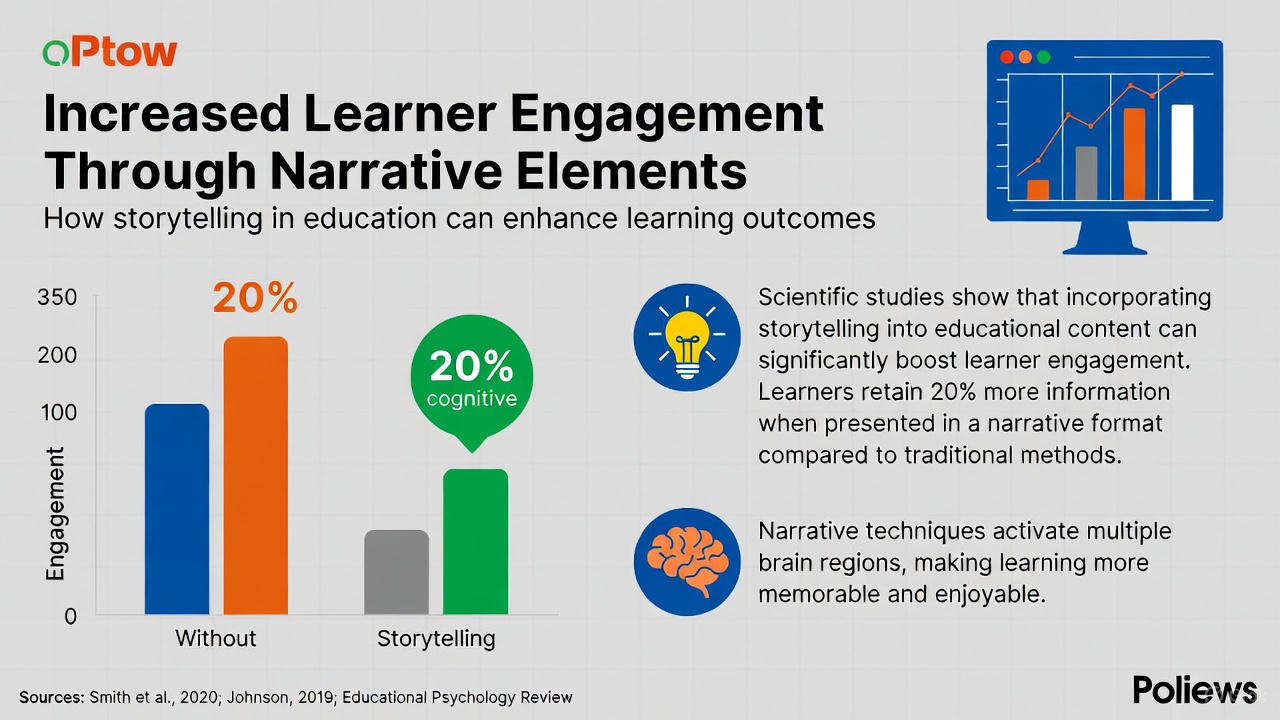
Stories evoke emotions, and emotions often trump logic when it comes to getting buy-in and creating excitement. Stories help with visualization, and visualizing success has been shown to enhance goal achievement. Think about the power of good TED Talks to help you understand and retain ideas.
Steve Jobs realized that people are drawn to engaging stories that evoke emotion. He created relatable scenarios that helped people understand the benefits of a technologically advanced solution without having to dive deep into the technology. He spoke about things that were fun, exciting, and useful. He was visionary, but just as important, he could share that vision and create demand. Relatability and engagement, when done right, create an emotional attachment that drives action.
When my team and I were selling a leading-edge vector analytics database years ago, our Marketing team and other experts wanted us to focus on what later became known as “speeds and feeds.” Our product was faster and more advanced than our competitors’, but our message was undifferentiated from theirs. That is not a good place to start when your competitors are larger and better known.
I created a weekly webinar that we called “Why Fast Matters.” We started by discussing common issues around the complexity and inflexibility of Star Schemas, Fact Tables, pre-aggregation, specialized hardware, and more. The focus was on agility that created a tangible business advantage while saving money. One of the stories I would tell was around a beautiful, multi-layered cake. It is a thing of beauty, taking a lot of time and skill to create. It was also fragile and expensive.
The story concluded like this:
“Now, picture yourself taking a bite of that amazing cake with your eyes closed. Think about how rich, flavorful, and amazing it is. Then someone hands you a fork, and you take another bite. It is just as amazing. You open your eyes and see a plated piece of the amazing layer cake alongside a cupcake. They were both delicious, and with your eyes closed, the results were the same. But one was complex and fragile, and the other was simple, quick, and inexpensive. There is a time and place for each, but when you are betting your success on an outcome, do you really care how you get there?”
We closed with a brief explanation of the technology, real-life proof points, and a call to action to prove its effectiveness in their environment using their data. The close helped demonstrate that this was not just a made-up story, but rather, something that could become their own success story. This was a straightforward approach to getting people to try something they might never have considered otherwise.
Essentially, you are shifting the audience’s mindset from how something gets done (means objective) to what matters and why it needs to be done (fundamental objective).
People tend to have preconceived ideas about how the solution should work, often based on what they are familiar with. Once the audience visualizes their desired outcome, they become more open to different approaches.
I have successfully used these approaches with more complex products, such as an advanced Kubernetes platform, object databases, a multi-platform data integration product, and the world’s first commercial JDBC driver. It is also an effective way to motivate teams. Create a vision of successfully executing a plan, how good it feels to achieve your goals, and what it could mean for each person—an area they develop as their minds elaborate and personalize the story.
Some of the most effective and engaging people that I have known are skillful storytellers. Not everything has to be a story, but when you use it at the right time, it can mean the difference between moving closer to your goal and being just one of many ideas or solutions.
You may not be the next Steve Jobs (I’m certainly not), but you could easily stand out from your peers and competition. Share your story in the comments below!
Getting Your Piece of the PIE

Whether you are selling, consulting, or managing, a foundational approach has consistently helped me succeed. I call it PIE – an acronym that stands for Perspective, Insight, and Experience. When applied effectively, these three elements provide a robust framework for solving problems, winning clients, and leading teams to remarkable outcomes.
Over the years, I’ve taught this methodology to my teams, and it’s been a critical driver of their success. While I usually reserve it for a small circle, I believe it’s time to share it more broadly. I built this methodology and other structured approaches/methodologies as part of developing high-performance teams. They provide the foundation for rapid qualification and faster wins.
Approaches like these are required for consistent, reliable, and scalable organic growth
Perspective – Broaden Your View to Stand Out:
To truly differentiate yourself in any field, you need a broad, informed perspective. This involves understanding the larger environment in which you operate: the market, competitive landscape, customer needs, technological advances, and regulatory shifts. A dynamic perspective evolves as you gain new experiences and encounter different approaches to solving similar problems across other businesses or industries.
This requires a broad understanding of the environment, market, competitive landscape, legal and technological changes, and more. It also grows and changes as you experience new and different things—especially when different approaches to similar problems are taken. It is how you start to stand out in the eyes of your prospects, customers, and team.
Earlier in my career, I taught technical courses. Usually, two or three people stood out. At least one wanted to prove they were better and smarter, and usually, one discussed strange approaches to solving problems. When you dug into those strange approaches, you often found something creative and brilliant coming from a different perspective on the problem. Curiosity and a desire to improve often drove their innovative approaches.
In business, perspective becomes your differentiator. When you can see things from a broader, more holistic viewpoint, you position yourself as someone who can offer more than just solutions—you offer foresight, adaptability, and creativity. You become the lighthouse that guides your clients around tricky situations and to a better destination.
Products create interest. Perspective creates confidence.
How to Apply This:
- Stay informed about industry trends, not just within your niche but across related sectors.
- Engage with diverse thinkers, challenge your assumptions, and be open to unconventional ideas.
- Regularly reassess your strategies in light of new information or shifts in the business environment.
Here is a post that discusses perspective as the starting point.
Insight – The Power of Seeing What Others Don’t:
Insight is one of the most valuable assets you can bring to any business interaction. Too often, people are trapped by existing tools, processes, and perceived constraints. Insight lets you cut through these limitations and spot opportunities for improvement that others miss.
Here’s where perspective plays a role in insight: the broader your view, the better you can generate actionable insights that can transform a business. My most successful deals and projects were not won because I followed the status quo—they were won because I brought fresh ideas to the table. By reframing the problem and presenting a path to a better solution, I created value that competitors cannot match.
How to Apply This:
- Question assumptions and typical approaches. Ask yourself, “Is this really the best way to solve the problem?”
- Look for inefficiencies, bottlenecks, and areas of waste in processes. These are often hidden opportunities for innovation.
- When engaging with clients or teams, offer insights that reframe their challenges and provide a path to improved outcomes by focusing on the “what” rather than the “how.”
Here’s a post that delves deeper into insightfulness.
Experience – The Foundation of Wisdom and Credibility:
Experience is the foundation that supports both perspective and insight. It’s the repository of lessons learned—both successes and failures—that shape your approach to problem-solving and innovation. The more varied and in-depth your experience, the better equipped you are to offer valuable insights and strategies.
Consulting, in particular, is fertile ground for gaining diverse experience. By working with multiple clients across industries, you gain exposure to a wide array of challenges and solutions. In sales, this experience translates into powerful stories that illustrate your ability to help clients achieve better outcomes. The more experience you accumulate, the more confident you’ll become in your ability to deliver meaningful results through transferable competence (taking skills and lessons learned from one domain and applying them to another).
How to Apply This:
- Reflect on your past experiences—what worked, what didn’t, and why. Use these lessons to guide future decisions.
- Build case studies from your experiences to demonstrate your expertise and credibility when engaging with clients or stakeholders.
- Continuously seek out new challenges that stretch your capabilities and expand your knowledge base.
As Albert Einstein wisely said, “The only source of knowledge is experience. You need experience to gain wisdom.” But it’s not just about accumulating experiences—it’s about leveraging them. Your past successes build confidence in your abilities, while your failures provide invaluable lessons that help you avoid costly mistakes in the future.
Beyond the Hunt: Fueling Sustainable Enterprise Sales Growth
The software start-up world is obsessed with “Hunters” – salespeople laser-focused on landing new customers. Job boards are overflowing with companies in “growth phases,” desperate for new logos. Understandably, the revenue from each new customer can mean a 10-20x multiple in company valuation in the VC-fueled race toward an exit. What happens after the deal closes ultimately determines a company’s success. Sustainable growth requires a systematic approach for ongoing customer success and satisfaction.
The Long Game: Profitability and Sustainability

My experience leading a large business unit and running my own company has taught me that sustainable growth requires more than just a flood of new logos. Here’s why:
- Cash flow is King: Lines of credit can vanish overnight (remember Silicon Valley Bank?). Relying solely on external funding is risky.
- Not All New Business is Good Business: Unprofitable accounts, high-churn risks, and customers with limited growth potential can drain your resources faster than you can acquire them. Efficiency matters for scalability.
- Profits Drive Long-Term Growth: Organic, profit-fueled growth, especially when driven by innovation, creates a much more resilient and valuable business.
- The effort and costs associated with closing new customers can be high in many industries. Your install base business helps fund new growth.
- Churn negatively offsets growth (think net revenue retention, or NRR) and limits profits that fund growth.
The Power of the Hybrid Sales Model
To achieve sustainable growth, you need either an extensive, fully integrated organization that seamlessly transitions from sales to implementation (few companies can do this) or a hybrid sales team that excels at both hunting (50-70%) and farming (30-50%). Landing a new customer is hard work, but retaining and growing them is just as challenging and crucial. Customer acquisition costs are often too high to justify losing a customer only a year or two after the initial win. Treating new customers as assets (not commodities) is essential to long-term success.
Mastering Strategic Accounts: Turnarounds and Growth
Large, strategic accounts—Tier 1 companies with strong brand recognition and significant revenue potential—present unique challenges. In my experience, these accounts often fall into two categories: those I initially closed and then grew (ideal, as you have already laid the foundation for success), and those I inherited in a neglected state and had to turn around.
Turnarounds require a unique skill set. They demand as much time and sometimes even more effort than landing a new logo, blending aspects of both hunting and farming. It takes commitment, skill, patience, and effort to understand an organization and find new ways to deliver value. Relationships and trust take time to develop, and in this situation they are in question (or worse).
The lesson learned is that it is better to take a proactive approach to keep adding value for those accounts, rather than neglect them and spend a lot of time, money, and effort rebuilding trust and earning their business again.
Case Study: From Churn Risk to Multi-Million Dollar Expansion
Take, for example, a large Financial Services company I inherited when their Strategic Account Manager left. The account had been neglected for two years and was riddled with problems. We lacked executive relationships and higher-level visibility within the organization. They were evaluating competitors, and we knew nothing about it! Even though they were an existing customer, we were the underdog.
I started by organizing a day-long on-site meeting to understand their pain points and needs. We identified several immediate issues, shared our vision for the future, began building trust, and demonstrated our commitment to their success. Following this, we spent a few hours getting to know the team over dinner. It was an eye-opener for me, as they shared more about their needs, how best to approach them, and their disappointment with our company’s past efforts.
The result? First and foremost, we saved the account. Within three months, I closed a $500K expansion deal, followed by a $500K consulting engagement and then a $3.25M two-year cloud expansion and upgrade prepay deal. My team and I rebuilt the relationship, solved critical problems (even going beyond our product scope), and provided a clear path forward with our AI-powered platform. I became a trusted advisor who was valued by their executive team. It was a true win-win.
The Bottom Line: Building a Sustainable Sales Engine
Install base growth and customer retention are critical for long-term success, especially with larger customers. The approach has to be multi-dimensional. It is a team effort, and the Account Executive is the quarterback. Relationship management, customer success teams, support, and services all play a role. Effective communication is bi-directional, with the customer having insight into what is coming down the road and input into the direction of the products they rely on. This becomes a true partnership that adds significant value to both organizations.
Does this hybrid approach apply to every company? If you’re IBM or Oracle, your offerings are broad and deep, and your customers are largely locked-in. “Land and expand” is part of their DNA. And if you’re selling end-of-life products, your focus might shift towards maximizing the “long tail” through customer success and services to minimize costs and maximize profitability.
However, for most growth-stage Cloud and SaaS companies, the hybrid sales model is more essential to their success than they probably realize.
Call to Action:
- Evaluate your sales team structure and compensation plans. Do they incentivize both new customer acquisition and ongoing account growth?
- Invest in training and development for your sales team. Equip them with the skills needed to excel at both hunting and farming. It can be a difficult transition, but it is worth it in the long run.
- Need help building a high-performing hybrid sales team or turning around strategic accounts? Let’s connect!
Six Ways AI Can Become a Sales Management Enhancer
As a VP of Sales, I would spend the first 60-90 minutes of every day reviewing a dozen news sources for new technology, competitor announcements, proposed legislation, and M&A news. I looked for anything relevant in critical industries, news about our customers or their top customers, and staffing changes within their companies.

My goal was to identify anything that could negatively impact deals in play, threaten the customer base, disrupt the run-rate business, or create opportunities to break into a new company or displace a competitor. You feed your findings and speculations back to your team, along with suggestions, talking points, or specific directions to help them maintain or increase their success for the current quarter plus the next few quarters.
You look for trends and leading indicators that could help your team and your organization achieve greater success. Winning feels good, and the rewards drive you to achieve even more.
Artificial Intelligence (AI) can do all this and more. It will be more consistent, analyze information without bias, and do so faster.
1. Automated Intelligence Gathering
Focus your efforts where they add the most value. AI can automate the collection and analysis of data from multiple sources, including news feeds, legal updates, social media, and competitor websites. This automation can save considerable time and minimize the chances of missing relevant information. Natural Language Processing (NLP) can identify, categorize, and correlate relevant information, providing actionable insights without manual review.
2. Enhanced Lead and Opportunity Identification
In addition to the correlations above, Machine Learning (ML) models can analyze trends and patterns in data to identify potential leads or opportunities for expansion. By understanding market movements, customer behaviors, historical behavior, and presumptive competitor strategies, AI can suggest new targets for sales efforts and highlight areas where teams could gain a competitive edge.
3. Improved Internal Communication and Collaboration
Sales is not just about selling; it also requires internal collaboration to create the best possible products and services and identify the best approaches to generate awareness and interest in your offerings.
AI systems can serve as a central hub for information that benefits various departments within a company. By integrating with CRM, marketing, support, and other internal systems, AI can distribute tailored information to different teams, ensuring everyone has the best insights to perform their roles effectively and promoting a more cohesive, coordinated approach to achieving long-term business objectives.
4. Forecasting and Predictive Analytics
With the ability to process vast amounts of data, AI should significantly improve forecasting accuracy. Predictive analytics can estimate future sales trends, customer demand, and market dynamics, giving businesses more opportunities to make better-informed decisions—leading to better resource allocation, optimized sales strategies, and, ultimately, higher revenue.
5. Increased Efficiency and ROI
By automating routine tasks and providing deep insights, AI can free up sales and management teams to focus on strategic activities. The efficiency gains from AI can result in significant cost savings and a higher return on investment (ROI) as teams do more with less, capitalize on opportunities faster and more effectively, and ultimately make more money for themselves and their company.
6. Continuous Learning and Improvement
Machine learning models will improve over time as they process more data, meaning the insights and recommendations provided by AI will become increasingly accurate and valuable, helping businesses continuously refine their strategies and operations for better outcomes. AI will also provide constructive feedback and suggest next steps in real time, helping everyone using it upskill.
Future Perspectives
While AI may not yet be ready to take over complex roles like enterprise sales, its potential to enhance these roles is undeniable. As AI technology continues to evolve, its ability to provide highly accurate forecasts, improve win rates, shorten sales cycles, and enhance competitiveness will only grow. The future of AI in sales and business management is not just about automation; it’s about augmenting human capabilities to create more effective, efficient, and thriving organizations that can compete in an increasingly competitive global landscape.
So, what do you think? Will this work? Will it be good enough if everyone is doing it? Leave a comment and let us know.
- ← Previous
- 1
- 2
- 3
- …
- 9
- Next →

