Latest Event Updates
One Successful Approach to Innovation that worked for an SMB
When I owned a consulting company, we viewed innovation as an imperative. It was the main thing that created differentiation, credibility, and opportunity. We had an innovation budget, solicited ideas from the team, and evaluated those ideas quarterly.
Almost as important to me was that this was fun. It allowed everyone on the team to suggest ideas and participate in the process. That was meaningful and supported the collaborative, high-performance culture that had developed. The team was inspired and empowered to make a difference, and that led to an ever-increasing sense of ownership for each employee.
The team also had a vested interest in having the process work, as quarterly bonuses were paid based on their contributions to the company’s profitability. There was a direct cause-and-effect correlation with tangible benefits for every member of the team.
We developed the following 10 questions to qualify & quantify the potential of new ideas:
- What will this new thing do?
- It is important to be very detailed as this was used to create a common vision of success based on the presented idea.
- What problem(s) does this solve, and how so?
- This seems obvious, but selling this new product will be an uphill challenge if you are not solving a problem (which could be something like “lack of organic expansion”) or addressing a pain point.
- What type of organizations have those problems and why?
- This was fundamental to understanding if a fix was possible from a practical perspective, what the value of that fix might be for the target buyer, and how much market potential existed to scale this new offering.
- What other companies have created solutions or are working on solutions to this problem?
- The lack of competition today does not mean you are the first to attack this problem. Due diligence can help avoid repeating the failure of others, potentially providing lessons learned by others and helping you avoid similar pitfalls.
- Will this expand our existing business, or does it have the potential to open up a new market for us?
- Each answer has upsides and downsides, but breaking into a new market can take more time and be more difficult, time-consuming, and expensive to achieve.
- Is this Strategic, Tactical, or Opportunistic?

- An idea may fall into multiple categories. When the Sarbanes-Oxley (SOX) Act became law, we viewed a new service offering as a tactical means to protect our managed services business and an opportunistic means to acquire new customers and grow the business. While this is not true innovation, IMO, it was an offering that flowed from this defined process.
- What are the Cost, Time, and Skill estimates for developing a Minimally Viable Product (MVP) or Service?
- What are the Financial Projections for the first year?
- Cost to develop and go to market.
- Target selling price, factoring in early adopter discounts.
- Estimated Contribution Margin Ratio (for comparison with other ideas being considered).
- Break-even point.
- Would we be able to get an existing customer to pre-purchase this?
- A company willing to provide a PO that commits to purchasing that MVP within a specific timeframe increased our confidence in the viability of the idea.
- What are the specific Critical Success Factors to be used for evaluation purposes?
- This important lesson learned over time helped minimize emotional attachment to the idea or project and provided objective milestones for critical go / no-go decision-making.
This process was purposeful, agile, lean, and somewhat aggressive. We believed it gave our company a competitive advantage over larger companies that tended to respond slower to new opportunities and smaller competitors that did not want to venture outside their wheelhouse.
With each project, we learned and became more efficient and effective and made better investment decisions that positively impacted our success. We monitored progress on an ongoing basis relative to our defined success criteria and adjusted or sunset an offering if it stopped providing the required value.
The process was not perfect…
For example, we passed on some leading-edge ideas, such as a “Support Robot” in 2003, an interactive program that used a machine-learning algorithm. It was to be trained using historical log files, could quickly and safely be tested in a production environment, refined as needed, and ultimately validated.
This automation could have been used with our existing managed services and Remote DBA customers to further mitigate the risk of unplanned outages. Most importantly, it would have provided leverage to take on new business without jeopardizing quality or adding staff – thereby increasing revenue and profit margin.
At the time, we believed this would be too difficult to sell to prospective customers (“pipe dream” and “snake oil” were some of the adjectives we envisioned), so it appeared to lack a few items required by the process. Live and learn.
In summary, having a defined approach for something as important as business needs innovation to grow and prosper, as best demonstrated by market leaders like Amazon and Google (read the 10-K Annual Reports to gain a better understanding of their competitive growth strategies that are largely based on innovation).
Implementing this type of approach within a larger organization requires additional steps, such as getting the buy-in from a variety of stakeholders and aligning with existing product roadmaps, but it is still the key to scalable growth for most businesses.
Creating Customers for Life (4 minute read)
The goal for any business, regardless of the products you sell or the services you provide, should be maintaining a satisfied customer base that is loyal to your business. The idea is to create a mutually beneficial relationship that motivates people to want to continue working with you despite the availability of competitive products or motivations (e.g., those pushing for a “Corporate Standard” involving another product.)
The best part is that this concept applies to all companies and all Product Life Cycle stages. Whether your company is on a rapid growth trajectory towards ‘Unicorn status,’ your offerings are mature and viewed as ‘less exciting.’ The approach will also help if your products decline and you seek the ‘longest tail’ possible. At each phase, there are credible threats from competitors that seek to grow through the erosion of your business.

Several years ago, I was responsible for two product lines in two major geographic regions (Americas and APAC/Japan). Our attrition rate (“churn”) was traditionally slightly below the industry average. We began seeing an increase in churn and a corresponding decrease in organic growth. Both were indicators that something needed to change.
After discussing tactical approaches to address this, our small leadership team agreed that this was a strategic issue we needed to address. The result was an understanding that we needed to create ‘Customers for Life.’ Everyone agreed with the concept, but due to various differences (culture, who our customer was – end customer vs. channel partner, buying patterns, etc.), we agreed to try what was best for each of our regional businesses and share the results and lessons learned.
My approach focused on developing strong relationships that fostered collaboration and ultimately led to growth and success for both parties. The basic premise was simple:
- People tend to buy from people they like, respect, and trust. Become one of those people for your customers.
- Helping companies achieve better business outcomes leads to greater success for our customers and us.
How did we do it? It was a systematic process that my team used that included the following:
- Develop simple profiles for each customer (e.g., products used, date of first purchase, size of footprint, usage and payment trends, industry).
- An optimal size – based on the size of the product footprint, annual amount spent with us, or size of the company- was used to prioritize companies and organizations with the most significant potential impact.
- Make contact multiple times yearly, not just when you want money.
- These “out of cycle” contacts became very important.
- Ask questions about key initiatives, milestones, and concerns.
- We documented the responses, which helped seed following conversations and demonstrate a genuine interest in what they were doing.
- Follow-up!
- Request meetings to understand how they use our products and get a brief update on what our company has been doing.
- Meeting people face-to-face is always good.
- Learning more about their business, systems, goals, and challenges created opportunities to add value and become more of a partner in success with that customer.
- Look at what they were doing with our products and offer suggestions to do more, do something better or more efficiently, call out potential problems and offer suggestions, and discuss best practices. Often, we would have a technical expert follow up and provide an hour or two of free assistance relating to those findings.
- Look for opportunities to congratulate them.
- It demonstrates that they are important enough that you are paying attention. Google Alerts made this easy.
- Regularly ask our customers if there is anything that we could do to help them.
- They would often reciprocate, leading to increased references and referrals.
- Continuous Improvement – Analyze the results and refine the process as needed on an ongoing basis.
Before the meeting, we would spend an hour or two researching the company, its history, and significant events for it and within its industry, and identify its top 2-3 competitors. My consulting background came in handy as I “looked between the lines” to better understand the situation as we planned the meeting, focusing on what we wanted to walk away with and what we wanted the customer to walk away with from that meeting.
As we met with our Customers and Channel Partners, we would explain what ‘Customer for Life’ meant to us and the potential benefits to them. Before the meeting, we would check to see if we had (or they wanted) an NDA so they could speak freely and with confidence. Trust was important. The information disclosed would help us understand their situation, and we would map this against other customers in search of actionable trends. Showing interest and understanding created credibility. Asking relevant questions allowed conversations to progress to substantive issues in less time. From there, we focused on specific points that would positively impact that customer.
Over the course of two years, my team and I helped our customers innovate by providing different perspectives and ideas, modernizing (e.g., moving to spatial analytics to get a more granular understanding of their own business, cloud-enable their systems to increase responsiveness to their business and often control costs), improve their systems and grow their businesses, and more. We also received feedback that helped us improve our products and a variety of processes – something that benefitted all customers. Occasionally, we learned about problems they were having. We took ownership of the issue, brought in the right people, and helped the customer find a resolution. Collaboration and success created strong relationships with many customers – especially in the segment with the largest customers and companies.
From a business perspective, our customer churn decreased by 50% over the same period, and organic growth increased slightly more than 20%. We had achieved our objectives and improved our bottom line. The concepts behind Strategic Account Management, Voice of the Customer, Customer Experience, Customer Loyalty, and Customer Success had blended into a manageable practical approach and provided a great ROI.
One of my biggest lessons learned was that adopting this mindset and creating a repeatable process should be started sooner rather than later.
Every day you are not creating your own ‘Customers for Life,’ there is a good chance that your competition is. Don’t let that happen to your business.
Edit: Added category and tags
Good Article on Being an Entrepreneur
Nearly every morning, I start the day out by reviewing news on business, technology, and finance / markets. Occasionally there is a general interest article that I stumble across. Today it was a short article about Curt Culver, Co-Founder of Culver’s Restaurants.
Several great points seem like common sense in hindsight but are often well out of focus during the “heat of the battle” as you build your business. Mr. Culver touches several of them:
- The Importance of having the proper Work / Life Balance
- For me personally, this was one of the toughest aspects of growing my business. I worked 100+ hours a week, traveled at least 50% of the time, and was often “not there,” even when spending time with my family.
- My habits also set the expectations for others on the team, and I later realized that this also created some strife at home for them.
- The turning point for me was when my youngest daughter, then 4 years old, told her twin brother and older sister, “Daddy really does love us; he just works all the time so that we can live here and have all of this stuff.” It was painful enough to hear that, but it was a wake-up call about what is really important in life – people (especially family and friends), not “stuff.”
- For me personally, this was one of the toughest aspects of growing my business. I worked 100+ hours a week, traveled at least 50% of the time, and was often “not there,” even when spending time with my family.
- The Need to Develop others on your Team
- From past experiences, I understood the need to hire the best people you could afford – people with complementary skills (not just clones of yourself) and who were better than you in at least one aspect. That diversity added value, while the similarities made it easier to “get on the same page” quickly. From there, it was important to understand their goals and work together on career planning early – something that adds value to both parties.
- One of my goals in developing my team was to have everyone understand the big picture and empower them to make good decisions for the business.
- While most of this occurred, my goal was to have each and every person think and act like owners of the business. That level of engagement and accountability only happened with my most senior person, who was also my first hire and owned a small part of the company.
- The moment when I recognized success was during a mission-critical ERP system upgrade for our largest customer – a multi-billion dollar semiconductor reseller. I sat in on project and team meetings, reviewed reports, and asked a few questions, but that was it. It was a very proud and empowering moment for me.
- The weekend of the pre-migration test, I received a call telling me that everything had been successful and that the migration was going forward the next weekend.
- The following weekend I received a nightly summary email, and on Sunday afternoon received a call telling me that the new system was operational and supporting production with ease.
- Culture
- Mr. Culver states, “Culture is all about people.” From my perspective, that is mostly true, but there are other important dimensions of culture based on my experiences.
- To me, the Cultural Identity of your company starts out as something aspirational and later grows into the glue that bonds every member of your team. It helps bring out the best in everyone, including the camaraderie and support from working with people you like and trust.
- There were two unexpected consequences of actively focusing on culture, which were:
- We quickly transformed into a High-Performance Organization. Everyone pushed to continuously “raise the bar.” There was healthy competition between people, but each team member was a “safety net” for others. Having the team win was far more important than winning as an individual.
- New Hires that were not a good fit recognized that very quickly and usually quit within the first 2-3 weeks. I only had to terminate one person who wasn’t a good fit during the probationary period.
- There were two unexpected consequences of actively focusing on culture, which were:
- Having a Support System
- Mr. Culver addresses failure and the importance of family to help support you in times of need.
- One of the biggest lessons I learned was that nothing that I did or accomplished with my company would have been possible without the support of my wife, children, parents, and in-laws (the latter two providing financial support during the early years in times of need).
- With understanding comes humility.
These are lessons learned that can be applied to any size organization and in my opinion, are a great investment in the future growth, value, and longevity of your company.
Occam’s razor, our Maxima, and the Sage Mechanic
My wife has a Nissan Maxima and loves her car. Over the past 9 months, there has been a persistent but seemingly random problem where the radio is used for a few minutes while the car is off and then the battery dies when she goes to start the car. This has happened more than a dozen times over the past 3 1/2 years, and it has been seen by two dealerships for a total of three times recently with no success – the most recent visit being one day before this problem occurred.
Saturday morning, I was running errands when my wife called and let me know that this problem had happened again (the second time this week, and she was very frustrated). I was pretty excited because this time, the problem occurred at home, not at some parking lot like usual, so I had the luxury of time to try to make a root cause determination. I’m somewhat mechanical but no professional, so I followed my consulting advice and contacted a professional.
Dave T. is a mechanical guru with an uncanny ability to offer sage advice with only a modicum of information. He is incredibly busy but always willing to spend a few minutes and give helpful advice. It helps that he is a great guy, but it also helps him generate business (leads and referrals). It is an approach that helps create a constant backlog of work and a very loyal clientele, which is good business.
I called Dave, described the problem, and mentioned what I had read on various forums (i.e., similar electrical problems observed after some arbitrary mileage). Next, I mentioned that this had just been to the dealership, and they did not find anything wrong. Dave laughed, stating, “There is a 99%+ likelihood that the alternator is bad, possibly both the alternator and battery.” He sounded very confident.
There was a pause, and then he asked, “What’s more likely – that there is some completely random problem that only happens when your wife is out and your son stays in the car and listens to music for a few minutes, which by the way only happens to Maximas after X number of miles, or that there are issues with the alternators where they tend to fail after a certain amount of use, which causes them not to charge the battery properly and leads to a condition where there is not enough of a charge to start the car?”

When Dave explained it like that, I felt kind of stupid, consoled only by the fact that other professional mechanics had not resolved the problem before me. He added, “Anything that could drain a battery within a few minutes would be noticeable. It would start a fire or melt wires and smoke or smell. You haven’t seen or smelled anything like that, have you?”
I described my plan to troubleshoot the problem, and Dave suggested that I also test the alternator and the specific gravity of the individual battery cells. So, less than five minutes into that call, I had a plan and was off and running.

Yesterday afternoon I spent several hours using a methodical approach to troubleshooting, documenting everything with pictures and videos to help me recall details and sequence if needed. Sure enough, Dave’s knowledge and intuition led to the correct conclusion.
I called him to thank him, and while talking, I wondered aloud why the dealership could not figure this out? Dave replied, “It’s not that they couldn’t have done what you did, but instead, they focused on the symptoms you described. The mechanic probably sat there for 10-15 minutes with the lights and radio on while the car was off. After that, the car started, so they assumed everything was fine.
I listened to what you said, ignored the randomness and speculation, and honed in on the likeliest problem. The fact that this happened again so soon also made sense because now your battery was run down from the testing performed by the dealership.” He added, “In my business, I get paid for results, so I can’t get away with taking the easy way out.”
I’m big on lessons learned, wanting to make the most of every experience because I have learned that skills and knowledge are often very transferrable. As I thought about this, I realized that Dave’s analysis was the perfect practical application of Occam’s razor. It’s a very helpful skill as a Consultant, but more importantly, it can help when problem-solving in any line of work.
The Downside of Easy (or, the Upside of a Good Challenge)
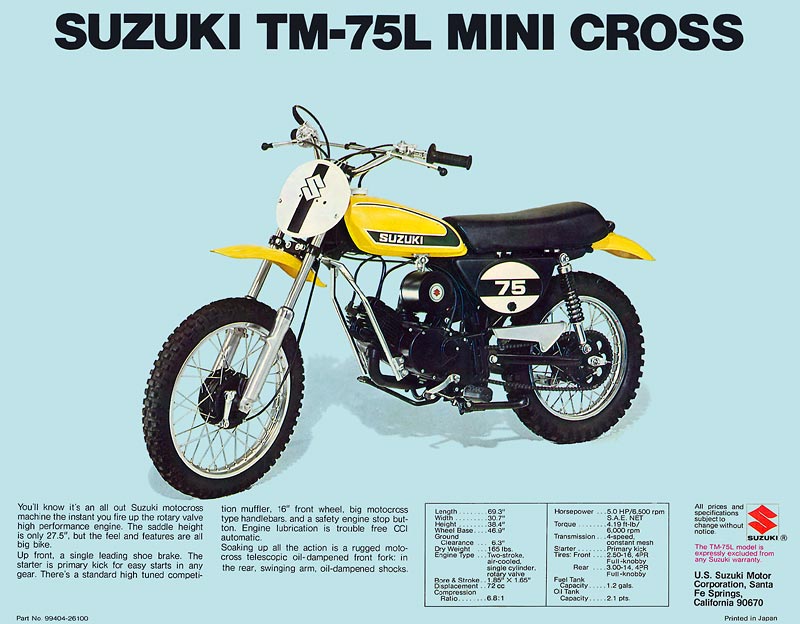
As a young boy, I was “that kid” who would take everything apart, often leaving a formerly functional alarm clock in a hundred pieces in a shoe box. I loved figuring out how things worked and how components worked together as a system. When I was 10, I spent one winter completely disassembling and reassembling my Suzuki TM75 motorcycle in my bedroom (my parents must have had so much more patience and understanding than I do as a parent). It was rebuilt by spring and ran like a champ. Beginners luck?
By then, I was hooked – I enjoyed working with my hands and fixing things. That was a valuable skill to have while growing up, as it provided an income and led to the first company I started at the age of 18. There was always a fair degree of trial and error involved with learning, but experience and experimentation led to simplification and standardization. That became the hallmark of the programs I wrote, and later, the application systems I designed and developed. It is a trait that has served me well over the years.
Today, I still enjoy doing many things myself, especially if I can spend a little time and save hundreds of dollars (which I usually invest in more tools). Finding examples and tutorials on YouTube is usually easy, and after watching a few videos for reference, the task is generally manageable. There is also a sense of satisfaction that comes with a job well done. And most of all, it is a great distraction from everything else that keeps your mind racing at 100 mph.
My wife’s 2011 Nissan Maxima needed a Cabin Air Filter, and instead of paying $80 again to have this done, I decided to do it myself. I purchased the filter for $15 and was ready to go. This shouldn’t take more than 5 or 10 minutes. I went to YouTube to find a video, but no luck. Then, I started searching various forums for guidance. There were plenty of posts complaining about the cost of replacement, but not much about how to do the work. I finally found a post that showed where the filter door was. I could already begin to feel that sense of accomplishment I was expecting in the next few minutes.

But fate and apparently a few sadistic Nissan Engineers had other plans. First, you needed to be a contortionist in order to reach the filter once the door was removed. Then, the old filter was nearly impossible to remove. And then, once the old filter was removed, I realized that the width of the filter entry slot was approximately 50% of the width of the filter. Man, what a horrible design!
A few fruitless Google searches later, I was more determined than ever to make this work. I tried several things and ultimately found a way to fold the filter where it was small enough to get through the door and would fully open once released. A few minutes later, I was finally savoring my victory over that hellish filter change.
This experience brought back memories of “the old days.” In 1989, I was working for a marketing company as a Systems Analyst and was assigned the project to create the “Mitsubishi Bucks” salesperson incentive program. Salespeople would earn points for sales and could later redeem those points on Mitsubishi Electronics products. It was a very popular and successful incentive program.
Creating the forms and reports was straightforward, but tracking the points (which included generating past reports and adjusting activity from previous periods) presented a problem. I finally considered how a banking system would work (remember, there were no books on the topic before the Internet, so this was essentially reinventing the wheel) and designed my own. It was very exciting and rock solid. Statements could be accurately reproduced at any time, and an audit trail was maintained for all activity.
Next, I needed to create validation processes and a fraud detection system for incoming data. This was rock solid, but instead of being a good thing, it became a real headache and source of frustration.
Salespeople would not always provide complete information, might have sloppy penmanship, or engage in other legitimate but unusual practices (such as bundling and adjusting prices among items in the bundle). Despite that, they expected immediate rewards, and having their submissions rejected apparently created more frustration than incentive.
So, I was instructed to turn the fraud detection dial way back. I let everyone know that while this would minimize rejections, it would increase the potential for fraud and the volume of rewards. I created a few reports to identify potentially fraudulent activity. It was amazing how creative people could be when trying to cheat the system, and how you could quickly identify patterns based on similar types of activities. By the third month, the system was trouble-free.
It was a great learning experience from beginning to end. It ran for several years after I left – something I know because I was still receiving the sample mailing with new sales promotions and “Spiffs” (sales incentives) every month. My later reflection made me wonder how many things are not being created or improved today because it is easier and less risky to follow an existing template.
We used to align fields and columns in byte order to minimize record size, overload operators, and other optimizations to maximize space utilization and performance. Our code was optimized for maximum efficiency because memory was scarce and processors were slow. Profiling and benchmarking programs brought you to the next level of performance. In a nutshell, you were forced to understand and become proficient with the technology used out of necessity. Today, these concepts have become somewhat of a lost art.
There are many upsides to being easy.
- My team sells more and closes deals faster because we make it easy for our customers to buy, implement, and start receiving value from the software we sell.
- Hobbyists like me can accomplish many tasks after watching just a short video or two.
- People are willing to try things they may not have tried before if getting started were not so easy.
However, there may also be downsides for innovation and continuous improvement, simply because ‘easy’ is often considered ‘good enough‘.
What will the impact be on human behavior once Artificial Intelligence (AI) becomes a reality and is in everyday use? It would be great to look ahead for 25, 50, or 100 years and see the full impact of emerging technologies, but my guess is that I will see many of the effects in my own lifetime.
 Where Ideas, Experiences, and Lessons Learned Intersect