artificial intelligence
The Downside of Easy (or, the Upside of a Good Challenge)

As a young boy, I was “that kid” who would take everything apart, often leaving a formerly functional alarm clock in a hundred pieces in a shoe box. I loved figuring out how things worked and how components worked together as a system. When I was 10, I spent one winter completely disassembling and reassembling my Suzuki TM75 motorcycle in my bedroom (my parents must have had so much more patience and understanding than I do as a parent). It was rebuilt by spring and ran like a champ. Beginners luck?
By then, I was hooked – I enjoyed working with my hands and fixing things. That was a valuable skill to have while growing up, as it provided an income and led to the first company I started at the age of 18. There was always a fair degree of trial and error involved with learning, but experience and experimentation led to simplification and standardization. That became the hallmark of the programs I wrote, and later, the application systems I designed and developed. It is a trait that has served me well over the years.
Today, I still enjoy doing many things myself, especially if I can spend a little time and save hundreds of dollars (which I usually invest in more tools). Finding examples and tutorials on YouTube is usually easy, and after watching a few videos for reference, the task is generally manageable. There is also a sense of satisfaction that comes with a job well done. And most of all, it is a great distraction from everything else that keeps your mind racing at 100 mph.
My wife’s 2011 Nissan Maxima needed a Cabin Air Filter, and instead of paying $80 again to have this done, I decided to do it myself. I purchased the filter for $15 and was ready to go. This shouldn’t take more than 5 or 10 minutes. I went to YouTube to find a video, but no luck. Then, I started searching various forums for guidance. There were plenty of posts complaining about the cost of replacement, but not much about how to do the work. I finally found a post that showed where the filter door was. I could already begin to feel that sense of accomplishment I was expecting in the next few minutes.
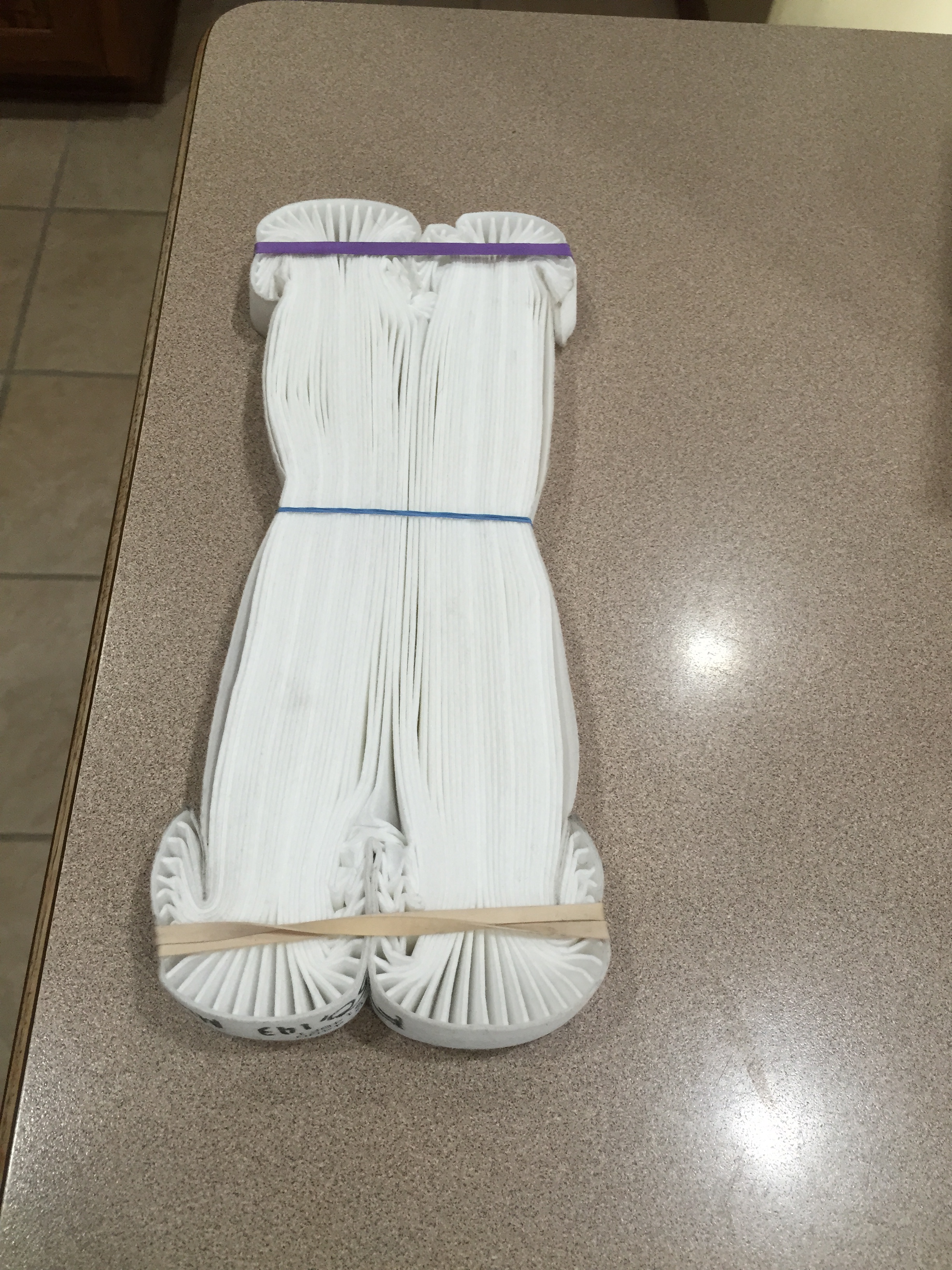
But fate and apparently a few sadistic Nissan Engineers had other plans. First, you needed to be a contortionist in order to reach the filter once the door was removed. Then, the old filter was nearly impossible to remove. And then, once the old filter was removed, I realized that the width of the filter entry slot was approximately 50% of the width of the filter. Man, what a horrible design!
A few fruitless Google searches later, I was more determined than ever to make this work. I tried several things and ultimately found a way to fold the filter where it was small enough to get through the door and would fully open once released. A few minutes later, I was finally savoring my victory over that hellish filter change.
This experience brought back memories of “the old days.” In 1989, I was working for a marketing company as a Systems Analyst and was assigned the project to create the “Mitsubishi Bucks” salesperson incentive program. Salespeople would earn points for sales and could later redeem those points on Mitsubishi Electronics products. It was a very popular and successful incentive program.
Creating the forms and reports was straightforward, but tracking the points (which included generating past reports and adjusting activity from previous periods) presented a problem. I finally considered how a banking system would work (remember, there were no books on the topic before the Internet, so this was essentially reinventing the wheel) and designed my own. It was very exciting and rock solid. Statements could be accurately reproduced at any time, and an audit trail was maintained for all activity.
Next, I needed to create validation processes and a fraud detection system for incoming data. This was rock solid, but instead of being a good thing, it became a real headache and source of frustration.
Salespeople would not always provide complete information, might have sloppy penmanship, or engage in other legitimate but unusual practices (such as bundling and adjusting prices among items in the bundle). Despite that, they expected immediate rewards, and having their submissions rejected apparently created more frustration than incentive.
So, I was instructed to turn the fraud detection dial way back. I let everyone know that while this would minimize rejections, it would increase the potential for fraud and the volume of rewards. I created a few reports to identify potentially fraudulent activity. It was amazing how creative people could be when trying to cheat the system, and how you could quickly identify patterns based on similar types of activities. By the third month, the system was trouble-free.
It was a great learning experience from beginning to end. It ran for several years after I left – something I know because I was still receiving the sample mailing with new sales promotions and “Spiffs” (sales incentives) every month. My later reflection made me wonder how many things are not being created or improved today because it is easier and less risky to follow an existing template.
We used to align fields and columns in byte order to minimize record size, overload operators, and other optimizations to maximize space utilization and performance. Our code was optimized for maximum efficiency because memory was scarce and processors were slow. Profiling and benchmarking programs brought you to the next level of performance. In a nutshell, you were forced to understand and become proficient with the technology used out of necessity. Today, these concepts have become somewhat of a lost art.
There are many upsides to being easy.
- My team sells more and closes deals faster because we make it easy for our customers to buy, implement, and start receiving value from the software we sell.
- Hobbyists like me can accomplish many tasks after watching just a short video or two.
- People are willing to try things they may not have tried before if getting started were not so easy.
However, there may also be downsides for innovation and continuous improvement, simply because ‘easy’ is often considered ‘good enough‘.
What will the impact be on human behavior once Artificial Intelligence (AI) becomes a reality and is in everyday use? It would be great to look ahead for 25, 50, or 100 years and see the full impact of emerging technologies, but my guess is that I will see many of the effects in my own lifetime.
Discussions that Seed the Roots of Creativity
A few months ago I purchased Fitbit watches for my children and myself. My goals were twofold. First, I was hoping that they would motivate all of us to be more active. Second, I wanted to foster a sense of competition (including fair play and winning) within my children. Much of their pre-High School experiences focused on “participation,” as many schools feel that competition is bad. Unfortunately, competition is everywhere in life, so if don’t play to win you may not get the opportunity to play at all.
It is fun seeing them push to be the high achiever for the day, and to continually push themselves to do better week-by-week and month-by-month. I believe this creates a wonderful mindset that makes you want to do more, learn more, achieve more, and make an overall greater impact with everything they do. People who do that are also more interesting to spend time with, so that is a bonus.
Recently my 14 year-old son and I went for a long walk at night. It was a cold, windy, and fairly dark night. We live in fairly rural area so it is not uncommon to see and hear various wild animals on a 3-4 mile walk. I’m always looking for opportunities to teach my kids things in a way that is fun and memorable, and in a way that they don’t realize they are being taught. Retention of the concepts is very high when I am able to make it relevant to something we are doing.
That night we started talking about the wind. It was steady with occasional gusts, and at times it changed direction slightly. I pointed out the movement on bushes and taller grass on the side of the road. We discussed direction, and I told him to think about the wind like an invisible arrow, and then explained how those arrows traveled in straight lines or vectors until they met some other object. We discussed which object would “win,” and how the force of one object could impact another object. My plan was to discuss Newton’s three laws of motion.
My son asked if that is why airplanes sometimes appear to be flying at an angle but are going straight. He seemed to be grasping the concept. He then asked me if drones would be smart enough to make those adjustments, which quickly led to me discussing the use potential future of “intelligent” AI-based drones by the military. When he was 9 he wanted to be a Navy SEAL, but once he saw how much work that was he decided that he would rather be Transformer (which I explained was not a real thing). My plan was to use this example to discuss robotics and how you might program a robot to do various tasks, and then move to how it could learn from the past tasks and outcomes. I wanted him to logically break down the actions and think about managing complexity. But, no such luck that night.
His mind jumped to “Terminator” and “I, Robot.” I pointed out that Science Fiction does occasionally become Science Fact, which makes this type of discussion even more interesting. I also pointed out that there is spectrum between the best possible outcome – Utopia, and the worst possible outcome – Dystopia, and asked him what he thought could happen if machines could learn and become smarter on their own.
His response was that things would probably fall somewhere in the middle, but that there would be people at each end trying to pull the technology in their direction. That seemed like a very enlightened estimation. He asked me what I thought and I replied that I agreed with him. I then noted how some really intelligent guys like Stephen Hawking and Elon Musk are worried about the dystopian future and recently published a letter to express their concerns about potential pitfalls of AI (artificial intelligence). This is where the discussion became really interesting…
We discussed why you would want a program or a robot to learn and improve – so that it could continue to become better and more efficient, just like a person. We discussed good and bad, and how difficult it could be to control something that doesn’t have morals or understand social mores (which he felt if this robot was smart enough to learn on its own that it would also learn those things based on observations and interactions). That was an interesting perspective.
I told him about my discussions with his older sister, who wants to become a Physician, about how I believe that robotics, nanotechnology, and pharmacology will become the future of medicine. He and I took the logical next step and thought about a generic but intelligent medicine that identified and fixed problems independently, and then sent the data and lessons learned for others to learn from.
I’m sure that we will have an Internet of Things (IoT) discussion later, but for now I will tie this back to our discussion and Fitbit wearable technology.
After the walk I was thinking about what just happened, and was pleased because it seemed to spark some genuine interest in him. I’m always looking for that perfect recipe for innovation, but it is elusive and so far lacks repeatability. It may be possible to list many of the “ingredients” (intelligence, creativity, curiosity, confidence (to try and accept and learn from failure), multi-disciplinary experiences and expertise) and “measurements” (such as a mix of complementary skills, a mix of roles, and a special environment (i.e., strives to learn and improve, rewards both learning and success but doesn’t penalize failure, and creates a competitive environment that understands that in most cases the team is more important than any one individual)).
That type of environment is magical when you can create it, but it takes so much more than just having people and a place that seem to match the recipe. A critical “activation” component or two is missing. Things like curiosity, creativity, ingenuity, and a bit of fearlessness.

I tend to visualize things, so while I was thinking about this I pictured a tree with multiple “brains” (my mental image looked somewhat like broccoli) that had visible roots. Those roots were creative ideas that went off in various directions. Trees with more roots that were bigger and went deeper would stand out in a forest of regular trees.
Each major branch (brain/person) would have a certain degree of independence, but ultimately everything on the tree worked as a system. To me, this description makes so much more sense than the idea of a recipe, but it still doesn’t bring me closer to being able map the DNA of this imaginary tree.
At the end of our long walk it seemed that I probably learned as much as my son did. We made a connection that will likely lead to more walks and more discussions.
And in a strange way, I can thank the purchase of these Fitbit watches for being the motivation for an activity that led to this amazing discussion. From that perspective alone this was money well spent.
Ideas are sometimes Slippery and Hard to Grasp
I started this blog with the goal of becoming an “idea exchange,” as well as a way to pass along lessons learned to help others. Typical guidance for a blog is to focus on one thing and do it well to develop a following. That is especially important if you want to monetize the blog, but that is not and has not been my goal.
One of the things that has surprised me is how different the comments and likes are for each post. Feedback from the last post was even more diverse and surprising than usual. It ranged from comments about “Siri vs Google” to feedback about Sci-Fi books and movies to Artificial Intelligence.
I asked a few friends for feedback and received something very insightful (Thanks Jim). He stated that he found the blog interesting but wasn’t sure of the objective. He went on to identify several possible goals for the last post. Strangely enough (or maybe not), his comments mirrored the type of feedback that I received. That pointed out an area for improvement, and I appreciated that as well as the wisdom of focusing on one thing. Who knows, maybe in the future…
This also reminded me of a white paper written 12-13 years ago by someone I used to work with. It was about how Bluetooth would be the “next big thing.” He had read an IEEE paper or something and saw potential for this new technology. His paper provided the example of your toaster and coffee maker communicating so that your breakfast would be ready when you walk into the kitchen in the morning.
At that time, I had a couple of thoughts. Who cared about something that only had a 20-30-foot range when WiFi had become popular and had a much greater range? In addition, a couple of years earlier, I had a tour of the Microsoft “House of the Future,” in which everything was automated and key components communicated. But everything in the house was all hardwired or used WiFi – not Bluetooth. It was easy to dismiss his assertion because it seemed to lack pragmatism. The value of the idea was difficult to quantify, given the use case provided.

Looking back now, I view that white paper as having insight. If it was visionary, he would have come out with the first Bluetooth speakers, car interface, or even phone earpiece and gotten rich, but it failed to present practical use cases that were easy enough to understand yet different enough from what was available at the time to demonstrate the real value of the idea. His expression of idea was not tangible enough and, therefore, too slippery to be easily grasped and valued.
I believe that good ideas sometimes originate where you least expect them. Those ideas are often incremental – seemingly simple and sometimes borderline obvious, often building on another idea or concept. An idea does not need to be unique to be important or valuable, but it needs to be presented in a way that makes it easy to understand the benefits, differentiation, and value. That is just good communication.
One of the things I miss most from when my consulting company was active was the interaction between a couple of key people (Jason and Peter) and myself. Those guys were very good at taking an idea and helping build it out. This worked well because we had some overlapping expertise and experiences as well as skills and perspectives that were more complementary. That diversity increased the depth and breadth of our efforts to develop and extend those ideas by asking the tough questions early and ensuring we could convince each other of the value.
Our discussions were creative, highly collaborative, and a lot of fun. We improved from them, and the outcome was usually viable from a commercial perspective. As a growing and profitable small business, you must constantly innovate to differentiate yourself. Our discussions were driven as much by necessity as intellectual curiosity, and I believe this was part of the magic.
So, back to the last post. I view various technologies as building blocks. Some are foundational, and others are complementary. To me, the key is not viewing those various technologies as competing with each other. Instead, I look for potential value created by integrating them with each other. That may not always be possible and does not always lead to something better, but occasionally it does, so to me, it is a worthwhile exercise. With regard to voice technology, I believe we will see more, better, and smarter applications of it – especially as real-time and AI systems become more complex due to the use of an increasing number of specialized chips, component systems, geospatial technology, and sensors.
While today’s smartphone interfaces would not pass the Turing Test or proposed alternatives, they are an improvement over more simplistic voice translation tools available just a few years ago. Advancement requires the tools to understand context in order to make inferences. This brings you closer to machine learning, and big data (when done right) significantly increases that potential.
Ultimately, this all leads back to Artificial Intelligence (at least in my mind). It’s a big leap from a simple voice translation tool to AI, but it is not such a stretch when viewed as building blocks.
Now think about creating an interface (API) that allows one smart device to communicate with another, like the collaborative efforts described above with my old team. It’s not simply having a front-end device exchanging keywords or queries with a back-end device. Instead, it is two or more devices and/or systems having a “discussion” about what is being requested, looking at what each component “knows,” making inferences based on location and speed, asking clarifying questions and making suggestions, and then finally taking that multi-dimensional understanding of the problem to determine what is really needed.
So, possibly not true AI (yet), but a giant leap forward from what we have today. That would help turn the science fiction of the past into science fact in the near future. The better the understanding and inferences by the smart system, the better the results.
I also believe that the unintended consequence of these new smart systems is that they will likely make errors or have biases like a human as they become more human-like in their approach. Hopefully, those smart systems will be able to automatically back-test recommendations to validate and minimize errors. If they are intelligent enough to monitor results and suggest corrective actions when they determine that the recommendation does not have the optimal desired results, they would become even “smarter.” There won’t be an ego creating a distortion filter about the approach or the results. Or maybe there will…
Many of the building blocks required to create these new systems are available today. But it takes vision and insight to see that potential, translate ideas from slippery and abstract to tangible and purposeful, and then start building something cool and useful. As that happens, we will see a paradigm shift in how we interact with computers and how they interact with us. It will become more interactive and intuitive. That will lead us to the systematic integration that I wrote about in a big data / nanotechnology post.
So, what is the real objective of my blog? To get people thinking about things differently, to foster collaboration and partnerships between businesses and educational institutions to push the limits of technology, and to foster discussion about what others believe the future of computing and smart devices will look like. I’m confident that I will see these types of systems in my lifetime, and I believe in the possibility of this occurring within the next decade.
What are your thoughts?
Genetics, Genomics, Nanotechnology, and more
Science has been interesting to me for most of my lifetime, but it wasn’t until my first child was born that I shifted from “interested” to “involved.” My eldest daughter was diagnosed with Systemic Onset Juvenile Idiopathic Arthritis (SoJIA – originally called Juvenile Rheumatoid Arthritis, or JRA) when she was 15 months old, which also happened to be about six months into the start of my old Consulting company and in the middle of a very critical Y2K ERP system upgrade and rehosting project. It was definitely a challenging time in my life.
At that time, there was very little research on JRA because it was estimated there were only 30,000 children affected by the disease, and the implication was that funding research would not have a positive ROI. This was also a few years before the breakthroughs of biological medicines like Enbrel for children.

One of the things that I learned was that this disease could be horribly debilitating. Children often had physical deformities as a result of this disease. Even worse, the systemic type that my daughter has could result in premature death. As a first-time parent, imagining that type of life for your child was extremely difficult.
Luckily, the company I had just started was taking off, so I decided to find ways to make a tangible difference for all children with this disease. We decided to take 50% of our net profits and use them to fund medical research. We aimed to fund $1 million in research and find a cure for Juvenile Arthritis within the next 5-7 years.
As someone new to “major gifts” and philanthropy, I quickly learned that some gifting vehicles were more beneficial than others. While most organizations wanted you to start a fund (which we did), the impact from that tended to be more long-term and less immediate. I met someone passionate, knowledgeable, and successful in her field who showed me a different and better approach (here’s a post that describes that in more detail).
I no longer wanted to blindly give money and hope it was used quickly and properly. Rather, I wanted to treat these donations like investments in a near-term cure. In order to be successful, I needed to understand research from both medical and scientific perspectives in these areas. That began a new research and independent learning journey in completely new areas.
There was a lot going on in Genetics and Genomics at the time (here’s a good explanation of the difference between the two). My interest and efforts in this area led to a position on the Medical and Scientific Advisory Committee with the Arthritis Foundation. With the exception of me, the other members were talented and successful physicians who were also involved with medical research. We met quarterly, and I did ask questions and made suggestions that made a difference. But, unlike everyone else on the committee, I needed to study and prepare for 40+ hours for each call to ensure that I had enough understanding to add value and not be a distraction.
A few years later we did work for a Nanotechnology company (more info here for those interested). The Chief Scientist wasn’t interested in explaining what they did until I described some of our research projects on gene expression. He then went into great detail about what they were doing and how he believed it would change what we do in the future. I saw that and agreed. I also started thinking of the potential for leveraging nanotechnology with medicine.
While driving today, I was listening to the “TED Radio Hour” and heard a segment about entrepreneur Richard Resnick. It was exciting because it got me thinking about this again – a topic I haven’t thought about for the past few years (the last time, I was contemplating how new analytics products could be useful in this space).
There are efforts today with custom, personalized medicines that target only specific genes for a specific outcome. The genetic modifications being performed on plants today will likely be performed on humans in the near future (I would guess within 10-15 years). The body is an incredibly adaptive organism, so it will be very challenging to implement anything that is consistently safe and effective long-term. But that day will come.
It’s not a huge leap from genetically modified “treatment cells” to true nanotechnology (not just extremely small particles). Just think, machines that can be designed to work independently within us to do what they are programmed to do and, more importantly, identify and understand adaptations (i.e., artificial intelligence) as they occur and alter their approach and treatment plan accordingly based on changes and findings. This is extremely exciting. It’s not that I want to live to be 100+ years old – because I don’t. But, being able to do things that positively impact the quality of life for children and their families is a worthy goal from my perspective.
My advice is to always continue learning, keep an open mind, and see what you can personally do to make a difference. You will never know unless you try.
Note: Updated to fix and remove dead links.
 Where Ideas, Experiences, and Lessons Learned Intersect