
NLP
Good Article on Why AI Projects Fail
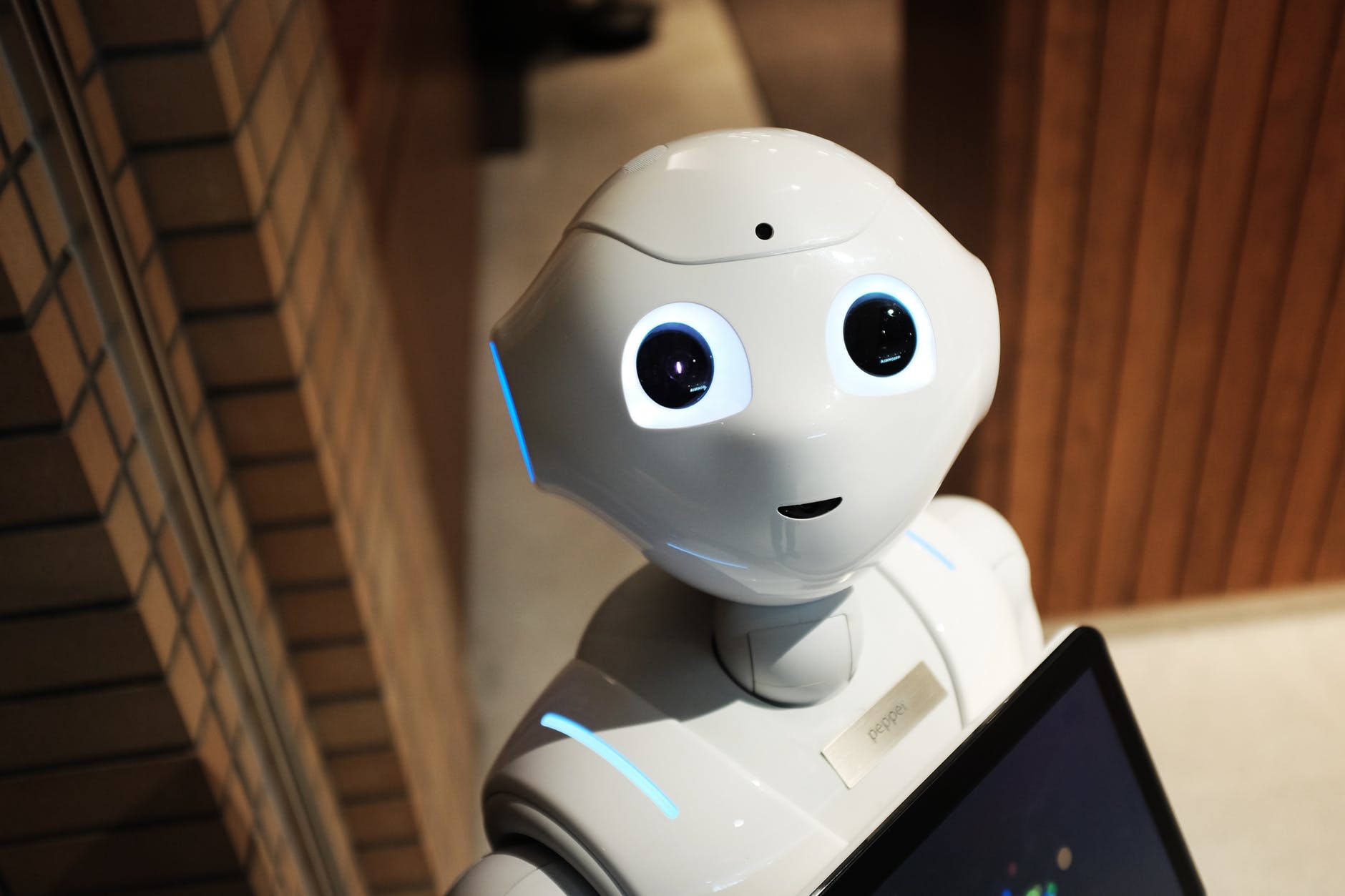
Today I came across this very good article focused on lessons learned, which could help anyone interested in these topics. It included a good mix of non-technical problems.
This is the link to the article, along with my commentary on the Top 3 items listed: https://www.cio.com/article/3429177/6-reasons-why-ai-projects-fail.html
Item #1:
The article discusses how the “problem” being evaluated was misstated using technical terms. At least some of these efforts are conducted “in a vacuum.” Given the cost and strategic importance of getting these early-adopter AI projects right, that surprised me.
In Sales and Marketing, you start the question, “What problem are we trying to solve?” and evolve that to, “How would customers or prospects describe this problem in their own words?” Without that understanding, you can neither vet the solution initially nor quickly qualify the need for it when speaking with customers or prospects. That leaves room for error when transitioning from strategy to execution.
More collaboration with Business likely would have helped. This was touched on at the end of the article under “Cultural challenges,” but the importance seemed to be downplayed. Lessons learned are valuable – especially when you are able to learn from the mistakes of others. This should have been called out early as a major lesson learned.
Item #2:
This second area had to do with the perspective of the data, whether that was the angle of the subject in photographs (overhead from a drone vs horizontal from the shoreline) or the type of customer data evaluated (such as from a single source) used to train the ML algorithm.
That was interesting because assumptions may have played a role in overlooking other aspects of the problem, or the teams may have been overly confident they could get the right results with the data available. In the examples cited, those teams identified the problems and took corrective action. A follow-up article describing the process used to determine the root cause in each case would be very interesting.
As an aside, from my perspective, this is why Explainable AI is so important. Sometimes, you just don’t know what you don’t know (the unknown unknowns). Understanding why and on what the AI is basing its decisions should help provide better-quality curated data up front, as well as identify potential drifts in the wrong direction while it is still early enough to make corrections without impacting deadlines or deliverables.
Item #3:
This didn’t surprise me, but it should be a cause for concern as advances are made at faster rates and organizations race to be first to market with an AI-based competitive advantage, potentially with less validation than ideal. The last paragraph under ‘Training data bias’ stated that based on a PWC survey, “only 25 percent of respondents said they would prioritize the ethical implications of an AI solution before implementing it.“
Bonus Item:
The discussion about the value of unstructured data was very interesting, especially when you consider:
- The potential for NLU (natural language understanding) products in conjunction with ML and AI.
- This is a great NLU-pipeline diagram from North Side Inc. in Canada, one of the pioneers in this space.
- The importance of semantic data analysis relative to any ML effort.
- The incredible value that products like MarkLogic’s database or Franz’s AllegroGraph provide over standard Analytics Database products.
- I personally believe the biggest exception to this assertion will be GPU databases (like OmniSci) that easily handle streaming data, can accomplish extreme computational feats well beyond traditional CPU-based products, and have geospatial capabilities that add an extra dimension of insight to the problem being solved.
Update: This is a link to a related article that discusses trends in areas of implementation, important considerations, and the potential ROI of AI projects: https://www.fastcompany.com/90387050/reduce-the-hype-and-find-a-plan-how-to-adopt-an-ai-strategy
This is an exciting space that will grow significantly over the next 3-5 years. The more information, experiences, and lessons learned are shared, the better it will be for everyone.
Ideas are sometimes Slippery and Hard to Grasp
I started this blog to be an “idea exchange,” as well as a way to pass along lessons learned to help others. Typical blog advice is to focus on one thing and do it well to build a following. That is especially important if you want to monetize the blog, but that is not and has not been my goal.
One thing that has surprised me is how different the comments and likes are for each post. Feedback from the last post was even more diverse and surprising than usual. It ranged from comments about “Siri vs Google” to feedback about Sci-Fi books and movies to Artificial Intelligence.
I asked a few friends for feedback and received something very insightful (thanks, Jim). He stated that he found the blog interesting but wasn’t sure of the objective. He went on to identify several possible goals for the last post. Strangely enough (or maybe not), his comments mirrored the type of feedback that I received. That pointed out an area for improvement, and I appreciated that as well as the wisdom of focusing on one thing. Who knows, maybe in the future…
This also reminded me of a white paper written 12-13 years ago by someone I used to work with. It was about how Bluetooth would be the “next big thing.” He had read an IEEE paper or something and saw potential for this new technology. He used the example of your toaster and coffee maker communicating so that your breakfast would be ready when you walk into the kitchen in the morning.
At that time, I had a couple of thoughts. Who cared about something that only had a 20-30-foot range when WiFi had become popular and had a much greater range? In addition, a couple of years earlier, I toured the Microsoft “House of the Future,” where everything was automated and key components communicated. But everything in the house was all hardwired or used WiFi – not Bluetooth. It was easy to dismiss his assertion because it seemed impractical. The value of the idea was difficult to quantify, given the use case provided.

Looking back now, I see that white paper as insightful. If it was visionary, he would have come out with the first Bluetooth speakers, car interface, or even phone earpiece and gotten rich, but it failed to present practical use cases that were easy enough to understand yet different enough from what was available at the time to demonstrate the real value of the idea. His expression of the idea was not tangible enough and, therefore, too slippery to grasp and value.
I believe that good ideas sometimes originate where you least expect them. Those ideas are often incremental – seemingly simple and sometimes borderline obvious, often building on another idea or concept. An idea does not need to be unique to be important or valuable, but it needs to be presented in a way that makes it easy to understand the benefits, differentiation, and value. That is just good communication.
One of the things I miss most from when my consulting company was active was the interaction between a couple of key people (Jason and Peter) and myself. Those guys were very good at taking an idea and helping build it out. This worked well because we had overlapping expertise and experiences, as well as complementary skills and perspectives. That diversity increased the depth and breadth of our efforts to develop and extend those ideas by asking the tough questions early and ensuring we could convince each other of the value.
Our discussions were creative, highly collaborative, and a lot of fun. We improved from them, and the outcome was usually commercially viable. As a growing and profitable small business, you must constantly innovate to differentiate yourself. Our discussions were driven as much by necessity as intellectual curiosity, and I believe this was part of the magic.
So, back to the last post. I view various technologies as building blocks. Some are foundational, and others are complementary. To me, the key is not viewing those various technologies as competing with each other. Instead, I look for potential value created by integrating them. That may not always be possible and does not always lead to something better, but occasionally it does, so to me, it is a worthwhile exercise. With regard to voice technology, I believe we will see more, better, and smarter applications of it – especially as real-time and AI systems become more complex due to the use of an increasing number of specialized chips, component systems, geospatial technology, and sensors.
While today’s smartphone interfaces would not pass the Turing Test or proposed alternatives, they are an improvement over more simplistic voice translation tools available just a few years ago. Advancement requires tools that understand context to make inferences. This brings you closer to machine learning, and big data (when done right) significantly increases that potential.
Ultimately, this all leads back to Artificial Intelligence (at least in my mind). It’s a big leap from a simple voice translation tool to AI, but it is not such a stretch when viewed as building blocks.
Now think about creating an interface (API) that allows one smart device to communicate with another, like the collaborative efforts described above with my old team. It’s not simply having a front-end device exchanging keywords or queries with a back-end device. Instead, it is two or more devices and/or systems having a “discussion” about what is being requested, looking at what each component “knows,” making inferences based on location and speed, asking clarifying questions and making suggestions, and then finally taking that multi-dimensional understanding of the problem to determine what is really needed.
So, possibly not true AI (yet), but a giant leap forward from what we have today. That would help turn the science fiction of the past into science fact in the near future. The better the smart system’s understanding and inferences, the better the results.
I also believe that an unintended consequence of these new smart systems is that they will likely make errors or have biases like humans as they become more human-like in their approach. Hopefully, those smart systems will be able to automatically back-test recommendations to validate and minimize errors. If they are intelligent enough to monitor results and suggest corrective actions when they determine the recommendation does not produce the desired results, they would become even “smarter.” There won’t be an ego creating a distortion filter about the approach or the results. Or maybe there will…
Many of the building blocks required to create these new systems are available today. But it takes vision and insight to see that potential, translate ideas from slippery and abstract to tangible and purposeful, and then start building something cool and useful. As that happens, we will see a paradigm shift in how we interact with computers and how they interact with us. It will become more interactive and intuitive. That will lead us to the systematic integration I wrote about in a big data/nanotechnology post.
So, what is the real objective of my blog? To get people thinking differently, foster collaboration and partnerships between businesses and educational institutions to push the limits of technology, and spark discussion about what others believe the future of computing and smart devices will look like. I’m confident that I will see these types of systems in my lifetime, and I believe this could happen within the next decade.
What are your thoughts?
The Future of Smart Interfaces
Recently, I was helping one of my children research a topic for a school paper. She was doing well, but the results she was getting were overly broad. So I taught her some “Google-Fu,” explaining how to structure queries to get better results. She replied that search engines should be smarter than that. I explained that sometimes the problem is that search engines look at your past searches and customize results as an attempt to appear smarter or to motivate someone to do or believe something.
Unfortunately, those results can be skewed and potentially lead someone in the wrong direction. It was a good reminder that getting the best results from search engines often requires a bit of skill and query planning, as well as occasional third-party validation.
Then the other day I saw this commercial from Motel 6 (“GasStation Trouble”) where a man has problems getting good results from his smartphone. That reminded me of seeing someone speak to their phone and get frustrated by the responses. His questions went something like this:
“Siri, I want to take my wife to dinner tonight, someplace that is not too far away, and not too late. And she likes to have a view while eating, so please look for something with a nice view. Oh, and we don’t want Italian food because we just had that last night.”
Just as amazing as the question being asked was watching him ask it over and over again in the exact same way, each time becoming even more frustrated. I asked myself, “Are smartphones making us dumber?” Instead of contemplating that question, I began to think about what future smart interfaces would or could be like.
I grew up watching Sci-Fi computer interfaces like “Computer” on Star Trek (1966), “HAL” on 2001: A Space Odyssey (1968), “KITT” from Knight Rider (1982), and “Samantha” from Her (2013). These interfaces had a few things in common:
- They responded to verbal commands.
- They were interactive – not just providing answers, but also asking qualifying questions and allowing for interrupts to drill down or enhance the search (e.g., with pictures or questions that resembled verbal Venn diagrams).
- They often suggested alternative queries based on intuition. That would have been helpful for the gentleman trying to find a restaurant.

Despite having 50 years of science fiction examples, we are still a long way off from realizing the goal of a truly intelligent interface. Like many new technologies, they were originally envisioned by science fiction writers long before they appeared in science.
A spectrum of common beliefs about modern interfaces seems to exist. On one end, some products make visualization easy, facilitating understanding, refinement, and drill-down of data sets. Tableau is an excellent example of this type of easy-to-use interface. At the other end of the spectrum, the emphasis is on back-end systems – robust computer systems that digest huge volumes of data and return the results to complex queries within seconds. Several other vendors offer powerful analytics platforms. In reality, you need a strong front end and back end to achieve the full potential of either.
But there is so much more potential…
I predict that within the next 3 – 5 years, we will see business and consumer interface examples (powered by AI and Natural Language Processing, or NLP) that are closer to the verbal interfaces from those familiar Sci-Fi shows (albeit with limited capabilities and no flashing lights).
Within the next 10 years, I believe we will have computer interfaces that understand the request (not just the string of words), intuit our needs, and quickly and easily generate correct answers. While this is unlikely to be at the level of “The world’s first intelligent Operating System” envisioned in the movie “Her,” and probably won’t even be able to read lips like “HAL,” it should be much more like HAL and KITT than like Siri (from Apple) or Cortana (from Microsoft).
Siri was groundbreaking consumer technology when it was introduced. Cortana seems to have taken a small leap ahead. While I have not mentioned Google Now, it is somewhat of a latecomer to this consumer smart interface party, and in my opinion, it is behind both Siri and Cortana.
So, what will this future smart interface do? It will need to be very powerful, harnessing a natural language interface on the front end with an extremely flexible and robust analytics interface on the back end. The language interface will need to take a standard question (in multiple languages and dialects) – just as if you were asking a person – deconstruct it using Natural Language Processing, and develop the proper query based on the available data. That is important, but it only gets you so far.
Data will come from many sources – things that we consider today with relational, object, graph, and NoSQL databases. Structured and unstructured data with inconsistent formats must be joined and filtered quickly and accurately. In addition, context will be more important than ever. Pictures and videos could be scanned for facial recognition, location (via geotagging and image searches), and, in the case of videos, analyze speech and background noises. Relationships will be identified and inferred based on a variety of sources, using both data and metadata. Sensors will collect data from almost everything we do and (someday) wear, providing both content and context.
Stylometry will identify outside content likely related to the people involved in the query and provide further context about interests, activities, and even biases. This is how future interfaces will truly understand (not just interpret), intuit (so it can determine what you really want to know), and then present results that may be far more accurate than we are used to today. Because the interface is interactive, it will allow you to organize and analyze subsets of data quickly and easily.
So, where do I think that this technology will originate? I believe that it will be adapted from video game technology. Video games have consistently pushed the envelope over the years, driving the need for higher-bandwidth I/O capabilities in devices and networks, better and faster graphics capabilities, and larger and faster storage (which ultimately led to flash memory and even Hadoop). Animation has become very lifelike and will someday be created with a few simple commands. Games are becoming more responsive to input from multiple sources, and may someday use things like eye movement for guidance. It is not a stretch to believe that the next generation of smart interfaces will come from this direction or something similar, like leading-edge defense technology (rather than from the evolution of current smart interfaces).
Someday, it may no longer be possible to “tweak” results through the use or omission of keywords, quotation marks, and flags. Additionally, it may no longer be necessary to understand special query languages (SQL, NoSQL, SPARQL, etc.) and syntax. We won’t have to worry as much about incorrect joins, spurious correlations, and biased result sets. Instead, we will be given the answers we need – even if we don’t realize that this was what we needed in the first place – which will likely be driven by AI. At that point, computer systems may appear nearly omniscient.
When this happens, parents will no longer need to teach their children “Google-Fu.” Those are going to be interesting times indeed.

