motivation
The Power of Storytelling
The discussion of data and goals in business is very common. Unfortunately, it is so common that it becomes routine. There is no heart, no excitement, and, generally, a lack of real motivation that limits the likelihood of success.

Stories evoke emotions, and emotions often trump logic when it comes to getting buy-in and creating excitement. Stories also help with visualization, and visualizing success is proven to enhance goal achievement. That leads to mutual success. Just think about the power of TED Talks to help with the understanding and retention of ideas.
Steve Jobs realized that people are drawn to engaging stories that evoke emotion. He created relatable scenarios that helped people understand the benefits of a technologically advanced solution without having to dive deep into the technology. He spoke about things that were fun, exciting, and useful. He was visionary, but just as important, he was able to share that vision and create demand. Relatability and engagement, when done right, create an emotional attachment that drives action.
When my team and I were selling a leading-edge vector analytics database years ago, our Marketing team and other experts wanted us to focus on what later became known as “speeds and feeds.” Our product was more advanced than the competitors’, but our message was undifferentiated. That is not a good place to start when your competitors are larger and better known.
I created a weekly webinar that we called “Why Fast Matters.” We started by discussing common issues around the complexity and inflexibility of Star Schemas, Fact Tables, pre-aggregation, specialized hardware, and more. The focus was on agility that created a tangible business advantage while saving money. One of the stories I would tell was around a beautiful, multi-layered cake. It is a thing of beauty, taking a lot of time and skill to create. It was also fragile and expensive.
The story concluded like this:
“Now, picture yourself taking a bite of that amazing cake with your eyes closed. Think about how rich, flavorful, and amazing it is. Then someone hands you a fork, and you take another bite. It is just as amazing. You open your eyes and see a plated piece of the amazing layer cake alongside a cupcake. They were both delicious, and with your eyes closed, the results were the same. But one was complex and fragile, and the other was simple, quick, and inexpensive. There is a time and place for each, but when you are betting your success on an outcome, do you really care how you get there?”
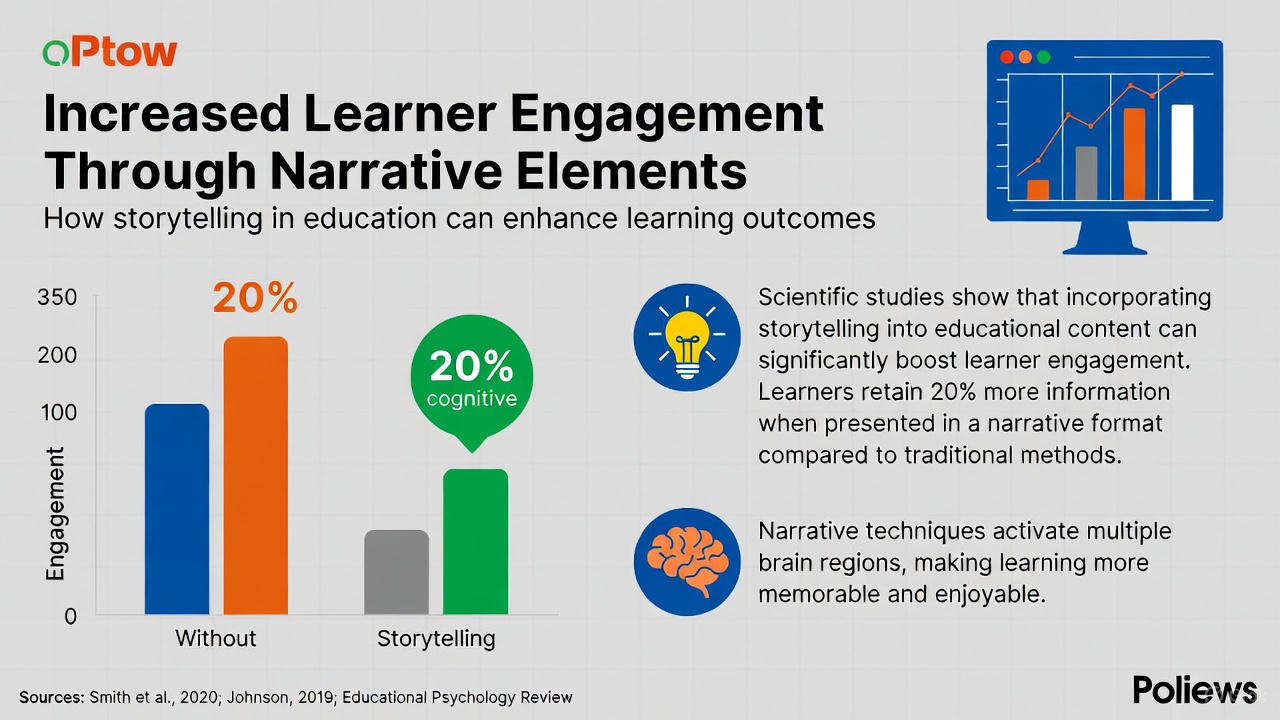
We closed with a brief explanation of the technology, real-life proof points, and a call to action to prove its effectiveness in their environment using their data. The close helped demonstrate that this was not just a made-up story, but rather, something that could become their own success story. This was a straightforward approach to getting people to try something they might never have considered otherwise.
Essentially, you are shifting the audience’s mindset from how something gets done (means objective) to what matters and why it needs to be done (fundamental objective). People tend to have preconceived ideas about how the solution should work, often based on what they are familiar with. Once the audience begins to visualize a desirable outcome, they become more open to different approaches.
I have successfully used these approaches with more complex products, such as an advanced Kubernetes platform, object databases, a multi-platform data integration product, and the world’s first commercial JDBC driver. It is also an effective way to motivate teams. Create a vision of the successful execution of a plan, how good it feels to achieve your goals, and what it could mean for each person—an area they develop as their minds elaborate and personalize the story.
Some of the most effective and engaging people that I have known are skillful storytellers. Not everything has to be a story, but when leveraged at the right time, it can mean the difference between moving closer to your goal and being just one of many ideas or solutions.
You may not be the next Steve Jobs (I’m certainly not), but you could easily stand out from your peers and competition. Share your story in the comments below!
Success is a Mental Game
This assertion is as true in business as in sports, individually and in teams. So, let’s break it down.

When I watch my local football team, I occasionally see a shift in facial expressions from excitement to frustration – often right before the end of the first half. Sometimes, they recover during halftime and come out renewed and ready to win, but the “gloom and doom” expressions usually translate into suboptimal performance and mistakes. It is frustrating because you know they have the talent to win.
The same thing happens in business – especially in Sales. Sometimes it occurs in the middle of a sales cycle, similar to the example above. Unfortunately, too many people allow a few data points to determine their future trajectory. Why is that?
Whether you own a company or manage a group of people, good leaders aim to optimize their workforce by balancing factors that result in happy and loyal employees doing their best for themselves, their customers, and their company. Many motivational theories exist, such as Expectancy Theory, Reinforcement Theory, the Role of Instrumentality, Intrinsic vs. Extrinsic Motivation, and more. Since one size rarely fits all, the challenge becomes an effort of reward-focused personalization, which can be a lot of work.
People will often win or lose before they even start. Their negativity, self-doubt, and anticipation of failure become a self-fulfilling prophecy. This post focuses on self-motivation, attitude, mindset, and creating the habits that lead to better success.
Below are four simple questions that someone should ask themselves when they question their ability to succeed in a position, company, or industry. There are always many ways to point the finger of blame elsewhere, but the first step should be to look in the mirror.
- Do you believe that you can win where you are today? If not, why are you still there? Customers and prospects can sense insincerity, so if you don’t believe in yourself, you shouldn’t expect them to believe in you. Maybe the company is terrible, and everyone is failing. If that is true, then it is probably time to look elsewhere.
- What have you learned from past successes and failures, and how have you adapted based on those lessons learned?
- What are some early indicators of success or failure that you have identified? Are you adapting to the situation if you run into those indicators now? It could be that the best approach is to cut your losses on this attempt and move to the next sooner rather than later (i.e., qualify out quickly).
- What are you doing to improve your skills? It is funny how small, continuous improvement efforts lead to a greater sense of confidence. Greater confidence often translates to increased success.
I have found that consistently doing the right things is the best way to maximize my success. Start developing habits and routines that have led to winning in the past, but don’t expect them to work forever. Everything changes, and you should change, too. Look for things that are working for others, try them out, and if they work, incorporate them into your routines.
Success truly is a mental game, and everyone can win. The person who continues to win over time is the person who does not get stuck in time. Be curious, get excited, and adapt. And once you get there, start helping others. Having mentors is nice, but it is also great to become one.
As the saying goes, The rising tide lifts all boats. Winning can be a team sport, but it begins with individual contributors having winning attitudes. Unfortunately, the same can be said for losing, so decide now what you want and go forward with energy and confidence.
Interesting Article about ADHD and Creativity
This “pocket” story is from Scientific American, originally published on March 5, 2019. The Creativity of ADHD.
Over the years, I have found that some of the most interesting, creative, and effective CEOs have ADHD-like tendencies. Strangely, they may not even be aware that they have it. Hyperfocus can be incredibly effective when attached to a driven person.

Below are links to a couple of posts that make these concepts and their benefits tangible:
These are examples of why it is best to look beyond labels, lay your preconceived notions aside, and explore each individual’s potential to contribute. The best managers and leaders tend to have this ability.
And if you want to take that a step further, let it guide you in finding the best approach to teaching, coaching, and motivating your team members. It may take a little extra effort, but the results are amazing.
It’s not Rocket Science – What you Measure Defines how People Behave
I previously wrote a post titled “To Measure is to Know.”

The other side of the coin is that what you measure defines how people behave. This is an often forgotten aspect of Business Intelligence, Compensation Plans, Performance reviews, and other key areas in business. While many people view this topic as “common sense,” based on the numerous incentive plans you run across as a consultant and compensation plans you submit as a Manager, that is not the case.
Is it wrong to have people respond by focusing on specific aspects of their job that they are being measured on? That is a tricky question. This simple answer is “sometimes.” This is ultimately the desired outcome of implementing specific KPIs (key performance indicators), OKRs (objectives and key results), MBOs (Management by Objectives), and CSAT (Customer Satisfaction), but it doesn’t always work. Let’s dig into this a bit deeper.
One prime example is something seemingly easy yet often anything but – Compensation Plans. When properly implemented, these plans drive organic business growth through increased sales, revenue, and profits (three related items that should be measured). This can also drive steady cash flow by closing deals faster and within specific periods (usually months or quarters) and focusing on models that create the desired revenue stream (e.g., perpetual license sales versus subscription license sales versus SaaS subscription sales). What could be better than that?
Successful salespeople focus on the areas of their comp plan where they have the greatest opportunity to make money. Presumably, they are selling the products or services that you want them to based on that plan. MBO and OKR goals can be incorporated into plans to drive toward positive outcomes that are important to the business, such as bringing on new reference accounts. Those are forward-looking goals that increase future (as opposed to immediate) revenue. In a perfect world, with perfect comp plans, these business goals are codified and supported by motivational financial incentives.
Some of the most successful salespeople are the ones who primarily care only about themselves (although not at the expense of their company or customers). They are in the game for one reason—to make money. Give them a well-constructed plan that allows them to win, and they will do so in a predictable manner. Paying large commission checks should be a goal for every business because properly constructed compensation plans mean their own business is prospering. It needs to be a win-win design.
However, suppose a salesperson has a poorly constructed plan. In that case, they will likely find ways to personally win with deals inconsistent with company growth goals (e.g., paying a commission based on deal size but not factoring in profitability and discounts). Even worse, give them a plan that doesn’t provide a chance to win, and the results will be uncertain at best.
Just as most tasks tend to expand to use all the time available, salespeople tend to book most of their deals at the end of whatever period is used. With quarterly payment cycles, most of the business tends to book in the final week or two of the quarter, which is not ideal from a cash flow perspective. Using shorter monthly periods may increase business overhead. Still, the potential to level out the flow of booked deals (and associated cash flow) from salespeople working harder for that immediate benefit will likely be a worthwhile tradeoff. I pushed for this change while running a business unit, and we began seeing positive results within the first two months.
What about motiving Services teams? What I did with my company was to provide quarterly bonuses based on overall company profitability and each individual’s contribution to our success that quarter. Most of our projects used task-oriented billing, where we billed 50% up-front and 50% at the time of the final deliverables. You needed to both start and complete a task within a quarter to maximize your personal financial contribution, so there was plenty of incentive to deliver and quickly move to the next task. As long as quality remains high, this is a good thing.
We also factored in salary costs (i.e., if you make more than you should be bringing in more value to the company), the cost of re-work, and non-financial items that were beneficial to the company. For example, writing a white paper, giving a presentation, helping others, or even providing formal documentation on lessons learned added business value and would be rewarded. Everyone was motivated to deliver quality work products in a timely manner, help each other, and do things that promoted the growth of the company. My company prospered, and my team made good money to make that happen. Another win-win scenario.
This approach worked very well for me and was continually validated over several years. It also fostered innovation because the team was always looking for ways to increase their value and earn more money. Many tools, processes, and procedures emerged from what would otherwise be routine engagements. Those tools and procedures increased efficiency, consistency, and quality. They also made it easier to onboard new employees and incorporate an outsourced team for larger projects.
Mistakes with comp plans can be costly – due to excessive payouts and/or because they are not generating the expected results. Backtesting is one form of validation as you build a plan. Short-term incentive programs are another. Remember, without some risk, there is usually little reward, so accept that some risk must be taken to find the point where the optimal behavior is fostered and then make plan adjustments accordingly.
It can be challenging and time-consuming to identify the right things to measure, the proper number of things (measuring too many or too few will likely fall short of goals), and provide the incentives to motivate people to do what you want and need. But, if you want your business to grow and be healthy, it must be done well.
This type of work isn’t rocket science and is well within everyone’s reach.
The People who Move the Dial
Whether you are a business owner, a manager, or a parent, finding the right way to motivate your team is important to maximize performance and results. Each person is a little bit different and is looking for something a little different, and once you figure out what is important, you can get the most out of them. Not everyone wants to be a star – which is usually OK (as long as they have the right attitude, skills, and work ethic and add value).
Then there are those exceptional people who want to be the best, are willing to take risks, work hard, and “think differently” in order to succeed. These people are self-motivated and continue to raise the bar for the entire team as part of a high-performance culture. These are the people who move the dial.
I’ve had the pleasure of being taught by people like this, working with people like this, managing people like this, and helping a few become people like this. Occasionally, you have a few special people working together, which is when amazing things happen. These people are generally curious and wonder, “Why not?” They are confident (not arrogant), intelligent, and passionate about success.
Back when I was funding research projects, I had a trip scheduled to Philadelphia. I asked a friend at a local hospital to make an introduction to meet someone from “CHOP” (the Children’s Hospital of Philadelphia). They were always ranked as a top hospital and research facility, and I wanted to learn why. The introduction was made, and a lunch meeting was scheduled. I was looking forward to the meeting but had no real expectations (other than being asked for money).
To my surprise, a half-dozen people in a large conference room with a catered lunch greeted me. They presented on their various projects (which was unusual as they did not know me, and possibly worse, knew I was involved with research projects at other facilities). Everyone in the room was amazing, and the department head (Dr. Terri Finkel) was one of the most impressive people I had ever met.
After lunch, I told Dr. Finkel I appreciated the lunch, but wondered why she went to so much trouble when I never promised to do anything in return. She smiled and replied, “We love what we do and love having the opportunity to talk about our projects and passions to people with similar interests.” That made a huge impression on me, and within a few months, we were funding projects using a unique approach that Terri suggested. The approach was in response to my question about getting the most “bang for my research dollars” (thinking more like a businessperson than a researcher).
Over the next few years, this team did incredible things that had a tangible impact on Pediatric Rheumatology and the quality of life for children with Juvenile Arthritis. Many great researchers were involved, but two of them really stood out (Drs. Sandy Burnham and Randy Cron – both continue to do amazing things to this day). The results of this team were so much better than everyone else we supported. They provided a huge return on my investment, and I can take pride knowing that I made a difference through these efforts.
To me, it came back to the basics. Intelligent people who were passionate about making a difference, confident enough to be challenged, and led by a visionary person who saw an opportunity to motivate her team and help me achieve my goals. It’s the best type of win-win scenario possible.
These people moved the dial back then and continue to move it today. It is a thing of beauty to watch stars like this perform. These people shine twice as bright and guide others toward success. And you can find them in every industry and every walk of life.
 Where Ideas, Experiences, and Lessons Learned Intersect