optimization
Innovation, Optimization, and Business Continuity
Originally posted on LinkedIn.com/in/chipn

Recently I read that the U.S. is experiencing a significant jump in unemployment claims. Much of that is understandable given the recent decline in many businesses, concerns about how long this crisis may last, and the need to protect ongoing viability by business owners and executives. But, in the near future, business activity will resume, and it will be very important that businesses maintain a business pipeline and retain qualified staff to deliver their products and services.
Now could be the ideal time to challenge your team to focus on improving your business. Look at business processes and identify:
- What works well today? Are you able to identify what makes it work so well? Simplicity, automation, and lack of friction are typical attributes of effective and efficient systems and processes that positively impact any business.
- What could be improved and why? Specific examples and real data will help quantify the impact and support prioritizing follow-up activities.
- What is missing today?
- Good ideas have likely been raised in the past, so why not revisit them?
- What are competitors or businesses in other segments doing that could be helpful?
- Brainstorm and consider something completely new that could help your business.
- Start a list, describe the needs and benefits, provide specific examples, and then estimate each idea’s potential impact and time to value.
- Take the ideas with the greatest promise and estimate the cost, people/skills needed, and other dependencies to see how they stack up.
Something else to consider is the creation or updating of Business Continuity Plans. Now is a perfect time – while everything is fresh in the minds of your team. Not only will this help in the future, but there could also be several useful ideas for the coming weeks.
For example, do you have sufficient documentation for someone who is not an expert in your business to take over with a relatively small ramp-up time? How will you maintain quality and control of those processes? Are your plans stored in a repository that is accessible yet secure outside of your organization? Do you have the processes and tools to collect documentation and feedback on things that did not work as documented or could be improved? Are your Risk Management plans and mitigation procedures up-to-date and adequate?
Investing in your business during this slowdown could have many benefits, including maintaining employee morale, enhancing employee and customer loyalty, retaining employees and their expertise and skills, and increasing sustainability and long-term growth potential.
The Downside of Easy (or, the Upside of a Good Challenge)
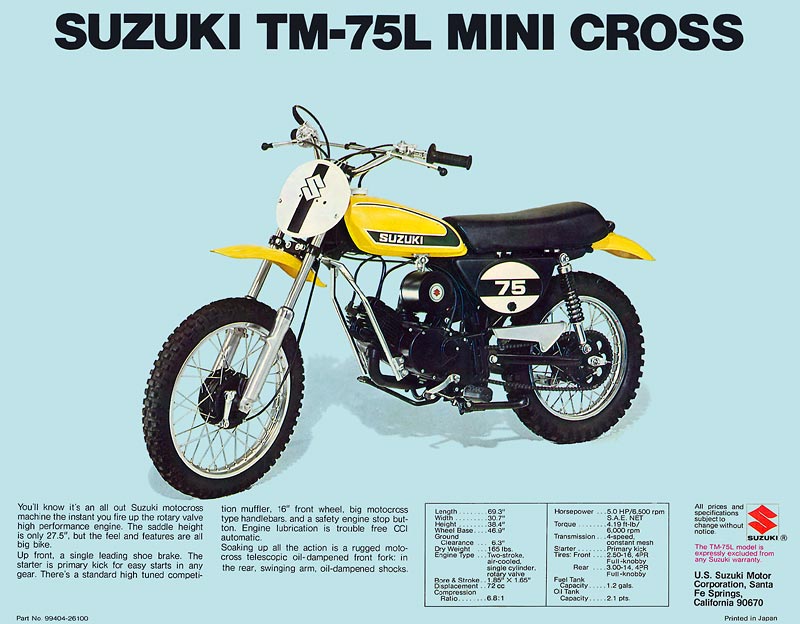
As a young boy, I was “that kid” who would take everything apart, often leaving a formerly functional alarm clock in a hundred pieces in a shoe box. I loved figuring out how things worked and how components worked together as a system. When I was 10, I spent one winter completely disassembling and reassembling my Suzuki TM75 motorcycle in my bedroom (my parents must have had so much more patience and understanding than I do as a parent). It was rebuilt by spring and ran like a champ. Beginners luck?
By then, I was hooked – I enjoyed working with my hands and fixing things. That was a valuable skill to have while growing up, as it provided an income and led to the first company I started at the age of 18. There was always a fair degree of trial and error involved with learning, but experience and experimentation led to simplification and standardization. That became the hallmark of the programs I wrote, and later, the application systems I designed and developed. It is a trait that has served me well over the years.
Today, I still enjoy doing many things myself, especially if I can spend a little time and save hundreds of dollars (which I usually invest in more tools). Finding examples and tutorials on YouTube is usually easy, and after watching a few videos for reference, the task is generally manageable. There is also a sense of satisfaction that comes with a job well done. And most of all, it is a great distraction from everything else that keeps your mind racing at 100 mph.
My wife’s 2011 Nissan Maxima needed a Cabin Air Filter, and instead of paying $80 again to have this done, I decided to do it myself. I purchased the filter for $15 and was ready to go. This shouldn’t take more than 5 or 10 minutes. I went to YouTube to find a video, but no luck. Then, I started searching various forums for guidance. There were plenty of posts complaining about the cost of replacement, but not much about how to do the work. I finally found a post that showed where the filter door was. I could already begin to feel that sense of accomplishment I was expecting in the next few minutes.

But fate and apparently a few sadistic Nissan Engineers had other plans. First, you needed to be a contortionist in order to reach the filter once the door was removed. Then, the old filter was nearly impossible to remove. And then, once the old filter was removed, I realized that the width of the filter entry slot was approximately 50% of the width of the filter. Man, what a horrible design!
A few fruitless Google searches later, I was more determined than ever to make this work. I tried several things and ultimately found a way to fold the filter where it was small enough to get through the door and would fully open once released. A few minutes later, I was finally savoring my victory over that hellish filter change.
This experience brought back memories of “the old days.” In 1989, I was working for a marketing company as a Systems Analyst and was assigned the project to create the “Mitsubishi Bucks” salesperson incentive program. Salespeople would earn points for sales and could later redeem those points on Mitsubishi Electronics products. It was a very popular and successful incentive program.
Creating the forms and reports was straightforward, but tracking the points (which included generating past reports and adjusting activity from previous periods) presented a problem. I finally considered how a banking system would work (remember, there were no books on the topic before the Internet, so this was essentially reinventing the wheel) and designed my own. It was very exciting and rock solid. Statements could be accurately reproduced at any time, and an audit trail was maintained for all activity.
Next, I needed to create validation processes and a fraud detection system for incoming data. This was rock solid, but instead of being a good thing, it became a real headache and source of frustration.
Salespeople would not always provide complete information, might have sloppy penmanship, or engage in other legitimate but unusual practices (such as bundling and adjusting prices among items in the bundle). Despite that, they expected immediate rewards, and having their submissions rejected apparently created more frustration than incentive.
So, I was instructed to turn the fraud detection dial way back. I let everyone know that while this would minimize rejections, it would increase the potential for fraud and the volume of rewards. I created a few reports to identify potentially fraudulent activity. It was amazing how creative people could be when trying to cheat the system, and how you could quickly identify patterns based on similar types of activities. By the third month, the system was trouble-free.
It was a great learning experience from beginning to end. It ran for several years after I left – something I know because I was still receiving the sample mailing with new sales promotions and “Spiffs” (sales incentives) every month. My later reflection made me wonder how many things are not being created or improved today because it is easier and less risky to follow an existing template.
We used to align fields and columns in byte order to minimize record size, overload operators, and other optimizations to maximize space utilization and performance. Our code was optimized for maximum efficiency because memory was scarce and processors were slow. Profiling and benchmarking programs brought you to the next level of performance. In a nutshell, you were forced to understand and become proficient with the technology used out of necessity. Today, these concepts have become somewhat of a lost art.
There are many upsides to being easy.
- My team sells more and closes deals faster because we make it easy for our customers to buy, implement, and start receiving value from the software we sell.
- Hobbyists like me can accomplish many tasks after watching just a short video or two.
- People are willing to try things they may not have tried before if getting started were not so easy.
However, there may also be downsides for innovation and continuous improvement, simply because ‘easy’ is often considered ‘good enough‘.
What will the impact be on human behavior once Artificial Intelligence (AI) becomes a reality and is in everyday use? It would be great to look ahead for 25, 50, or 100 years and see the full impact of emerging technologies, but my guess is that I will see many of the effects in my own lifetime.
Profitability through Operational Efficiency
In my last post, I discussed the importance of proper pricing for profitability and success. As most people know, you increase profitability by increasing revenue and/or decreasing costs. However, cost reduction does not necessarily mean slashing headcount, wages, benefits, or other factors that often negatively affect morale and cascade negatively on quality and customer satisfaction. There is often a better way.

The best businesses generally focus on repeatability and reliability, realizing that the more you do something – the better you should get at doing it well. You develop a compelling selling story based on past successes, develop a solid reference base, and have identified the sweet spot from a pricing perspective. People keep buying what you are selling, and if your pricing is right, money is available at the end of the month to fund organic growth and operational efficiency efforts.
Finding ways to increase operational efficiency is the ideal way to reduce costs, but it takes time and effort. Sometimes this is realized through increases in experience and skill. But, often optimization occurs through standardization and automation. Developing a system that works well, consistently applying it, measuring and analyzing the results, and then making changes to improve the process. An added benefit is that this approach increases quality, making your offering even more attractive.
Metrics should be collected at a “work package” level or lower (e.g., task level), which means they are related tasks at the lowest level that produce a discrete deliverable. This project management concept works whether you are manufacturing something (although a Bill of Materials may be a better analogy in this segment), building something, or creating something. This allows you to accurately create and validate cost and time estimates. When analyzing work at this level of detail, it becomes easier to identify ways to simplify or automate the process.
When I had my company, we leveraged this approach to win more business with competitive fixed-price project bids that provided healthy profit margins for us while minimizing risk for our clients. Bigger profit margins allowed us to invest in our own growth and success by funding ongoing employee training and education, innovation efforts, and international expansion, as well as experimenting with new things (products, technology, methodology, etc.) that were fun and often taught us something valuable.
Those growth activities were only possible because we focused on doing everything as efficiently and effectively as possible, learning from everything we did – good and bad, and having a tangible way to measure and prove that we were constantly improving.
Think like a CEO, act like a COO, and measure like a CFO. Do this and make a real difference in your own business!
 Where Ideas, Experiences, and Lessons Learned Intersect