
Career
Is Your Sales Team Killing Deals in the First 30 Seconds?
How many times has a stranger called you or filled your inbox with a message that starts with their name and a generic company intro? Did it make you want to pay attention, or did you immediately hit “delete”?

For executives overseeing high-stakes enterprise sales, this isn’t just an annoyance—it’s a performance barrier. If your team is stuck in a “Me and We” mentality, they are burning valuable leads before discovery even begins.
The Problem: You Can’t Win if You Don’t Get to Play
Most sales and marketing teams default to talking about themselves. They lead with their history and their product features. In enterprise sales, this is a fatal error.
Unless you are a dominant market leader, your prospects don’t care who you are or where you work; they care what you can do for them. Every second spent on your “About Us” slide is a second lost in identifying the prospect’s pain points.
The Cost of Misaligned Messaging
When your team uses “me-focused” messaging, the consequences are immediate:
· Low Engagement: Cold calls and emails are ignored because they lack immediate relevance.
· Stalled Demos: Prospects tune out during the “logo slide,” reducing the probability of real engagement and follow-on from this point on.
· Failed Discovery: Without quickly developing rapport and a focus on the prospect’s specific business and terminology, your team will never uncover the deep-seated issues required to close a complex deal.
The Solution: Use a “Prospect-First” Framework
To fix your pipeline performance, your team needs to pivot to a PIE-based approach that leverages your perspectives, insights, and expertise to prioritize the prospect’s desired outcomes. Help them visualize that better outcome, using their terminology and scenarios, with your solution.
1. Establish Immediate Rapport
Before the call, find a “hook”—a shared hobby, a mutual connection, or a specific business challenge they’ve mentioned in forums or job postings. Connection builds the rapport necessary for a successful discovery.
2. Lead with PIE (Perspective, Insight, Experience)
Instead of introducing your company, lead with the problems you solve. Help them answer the “why you?” question by demonstrating expertise and a proven solution.
· The Shift: Instead of saying “We are the leading Kubernetes platform,” try: “About half of the executives I meet are concerned about unplanned outages, spiraling costs, and security exposure. Have these been concerns for you?”
· The Result: This adds instant credibility without making the conversation about you. It forces the prospect to engage with their own problems if they are truly interested in finding a solution. If not, you both agree there is no fit right now and move on.
3. Skip the Ego, Show the Success
In your next demo, skip the logo page and the multiple feature pages. Move directly to a relevant customer case study from a similar industry. Discuss their specific issues and the measurable outcomes that must be achieved. This makes your solution relatable and positions your team as experts who can help, rather than just another vendor. Build rapport and earn that next meeting.
Audit your team’s outreach today. Are they leading with “We” or with “You”? If your messaging needs a strategic overhaul to better reach your future customers, contact me here. Let’s turn your sales messaging into a competitive advantage.
How is your team changing its approach to meet today’s better-informed yet more skeptical enterprise buyers? Let me know in the comments below.
Leading Next-Generation Sales Teams: The Mandate for Predictable Revenue

The sales landscape has fundamentally shifted. I keep reading posts and stories about AI replacing sales teams, and it may be for more commodity-type sales, but it will be some time before it replaces Enterprise sales teams. Building relationships and trust is the foundation for an executive to take a risk on your product, especially when it is critical to their success. AI is not yet at that level, and as behavior changes with every key release, building trust in AI will be challenging for many years to come. But today, AI can be a powerful enablement tool for your team when leveraged correctly.
Your prospects no longer need salespeople for information; they need us for Insight. They have done their research. They expect their time to be an investment, not a discovery exercise. Does your presence and knowledge project confidence and inspire trust? Does the prospect view you as someone interested in helping their business, or just someone trying to close a deal? Impress them, and you could earn the opportunity to dig deeper. Disappoint them, and good luck recovering.
Two years ago, I was selling to a Fortune 100 Financial Services company. I understood their business needs, and we met them easily. We demonstrated that we could take a key manual process that typically took 7 weeks to complete, automate it and maintain full compliance, and complete the task within 10 minutes. The SVP told me his priorities for selecting any new vendor were: 1 – Company Stability; 2 – Relationship with the Vendor; 3 – Product Quality; 4 – Product Value to their business; and 5 – Total Solution cost. Before selling their IP, the company fired the sales team, and the remaining execs stepped in and offered the deal at an even greater discount. It never sold because the executive team didn’t understand what mattered to this buyer. The company had a high-level relationship with the stakeholders, but lacked the trust and credibility that I had built over several months. This is one of the main reasons why I believe AI won’t take over Enterprise Sales anytime soon.
So, how do you get it right?
The question for every CRO or VP of Sales isn’t whether their team is busy, but whether their activity is revenue-focused and drives predictable, scalable results. There’s plenty of money to be made, but following the same old tired formulas seldom works.
For leaders aiming to build next-generation teams that deliver zero surprises in the forecast, the approach must be recalibrated around three core pillars: Strategic Preparation, High-Agency Coaching, and Outcome-Focused Messaging (“context”). It is much more than cold calling for two hours a day or having 5-10 meetings per week. Those things matter, but they are just activities if you are not targeting the right companies and people, or if your team blows it once you have found them. This will be a significant cultural shift for many companies.
Strategic Preparation: From “Discovery” to “Insight”
When a prospect books a meeting, they are giving us one of their most precious assets: time. If we treat that time as a standard discovery call, we set negative expectations, which signals the lack of perspective (the ‘P’ in PIE) and perceived value. This isn’t theory—it’s the PIE framework (Perspective, Insight, Experience) I’ve used for years to sell large deals, turn around at-risk customers, and scale teams.
The C-Suite Mandate: Accelerate deal velocity by focusing on specific quantifiable impact for your prospects, and increase win rates by targeting identifiable business pain.
- Come with an Understanding of their Market, Changes, and Competition. Before the first call, we must show we’ve already invested time in understanding their operational constraints, competitive pressures, and budget priorities. The goal is to move the conversation immediately from the tired, “What keeps you up at night?” to “We have seen [problem] with companies in your industry. Is that something you have experienced or have concerns about?”
- Long Discovery Calls or Presentations Typically Won’t Work. Customers are fatigued by generic questions. Every interaction must be purpose-driven and meaningful. If the call runs longer than planned, it must be because the conversation has become mutually valuable, not because the seller was ill-prepared and just kept talking.
- Discussions Must Be Targeted to the Problems They Are Most Likely Experiencing. This is where we leverage Insight (the ‘I’ in PIE). Use your background and AI to hypothesize the top three pain points before you dial. Our role is to validate these points, quantify the impact, and then introduce a Shared Vision of Success (our solution) anchored by measurable business outcomes.
Player-Coach: Enhancing Team Capabilities, Not Just Motivating Activity
If you are a sales leader who only focuses on closing your team’s most challenging deals, you are creating a dependency, not a capability. A Player-Coach must be accountable for the team’s numbers and its health. That can be a big job.
The C-Suite Mandate: Drive organic growth by building repeatable processes and cultivating high-agency talent.
- Not a One-Size-Fits-All Proposition. True coaching is not a template. It requires a methodical but human approach to diagnostics. That takes time, effort, and a genuine desire to help people grow.
- Identify Skills Gaps and Tailor Efforts. Test skills, identify gaps, and create targeted efforts to build skills that address someone’s specific deficiencies. This personalized attention builds the high-performance culture and accountability required to sustain long-term success.
- Leverage the Team – Role Playing and Team Reviews. We must create a culture where knowledge sharing and feedback loops are the norm. Leverage team reviews and structured role-playing to sharpen execution. This is how we transform luck into a predictable process.
Give teams the latitude to adjust their messaging and test approaches. Adapt messaging to business trends, changes in the competitive landscape, and changing terminology. Then, have your team share their experiences and findings (good and bad) for review, feedback, and refinement. Structured agility helps your team maintain its competitive edge.
The Leadership Mandate: Context Over Content
We are past the AI hype cycle. The C-Suite doesn’t care about the tool; they care about the ROI and the risk of poor execution. As leaders, we cannot just hand our teams a login and say, “Go use AI.” That’s a recipe for chaos and a quick erosion of professional credibility. We must lead by example.
We need to teach our teams that AI generates content (not always accurate), but humans provide context. The two work hand-in-hand.
- Do use AI to deepen your understanding of the prospect’s industry so you can become a true consultant. Use the technology to gain understanding and market intelligence and tie it to your Experience (the ‘E’ in PIE) as preparation before any call.
- Don’t use AI to automate a thousand bad emails. Mass communication is cheap; individualized insight is priceless.
- Do use AI to research the one hundred prospects that actually matter. Focused efforts yield significantly better results.
- Don’t use AI to fake expertise. This can quickly kill credibility, as any good consultant will tell you.
The “Million Dollar Deal“ isn’t won by a bot. A human wins it by understanding the nuances of the prospect’s business, building trust, and navigating the internal structure and politics. AI is simply the tool that clears the path so you can do that work faster and with better data. AI is leverage, not a crutch.
Call to Action: Are You Building a Team or a Capability?
The next-generation sales leader understands that customer success is at the heart of everything we do. We win when they succeed. Your most valuable asset isn’t your pipeline—it’s the predictable capability of the individuals on your team. Consistently doing the right things is critical to success.
The challenge for every business leader today is this: Are you enabling your teams to sell like consultants, or are you still measuring them (and driving their behavior) on activity-based metrics? Focus on building intelligent and creative teams that deliver consistent results with zero surprises. It doesn’t happen overnight, but it is an investment in your future success.
Let’s discuss how we can implement the PIE framework and position your team to deliver scalable, organic growth.
Lessons Learned from GTM Consulting
For the past two years, I have performed part-time, contract go-to-market consulting. My wife had a surgery that went wrong 18 months ago, so I needed something that would allow me to take care of her, stay sharp, earn money, and help companies grow. What I encountered was quite different from what I expected, so I thought I would pass it along.

Most of the work was with small to midsize companies, but the problems and needs mirrored what I have encountered at larger companies. The main difference is that large companies tend to look to software to address problems. In contrast, smaller companies often lack the budget for what they view as a solution that increases complexity.
Here are my Top 5 findings:
- GTM plans are often developed at the highest levels, often in isolation, without market testing and validation.
- An interesting aside is that the company is often really seeking sales optimization but believes it is doing things “well enough” today and therefore needs to focus on new offerings and revenue streams.
- New perspectives on past performance and failures are well received but more surprising than anticipated. This leads to a better understanding of needs, which builds consensus moving forward.
- Sales teams are sometimes pitted against one another, rather than working together to help everyone achieve more (Coopetition – “A rising tide lifts all boats.”)
- Sometimes the competing team isn’t sales, but support. The team wants to help the customer (which is great), but works outside its defined scope instead of bringing in the services and sales teams to work jointly to solve the customer’s problem.
- Sales teams are focused on selling features rather than solving business problems.
- Training those teams on solution selling and understanding the prospect’s needs pays off.
- CRMs are not consistently used and often reflect idealized fiction rather than reality.
- Old, dead, or unqualified opportunities; lack of recent contact or interaction; deals that have slipped more than once; and a lack of understanding (company, needs, players, business environment) all point to an unrealistic pipeline.
- Sales management and teams are not leveraging AI to help focus their efforts.
- Conversely, they may view AI as a panacea, investing time and money in tools that supplement a strong team rather than focusing on strengthening the team.
Here are the related Lessons Learned:
- Selling is a byproduct of problem-solving. You can’t solve problems if you don’t know what they are. Every interaction with a prospect should focus on gathering information, building trust and relationships, and leveraging prior interactions to demonstrate that your solution will solve their problem and ease their pain.
- Here’s solution sales again. Teaching teams to ask better questions, listen more, and validate their understanding increases their standing with prospects.
- Identifying common business problems and describing how your product or service solves them should be the foundation of the plan.
- Perform market analysis. How do other companies describe those problems? Their terminology, often found in job postings by competitors and your target audience, can help create effective messaging that resonates. Work to become the natural fit for what your prospects are seeking and the problems they are likely dealing with.
- Individual contributors get paid to win, but sales management needs to create incentives for collaborative efforts that lead to both wins and ongoing customer growth.
- Paying sales teams for net new business only causes them to ignore install base expansion opportunities. And, if another vendor solves their problems, it is only a matter of time before they replace you.
- For one company, I convinced them to implement a 2% SPIV (like a SPIFF, but team-focused) for every team member who actively contributed to team improvement. SPIV payments were quarterly, and there was a running total so the team could see the fund growth. Initial indications of a positive impact are good.
- Another benefit of collaboration is that it helps teams focus on approaches that work due to ongoing testing and refinement. Collaboration also helps teams focus on a more accurate ICP (ideal customer profile). Sales management can then feed their findings back to Marketing to tailor and fine-tune their efforts.
- CRMs often either lack information or are full of wishful thinking. They focus on activities, and not progress and next steps.
- Using MEDPICC as a foundation for qualification is a much better start.
- Sales managers need to validate the information independently to ensure their teams are upfront and honest. Trust, coaching, and collaboration work together for the win.
- Chasing deals that are unlikely to close wastes valuable resources.
- AI is not a panacea, but it is very effective for research, market validation, prospecting, and meeting preparation.
- Going in prepared builds respect and credibility, saves time, and helps you quickly qualify prospects in or out.
- There may be opportunities to nurture prospects who have potential but aren’t qualified for immediate deals, seeding the pipeline for future opportunities. This could be a great place to leverage AI for personalized journeys with highly relevant curated content.
So, what are your thoughts? Have you seen some of these problems yourself? How did you handle them? Let me know in the comments below.
And if you are looking for assistance with your business, contact me.
The Power of Storytelling
Discussions of data and goals in business are common, but not always engaging. Worse, they become routine and are ignored. Without a vision, heart, and excitement, motivation wanes, and the likelihood of success diminishes.

Stories evoke emotions, and emotions often trump logic when it comes to getting buy-in and creating excitement. Stories help with visualization, and visualizing success has been shown to enhance goal achievement. Think about the power of good TED Talks to help you understand and retain ideas.
Steve Jobs realized that people are drawn to engaging stories that evoke emotion. He created relatable scenarios that helped people understand the benefits of a technologically advanced solution without having to dive deep into the technology. He spoke about things that were fun, exciting, and useful. He was visionary, but just as important, he could share that vision and create demand. Relatability and engagement, when done right, create an emotional attachment that drives action.
When my team and I were selling a leading-edge vector analytics database years ago, our Marketing team and other experts wanted us to focus on what later became known as “speeds and feeds.” Our product was faster and more advanced than our competitors’, but our message was undifferentiated from theirs. That is not a good place to start when your competitors are larger and better known.
I created a weekly webinar that we called “Why Fast Matters.” We started by discussing common issues around the complexity and inflexibility of Star Schemas, Fact Tables, pre-aggregation, specialized hardware, and more. The focus was on agility that created a tangible business advantage while saving money. One of the stories I would tell was around a beautiful, multi-layered cake. It is a thing of beauty, taking a lot of time and skill to create. It was also fragile and expensive.
The story concluded like this:
“Now, picture yourself taking a bite of that amazing cake with your eyes closed. Think about how rich, flavorful, and amazing it is. Then someone hands you a fork, and you take another bite. It is just as amazing. You open your eyes and see a plated piece of the amazing layer cake alongside a cupcake. They were both delicious, and with your eyes closed, the results were the same. But one was complex and fragile, and the other was simple, quick, and inexpensive. There is a time and place for each, but when you are betting your success on an outcome, do you really care how you get there?”
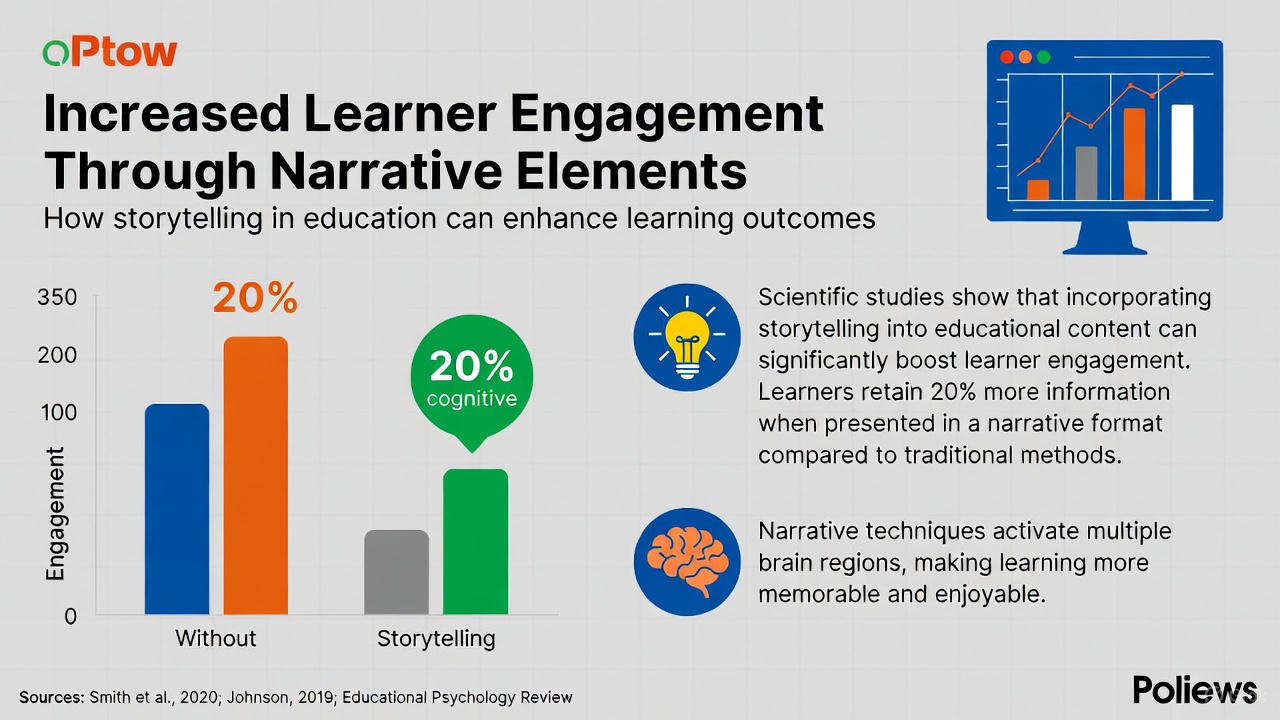
We closed with a brief explanation of the technology, real-life proof points, and a call to action to prove its effectiveness in their environment using their data. The close helped demonstrate that this was not just a made-up story, but rather, something that could become their own success story. This was a straightforward approach to getting people to try something they might never have considered otherwise.
Essentially, you are shifting the audience’s mindset from how something gets done (means objective) to what matters and why it needs to be done (fundamental objective).
People tend to have preconceived ideas about how the solution should work, often based on what they are familiar with. Once the audience visualizes their desired outcome, they become more open to different approaches.
I have successfully used these approaches with more complex products, such as an advanced Kubernetes platform, object databases, a multi-platform data integration product, and the world’s first commercial JDBC driver. It is also an effective way to motivate teams. Create a vision of successfully executing a plan, how good it feels to achieve your goals, and what it could mean for each person—an area they develop as their minds elaborate and personalize the story.
Some of the most effective and engaging people that I have known are skillful storytellers. Not everything has to be a story, but when you use it at the right time, it can mean the difference between moving closer to your goal and being just one of many ideas or solutions.
You may not be the next Steve Jobs (I’m certainly not), but you could easily stand out from your peers and competition. Share your story in the comments below!
Getting Your Piece of the PIE

Whether you are selling, consulting, or managing, a foundational approach has consistently helped me succeed. I call it PIE – an acronym that stands for Perspective, Insight, and Experience. When applied effectively, these three elements provide a robust framework for solving problems, winning clients, and leading teams to remarkable outcomes.
Over the years, I’ve taught this methodology to my teams, and it’s been a critical driver of their success. While I usually reserve it for a small circle, I believe it’s time to share it more broadly. I built this methodology and other structured approaches/methodologies as part of developing high-performance teams. They provide the foundation for rapid qualification and faster wins.
Approaches like these are required for consistent, reliable, and scalable organic growth
Perspective – Broaden Your View to Stand Out:
To truly differentiate yourself in any field, you need a broad, informed perspective. This involves understanding the larger environment in which you operate: the market, competitive landscape, customer needs, technological advances, and regulatory shifts. A dynamic perspective evolves as you gain new experiences and encounter different approaches to solving similar problems across other businesses or industries.
This requires a broad understanding of the environment, market, competitive landscape, legal and technological changes, and more. It also grows and changes as you experience new and different things—especially when different approaches to similar problems are taken. It is how you start to stand out in the eyes of your prospects, customers, and team.
Earlier in my career, I taught technical courses. Usually, two or three people stood out. At least one wanted to prove they were better and smarter, and usually, one discussed strange approaches to solving problems. When you dug into those strange approaches, you often found something creative and brilliant coming from a different perspective on the problem. Curiosity and a desire to improve often drove their innovative approaches.
In business, perspective becomes your differentiator. When you can see things from a broader, more holistic viewpoint, you position yourself as someone who can offer more than just solutions—you offer foresight, adaptability, and creativity. You become the lighthouse that guides your clients around tricky situations and to a better destination.
Products create interest. Perspective creates confidence.
How to Apply This:
- Stay informed about industry trends, not just within your niche but across related sectors.
- Engage with diverse thinkers, challenge your assumptions, and be open to unconventional ideas.
- Regularly reassess your strategies in light of new information or shifts in the business environment.
Here is a post that discusses perspective as the starting point.
Insight – The Power of Seeing What Others Don’t:
Insight is one of the most valuable assets you can bring to any business interaction. Too often, people are trapped by existing tools, processes, and perceived constraints. Insight lets you cut through these limitations and spot opportunities for improvement that others miss.
Here’s where perspective plays a role in insight: the broader your view, the better you can generate actionable insights that can transform a business. My most successful deals and projects were not won because I followed the status quo—they were won because I brought fresh ideas to the table. By reframing the problem and presenting a path to a better solution, I created value that competitors cannot match.
How to Apply This:
- Question assumptions and typical approaches. Ask yourself, “Is this really the best way to solve the problem?”
- Look for inefficiencies, bottlenecks, and areas of waste in processes. These are often hidden opportunities for innovation.
- When engaging with clients or teams, offer insights that reframe their challenges and provide a path to improved outcomes by focusing on the “what” rather than the “how.”
Here’s a post that delves deeper into insightfulness.
Experience – The Foundation of Wisdom and Credibility:
Experience is the foundation that supports both perspective and insight. It’s the repository of lessons learned—both successes and failures—that shape your approach to problem-solving and innovation. The more varied and in-depth your experience, the better equipped you are to offer valuable insights and strategies.
Consulting, in particular, is fertile ground for gaining diverse experience. By working with multiple clients across industries, you gain exposure to a wide array of challenges and solutions. In sales, this experience translates into powerful stories that illustrate your ability to help clients achieve better outcomes. The more experience you accumulate, the more confident you’ll become in your ability to deliver meaningful results through transferable competence (taking skills and lessons learned from one domain and applying them to another).
How to Apply This:
- Reflect on your past experiences—what worked, what didn’t, and why. Use these lessons to guide future decisions.
- Build case studies from your experiences to demonstrate your expertise and credibility when engaging with clients or stakeholders.
- Continuously seek out new challenges that stretch your capabilities and expand your knowledge base.
As Albert Einstein wisely said, “The only source of knowledge is experience. You need experience to gain wisdom.” But it’s not just about accumulating experiences—it’s about leveraging them. Your past successes build confidence in your abilities, while your failures provide invaluable lessons that help you avoid costly mistakes in the future.
- ← Previous
- 1
- 2
- 3
- …
- 11
- Next →

