
Life
Continuous Improvement, Growth Mindset, and an “Attitude of Better”
This was originally posted on LinkedIn.com/in/chipn
When I had my own company, we focused on providing the absolute best services in a few niche areas. Our goal was to succeed in the spaces that were important yet underserved. We identified those areas, validated the need, evaluated the competition and our competitive positioning, determined the market potential, and then made an informed decision based on that data.

But this was not a plan for winning. It was a roadmap to places we could win, but nothing more. What would our strategy be? What specific problems would we solve? How would we create awareness around the potential impact of those problems? And how would we position ourselves as the best candidates to address those business needs? In short, what was our real purpose or raison d’etre?
Recognizing that void led to a couple of powerful revelations –
1. It is great to have a goal of being the best at something, but don’t use that as an excuse to procrastinate. Learning and improving is an iterative process, so that goal alone wasn’t enough.
2. Adopting an “Attitude of Better” became a game-changer. We focused on continuous improvement and winning. We became customer-obsessed, driven to provide better service and better results for every customer. We gauged our success by customer satisfaction, repeat engagements, and referrals.
3. But it wasn’t until we adopted an intentional Growth Mindset that our business evolved and improved.
· We leveraged every win to help us find and create the next one.
· Our team constantly pushed each other to raise the bar of knowledge, expertise, and performance.
· Just as important was what occurred next. They became each other’s safety net. Failure for one meant failure for all, and nobody wanted that. They became a high-performance team.
· We created standard processes and procedures to ensure consistency and maintain the highest levels of quality. This applied to everything we did – from working on a task to writing trip reports, status reports, and proposals. It also reduced our risks when we chose an outsourcing partner to help us take on more concurrent projects.
· Whenever possible, we automated processes to maintain consistency while increasing efficiency, repeatability, scalability, and profitability.
· We measured and tracked everything, analyzed that data, captured lessons learned, and continuously worked on improving (and documenting) every aspect of the business.
· A byproduct of this approach was that we could offer leaner pricing based on accurate estimates with very small error margins. Our pricing was competitive, we could fix the price for much of what we did, and our profit margins were very good. This allowed us to invest in further growth.
Our “attitude of better” also came across as confidence when selling to and working with new customers. Not only could we tell them stories of our success with tangible metrics, but most of our customers also became references willing to talk about the value we added. Their stories included discussions of how much better things became because of our work.
Better became the foundation of what we did and the foundation of those customer success stories.
The Value Created by a Strong Team
I participated in an amazing team-building exercise as a Board Member for the Children’s Hospital Foundation of Wisconsin. We were heading down a path that would lead to a decision on whether to invest $150M in a new addition. The CEO at the time, Jon Vice, wisely determined that each committee needed strong teams to thoroughly vet the idea from every possible perspective.

The process started with being given a book to read (“Now, Discover Your Strengths” by Marcus Buckingham & Donald O. Clifton, Ph.D.) and then completing the “StrengthsFinder” assessment using a code provided in the book. The goal was to understand gaps in perception (how you view yourself vs. how others view you) so you could better understand your strengths and weaknesses. Then, teams were created with people having complementary skills to help eliminate weaknesses from the overall team perspective. The results were impressive.
Over my career, I have been involved in many team-building exercises and events – some of which provided useful insights. However, most failed to combine the findings meaningfully, provide useful context, or offer actionable recommendations. Key areas that were consistently omitted were Organizational Culture, Organizational Politics, and Leadership. Those three areas significantly impact value creation vis-à-vis team effectiveness and commitment.
When I ran my consulting company, we had a small core team of business and technology consultants and leveraged subcontractors and an outsourcing company to take on more concurrent projects, as well as larger, more complex ones. This approach worked for three reasons:
- We had developed a High-Performance Culture that was based on:
- Purpose: A common vision of success, understanding why that mattered, and understanding how that was defined and measured.
- Ownership: Taking responsibility for something and being accountable for the outcome. This included responsibility for the extended team of contractors. Standardized procedures helped ensure consistency and make it easier for each person to accept responsibility for “their team.”
- Trust: Everyone understood that to be effective and responsive, they needed to trust and support each other and trust each other’s judgment. If there was a concern, we focused on context and process improvements to understand what happened and implement changes based on lessons learned. We avoided personal attacks for the good of the entire team.
- Empowerment: Everyone understood that decision-making involves risk, while also recognizing that delaying an important decision could be costly and create more risk. Therefore, each member was responsible for making good decisions as needed and communicating changes to the rest of the team.
- Clear and Open Communication: The team was very transparent and honest. When an issue came up, they tried to resolve it with that person first, then escalated if they couldn’t reach an agreement and decided to seek the team’s consensus. Everything was out in the open and done in a constructive, collaborative spirit.
People who were not a good fit would quickly wash out, so our core team consisted of trusted experts. A friendly competition helped raise the bar for the entire team, but when needed, the other team members became a safety net for each other.
We were all focused on the same goal, and everyone realized the only way to succeed was to work together. Win or lose, we did it together. The strength of our team created tremendous value – internally and for our customers that we sustained for several years. That value included innovation, higher levels of productivity and profitability, and an extremely high success rate.
This approach can work at any level but is most effective when it starts at the top. When employees see their company leaders behaving this way, it provides a model and sets expectations for everyone under them. If there is dysfunction within an organization, it often starts at the top – by promoting or accepting behaviors that do not benefit the whole of the organization. With a strong and positive organizational culture, the value of strong teams is multiplied and becomes an incredible competitive advantage.
Apollo 11 50th Anniversary – Interesting photos & article link
I still remember my parents letting me stay up late to watch the first moonwalk. It was 9:30 pm, I was 5 years old, and we were huddled around an old “black and white” television with a circular viewing area. My parents tried to convey how important and monumental that moment was – telling me I would tell my children this story someday.
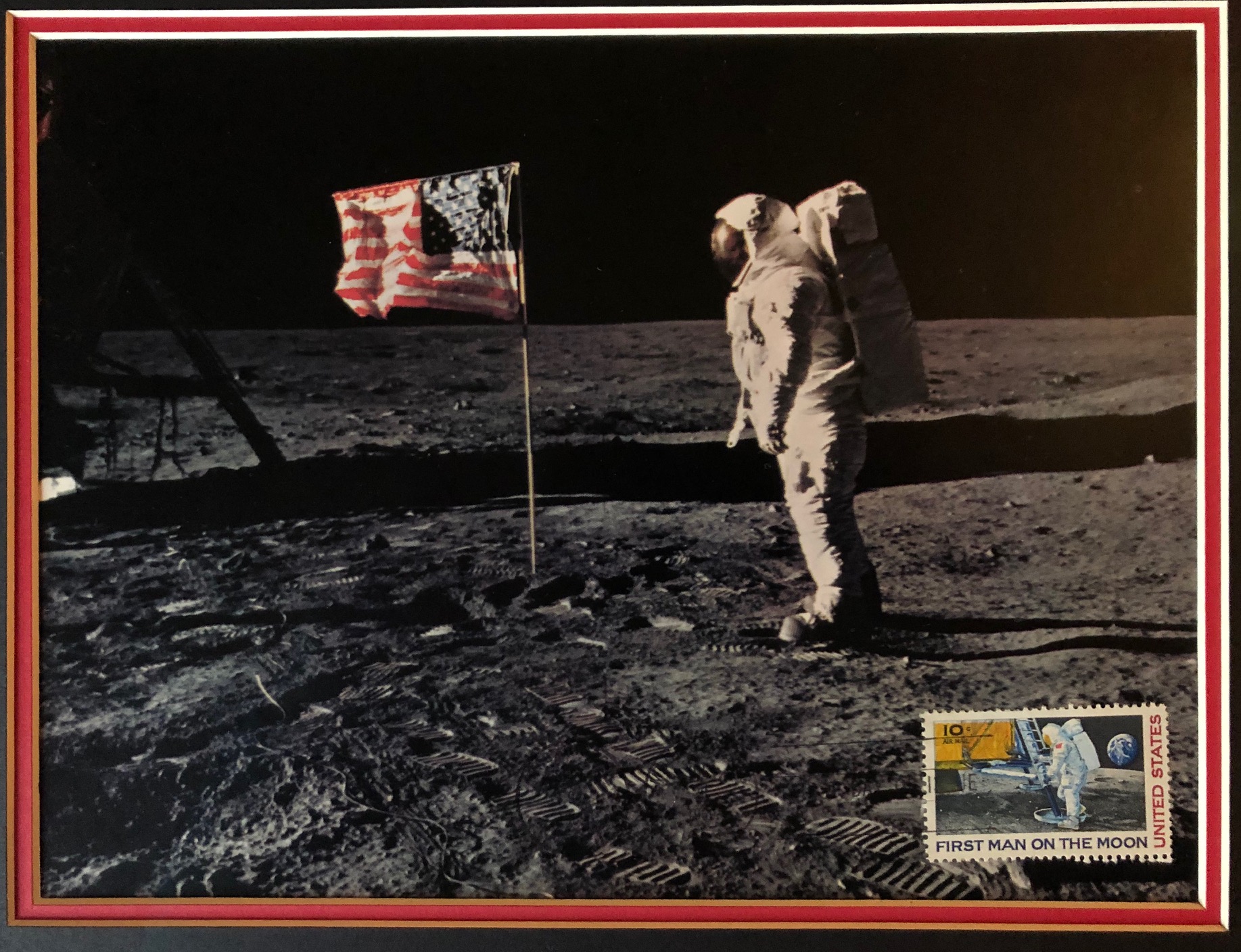
What I remember most was being amazed at seeing the astronauts hop around easily and not understanding how that could be. We had watched the launch on TV and were getting updates nightly from Walter Cronkite on the evening news. Normally my dad would sit at a TV table to eat dinner and watch the news as my mom sat with my sister and me at our kitchen table, but this week was different.
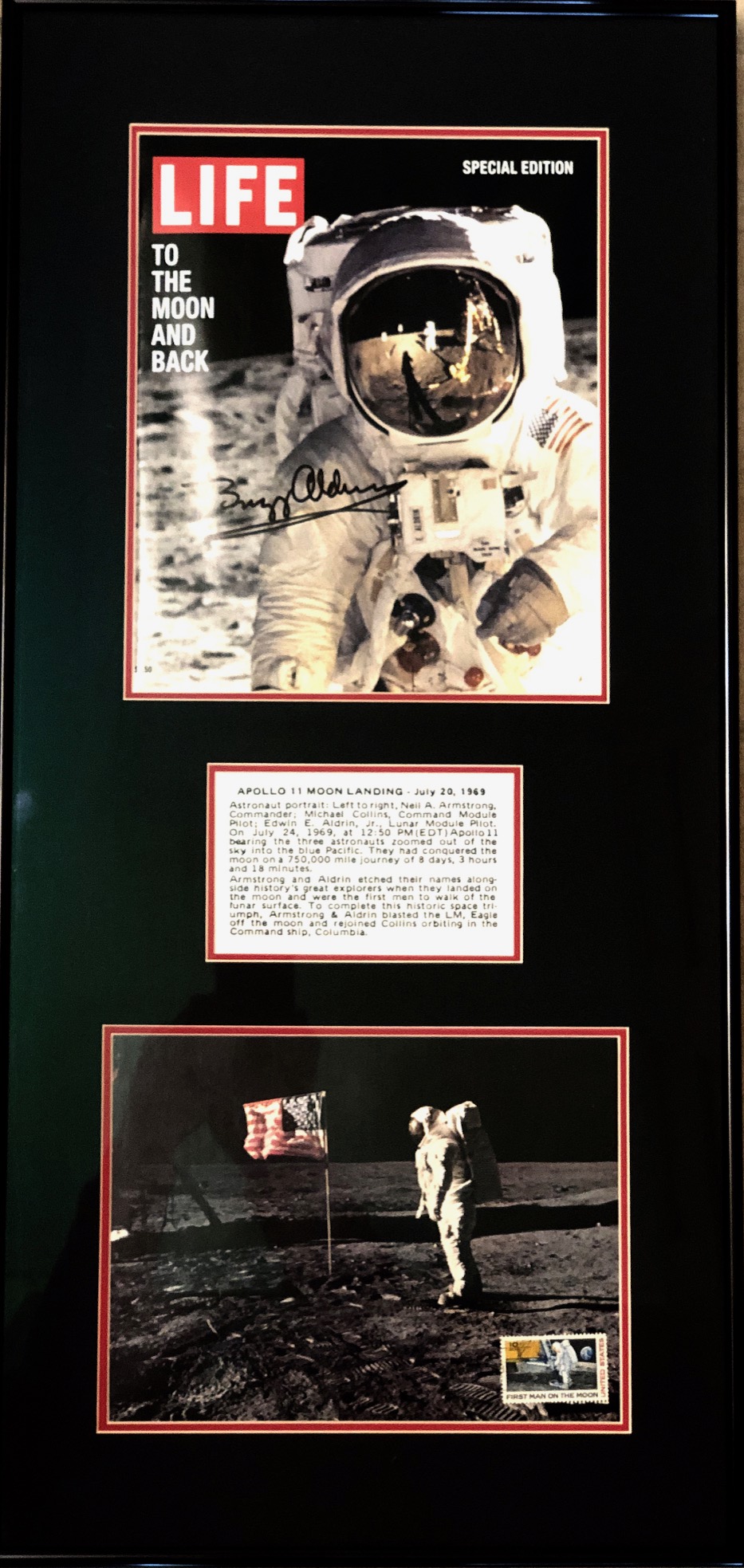
With all of the news this past week on the 50th Anniversary of the first moonwalk, it triggered a couple of memories. One of them was that I purchased a collectible item in 2005 at the annual Children’s Circle of Care leadership conference in San Diego, CA. A luncheon was held on the USS Midway Museum deck, and afterward, I took a tour. It is an incredible place to visit if you are ever near San Diego.
Before leaving that day, I went to the gift shop to get my wife and children a few trinkets. What I found was a beautiful display, which I immediately purchased and shipped home. This display was taken to school a couple of times for “show and tell.” It hung on my office wall for 3 years and then went into storage with other artwork. It then sat for the past decade, and I almost forgot it.
To me, this display is both beautiful to see and very inspirational. Human creativity is an incredible thing! As an aside, I have never seen anything like this display, so I thought I would share it with you.
Today I also ran across a good article regarding this event that provided information I had not seen before. It is very interesting and can be found here: https://go.usa.gov/xyVGh
Edit: This was another good article that discusses the advanced flight control computer used at the time – https://www.linkedin.com/pulse/apollo-11-moon-landings-fourth-crew-member-computer-far-fishman/
This anniversary is a great reminder of the power of individuals, teams, and partnerships when they are mission-focused. I find people like the men and women of NASA extremely motivating, and the few I have met have all been very friendly. They are the humble heroes!

Good Article on Being an Entrepreneur
Nearly every morning, I start the day by reviewing news on business, technology, and finance/markets. Occasionally there is a general interest article that I stumble across. Today it was a short article about Curt Culver, Co-Founder of Culver’s Restaurants.
Several great points seem like common sense in hindsight but are often well out of focus during the “heat of the battle” as you build your business. Mr. Culver touches several of them:
- The Importance of having the proper Work / Life Balance
- For me personally, this was one of the toughest aspects of growing my business. I worked 100+ hours a week, traveled at least 50% of the time, and was often “not there,” even when spending time with my family.
- My habits also set expectations for others on the team, and I later realized this also created strife at home.
- The turning point for me was when my youngest daughter, then 4 years old, told her twin brother and older sister, “Daddy really does love us; he just works all the time so that we can live here and have all of this stuff.” It was painful enough to hear that, but it was a wake-up call about what is really important in life – people (especially family and friends), not “stuff.”
- For me personally, this was one of the toughest aspects of growing my business. I worked 100+ hours a week, traveled at least 50% of the time, and was often “not there,” even when spending time with my family.
- The Need to Develop others on your Team
- From past experiences, I understood the need to hire the best people you could afford – people with complementary skills (not just clones of yourself) and who were better than you in at least one aspect. That diversity added value, while the similarities made it easier to “get on the same page” quickly. From there, it was important to understand their goals and work together on career planning early – something that adds value to both parties.
- One of my goals in developing my team was to have everyone understand the big picture and empower them to make good decisions for the business.
- While most of this happened, my goal was for each and every person to think and act like an owner of the business. That level of engagement and accountability only happened with my most senior person, who was also my first hire and owned a small part of the company.
- The moment when I recognized success was during a mission-critical ERP system upgrade for our largest customer – a multi-billion-dollar semiconductor reseller. I sat in on project and team meetings, reviewed reports, and asked a few questions, but that was it. It was a very proud and empowering moment for me.
- The weekend of the pre-migration test, I received a call telling me that everything had been successful and that the migration was going forward the next weekend.
- The following weekend I received a nightly summary email, and on Sunday afternoon received a call telling me that the new system was operational and supporting production with ease.
- Culture
- Mr. Culver states, “Culture is all about people.” From my perspective, that is mostly true, but my experiences show other important dimensions of culture.
- To me, your company’s cultural identity starts as something aspirational and later grows into the glue that bonds every member of your team. It helps bring out the best in everyone, including camaraderie and support that come from working with people you like and trust.
- There were two unexpected consequences of actively focusing on culture, which were:
- We quickly transformed into a High-Performance Organization. Everyone pushed to continuously “raise the bar.” There was healthy competition, but each team member was a “safety net” for others. Winning as a team mattered far more than winning as an individual.
- New hires who were not a good fit were recognized quickly and usually quit within the first 2-3 weeks. I only had to terminate one person who wasn’t a good fit during the probationary period.
- There were two unexpected consequences of actively focusing on culture, which were:
- Having a Support System
- Mr. Culver addresses failure and the importance of family in supporting you in times of need.
- One of the biggest lessons I learned was that nothing that I did or accomplished with my company would have been possible without the support of my wife, children, parents, and in-laws (the latter two providing financial support during the early years in times of need).
- With understanding comes humility.
These are lessons learned that can be applied to any size organization and, in my opinion, are a great investment in your company’s future growth, value, and longevity.
Occam’s razor, our Maxima, and the Sage Mechanic
My wife has a Nissan Maxima and loves her car. Over the past 9 months, there has been a persistent but seemingly random problem: the radio is used for a few minutes while the car is off, and then the battery dies when she tries to start the car. This has happened more than a dozen times over the past 3 1/2 years, and it has been seen by two dealerships for a total of three times recently with no success – the most recent visit being one day before this problem occurred.
Saturday morning, I was running errands when my wife called to let me know the problem had happened again (the second time this week, and she was very frustrated). I was pretty excited because this time the problem occurred at home, not at some parking lot like usual, so I had the luxury of time to try to determine the root cause. I’m somewhat mechanical but no professional, so I followed my consulting advice and contacted a professional.
Dave T. is a mechanical guru with an uncanny ability to offer sage advice with only a modicum of information. He is incredibly busy but always willing to spend a few minutes and give helpful advice. It helps that he is a great guy, but it also helps him generate business (leads and referrals). This approach creates a constant backlog of work and a very loyal clientele, which is good business.
I called Dave, described the problem, and mentioned what I had read on various forums (i.e., similar electrical problems observed after some arbitrary mileage). Next, I mentioned that this had just been to the dealership, and they did not find anything wrong. Dave laughed and said, “There is a 99%+ likelihood that the alternator is bad, possibly both the alternator and battery.” He sounded very confident.

There was a pause, and then he asked, “What’s more likely – that there is some completely random problem that only happens when your wife is out and your son stays in the car and listens to music for a few minutes, which by the way only happens to Maximas after X number of miles, or that there are issues with the alternators where they tend to fail after a certain amount of use, which causes them not to charge the battery properly and leads to a condition where there is not enough of a charge to start the car?”

When Dave explained it like that, I felt kind of stupid, consoled only by the fact that other professional mechanics had not resolved the problem before me. He added, “Anything that could drain a battery within a few minutes would be noticeable. It would start a fire, melt wires, or smoke or smell. You haven’t seen or smelled anything like that, have you?”
I described my plan to troubleshoot the problem, and Dave suggested that I also test the alternator and the specific gravity of the individual battery cells. So, less than five minutes into that call, I had a plan and was off and running.
Yesterday afternoon I spent several hours using a methodical approach to troubleshooting, documenting everything with pictures and videos to help me recall details and sequence if needed. Sure enough, Dave’s knowledge and intuition led to the correct conclusion.
I called him to thank him, and while we talked, I wondered aloud why the dealership couldn’t figure this out. Dave replied, “It’s not that they couldn’t have done what you did, but instead, they focused on the symptoms you described. The mechanic probably sat there for 10-15 minutes with the lights and radio on while the car was off. After that, the car started, so they assumed everything was fine.
I listened to what you said, ignored the randomness and speculation, and honed in on the likeliest problem. The fact that this happened again so soon also made sense because now your battery was run down from the testing performed by the dealership.” He added, “In my business, I get paid for results, so I can’t get away with taking the easy way out.”
I’m big on lessons learned and want to make the most of every experience because I have learned that skills and knowledge are often very transferable. As I thought about this, I realized that Dave’s analysis was the perfect practical application of Occam’s razor. It’s a very helpful skill as a Consultant, but more importantly, it can help when problem-solving in any line of work.

