
Life
The Downside of Easy (or, the Upside of a Good Challenge)
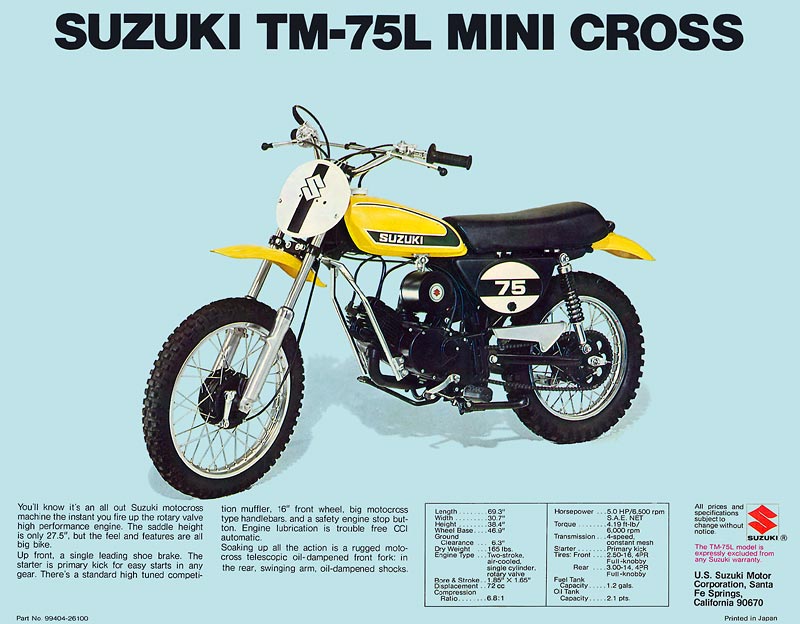
As a young boy, I was “that kid” who would take everything apart, often leaving a formerly functional alarm clock in a hundred pieces in a shoebox. I loved figuring out how things worked and how components worked together as a system. When I was 10, I spent one winter completely disassembling and reassembling my Suzuki TM-75 motorcycle in my bedroom (my parents must have had so much more patience and understanding than I do as a parent). I rebuilt it by spring, and it ran like a champ. Beginner’s luck?
By then, I was hooked – I enjoyed working with my hands and fixing things. That was a valuable skill to have while growing up, as it provided income and led to the first company I started at 18. Learning always involved a fair degree of trial and error, but experience and experimentation led to simplification and standardization. That became the hallmark of the programs I wrote, and later, the application systems I designed and developed. It is a trait that has served me well over the years.
Today, I still enjoy doing many things myself, especially if I can spend a little time and save hundreds of dollars (which I usually invest in more tools). Finding examples and tutorials on YouTube is usually easy, and after watching a few reference videos, the task is generally manageable. There is also a sense of satisfaction that comes with a job well done. And most of all, it is a great distraction from everything else that keeps your mind racing at 100 mph.
My wife’s 2011 Nissan Maxima needed a Cabin Air Filter, and instead of paying $80 again to have this done, I decided to do it myself. I purchased the filter for $15 and was ready to go. This shouldn’t take more than 5 or 10 minutes. I went to YouTube to find a video, but no luck. Then, I started searching various forums for guidance. There were plenty of posts complaining about the cost of replacement, but not much about how to do the work. I finally found a post that showed where the filter door was. I could already begin to feel that sense of accomplishment I was expecting in the next few minutes.
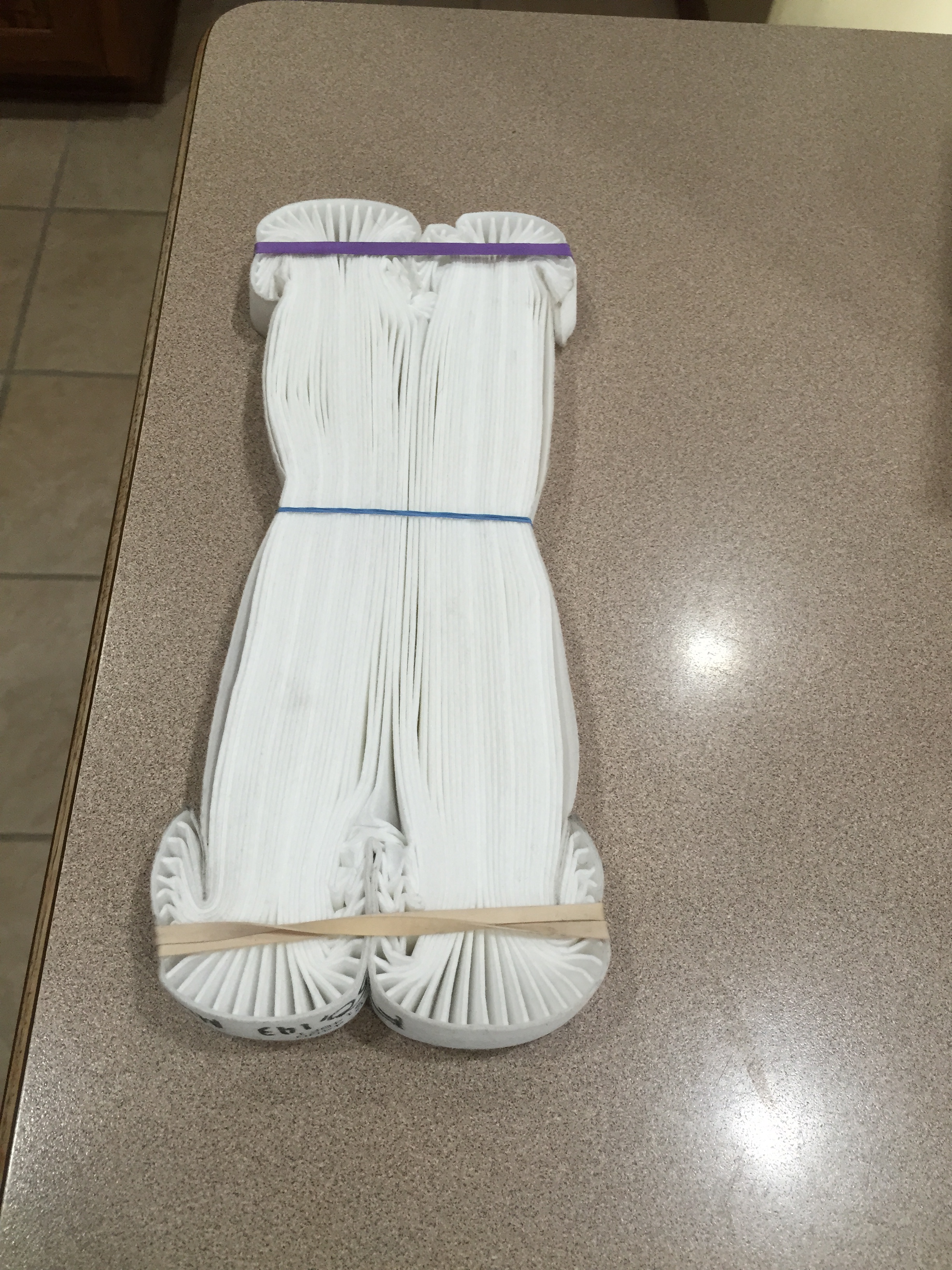
But fate and apparently a few sadistic Nissan Engineers had other plans. First, you needed to be a contortionist in order to reach the filter once the door was removed. Then, the old filter was nearly impossible to remove. Then, once the old filter was removed, I realized the width of the filter entry slot was about 50% of the filter’s width. Man, what a horrible design!
A few fruitless Google searches later, I was more determined than ever to make this work. I tried several things and ultimately found a way to fold the filter small enough to get through the door, and it would fully open once released. A few minutes later, I was finally savoring my victory over that hellish filter change.
This experience brought back memories of “the old days.” In 1989, I was working for a marketing company as a Systems Analyst and was assigned the project to create the “Mitsubishi Bucks” salesperson incentive program. Salespeople earned points for sales and could later redeem those points for Mitsubishi Electronics products. It was a very popular and successful incentive program.
Creating the forms and reports was straightforward, but tracking the points (including generating past reports and adjusting activity from previous periods) was a problem. I finally considered how a banking system would work (remember, there were no books on building banking systems readily available before the Internet, so this was essentially reinventing the wheel) and designed my own. It was very exciting and rock solid. Statements could be accurately reproduced at any time, and an audit trail was maintained for all activity.
Next, I needed to create validation processes and a fraud detection system for incoming data. This was rock solid, but instead of being a good thing, it became a real headache and source of frustration.
Salespeople would not always provide complete information, might have sloppy penmanship, or engage in other legitimate but unusual practices (such as bundling and adjusting prices among items in the bundle). Despite that, they expected immediate rewards, and having their submissions rejected apparently created more frustration than incentive.
So, I was instructed to turn the fraud detection dial way back. I let everyone know that while this would minimize rejections, it would increase the potential for fraud and the volume of rewards. I created a few reports to identify potentially fraudulent activity. It was amazing how creative people could be when trying to cheat the system, and how quickly you could identify patterns based on similar activities. By the third month, the system was trouble-free.
It was a great learning experience from beginning to end. It ran for several years after I left – something I know because I was still receiving the sample mailing with new sales promotions and “Spiffs” (sales incentives) every month. Later, I wondered how many things aren’t being created or improved today because it is easier and less risky to follow an existing template.
We used to align fields and columns in byte order to minimize record size, overload operators, and other optimizations to maximize space utilization and performance. Our code was optimized for maximum efficiency because memory was scarce and processors were slow. Profiling and benchmarking programs brought you to the next level of performance. In a nutshell, you were forced to understand and become proficient with the technology used out of necessity. Today, these concepts have become somewhat of a lost art.
There are many upsides to being easy.
- My team sells more and closes deals faster because we make it easy for our customers to buy, implement, and start receiving value from the software we sell.
- Hobbyists like me can accomplish many tasks after watching just a short video or two.
- People are willing to try things they may not have tried before if getting started were not so easy.
However, there may also be downsides for innovation and continuous improvement, simply because ‘easy’ is often considered ‘good enough‘ so people do the minimum required and move on.
What will the impact be on human behavior once Artificial Intelligence (AI) becomes a reality and is in everyday use? It would be great to look ahead 25, 50, or 100 years and see the full impact of emerging technologies, but I think I will see many of the effects in my own lifetime.
What do you think will happen?
Discussions that Seed the Roots of Creativity
A few months ago I purchased Fitbit watches for my children and myself. My goals were twofold. First, I was hoping that they would motivate all of us to be more active. Second, I wanted to foster a sense of competition (including fair play and winning) within my children. Much of their pre-High School experiences focused on “participation,” as many schools feel that competition is bad. Unfortunately, competition is everywhere in life, so if don’t play to win you may not get the opportunity to play at all.
It is fun seeing them push to be the high achiever for the day, and to continually push themselves to do better week-by-week and month-by-month. I believe this creates a wonderful mindset that makes you want to do more, learn more, achieve more, and make an overall greater impact with everything they do. People who do that are also more interesting to spend time with, so that is a bonus.
Recently my 14 year-old son and I went for a long walk at night. It was a cold, windy, and fairly dark night. We live in fairly rural area so it is not uncommon to see and hear various wild animals on a 3-4 mile walk. I’m always looking for opportunities to teach my kids things in a way that is fun and memorable, and in a way that they don’t realize they are being taught. Retention of the concepts is very high when I am able to make it relevant to something we are doing.
That night we started talking about the wind. It was steady with occasional gusts, and at times it changed direction slightly. I pointed out the movement on bushes and taller grass on the side of the road. We discussed direction, and I told him to think about the wind like an invisible arrow, and then explained how those arrows traveled in straight lines or vectors until they met some other object. We discussed which object would “win,” and how the force of one object could impact another object. My plan was to discuss Newton’s three laws of motion.
My son asked if that is why airplanes sometimes appear to be flying at an angle but are going straight. He seemed to be grasping the concept. He then asked me if drones would be smart enough to make those adjustments, which quickly led to me discussing the use potential future of “intelligent” AI-based drones by the military. When he was 9 he wanted to be a Navy SEAL, but once he saw how much work that was he decided that he would rather be Transformer (which I explained was not a real thing). My plan was to use this example to discuss robotics and how you might program a robot to do various tasks, and then move to how it could learn from the past tasks and outcomes. I wanted him to logically break down the actions and think about managing complexity. But, no such luck that night.
His mind jumped to “Terminator” and “I, Robot.” I pointed out that Science Fiction does occasionally become Science Fact, which makes this type of discussion even more interesting. I also pointed out that there is spectrum between the best possible outcome – Utopia, and the worst possible outcome – Dystopia, and asked him what he thought could happen if machines could learn and become smarter on their own.
His response was that things would probably fall somewhere in the middle, but that there would be people at each end trying to pull the technology in their direction. That seemed like a very enlightened estimation. He asked me what I thought and I replied that I agreed with him. I then noted how some really intelligent guys like Stephen Hawking and Elon Musk are worried about the dystopian future and recently published a letter to express their concerns about potential pitfalls of AI (artificial intelligence). This is where the discussion became really interesting…
We discussed why you would want a program or a robot to learn and improve – so that it could continue to become better and more efficient, just like a person. We discussed good and bad, and how difficult it could be to control something that doesn’t have morals or understand social mores (which he felt if this robot was smart enough to learn on its own that it would also learn those things based on observations and interactions). That was an interesting perspective.
I told him about my discussions with his older sister, who wants to become a Physician, about how I believe that robotics, nanotechnology, and pharmacology will become the future of medicine. He and I took the logical next step and thought about a generic but intelligent medicine that identified and fixed problems independently, and then sent the data and lessons learned for others to learn from.
I’m sure that we will have an Internet of Things (IoT) discussion later, but for now I will tie this back to our discussion and Fitbit wearable technology.
After the walk I was thinking about what just happened, and was pleased because it seemed to spark some genuine interest in him. I’m always looking for that perfect recipe for innovation, but it is elusive and so far lacks repeatability. It may be possible to list many of the “ingredients” (intelligence, creativity, curiosity, confidence (to try and accept and learn from failure), multi-disciplinary experiences and expertise) and “measurements” (such as a mix of complementary skills, a mix of roles, and a special environment (i.e., strives to learn and improve, rewards both learning and success but doesn’t penalize failure, and creates a competitive environment that understands that in most cases the team is more important than any one individual)).
That type of environment is magical when you can create it, but it takes so much more than just having people and a place that seem to match the recipe. A critical “activation” component or two is missing. Things like curiosity, creativity, ingenuity, and a bit of fearlessness.

I tend to visualize things, so while I was thinking about this I pictured a tree with multiple “brains” (my mental image looked somewhat like broccoli) that had visible roots. Those roots were creative ideas that went off in various directions. Trees with more roots that were bigger and went deeper would stand out in a forest of regular trees.
Each major branch (brain/person) would have a certain degree of independence, but ultimately everything on the tree worked as a system. To me, this description makes so much more sense than the idea of a recipe, but it still doesn’t bring me closer to being able map the DNA of this imaginary tree.
At the end of our long walk it seemed that I probably learned as much as my son did. We made a connection that will likely lead to more walks and more discussions.
And in a strange way, I can thank the purchase of these Fitbit watches for being the motivation for an activity that led to this amazing discussion. From that perspective alone this was money well spent.
Non-Linear Thought Process and a Message for my Children
I have recently been investigating and visiting universities with my eldest daughter, a Senior in High School. Last week we visited Stanford University (an amazing experience) and spent a week in Northern California on vacation. After being home for a day and a half, I am in Texas for a week of team meetings and training.
On the first night of a trip, I seldom sleep, so I listened to the song “Don’t Let It Bring You Down” by Annie Lennox, a cover of a Neil Young song. That led to a YouTube search for the original Neil Young version, which led to me listening to “Old Man” – a favorite song of mine for over 30 years. That led to some reflection, which ultimately led to this post.
I mention this because it is an example of the nonlinear or divergent thought process (generally viewed as a negative trait) that occurs naturally for me. It helps me “connect the dots” faster and more naturally. It is a manner of thinking associated with ADHD (again, something generally viewed as negative). The interesting thing is that to fit in and succeed with ADHD, you tend to develop logical systems for focus and consistency. That has many positive benefits for me – such as systemic thinking, creating repeatable processes, and automation.

The combination of linear and non-linear thinking can really fuel creativity. The downside is that it can take quite a while for others to see the potential of your ideas, which can be extremely frustrating. But you learn to communicate better out of necessity. The upside is that you tend to create relationships with other innovators because they think like you, making you relatable and interesting to them. The world is a strange place.
It is funny how there are several points in your life when you have an epiphany, and things suddenly make complete sense. That makes you realize how much time and effort you could have saved if you’d figured something out sooner. As a parent, I always try to identify and create learning shortcuts for my children so they reach those points much sooner than I did.
I started this post thinking that I would document as many of those lessons as possible to serve as a future reminder and possibly help others. Instead, I decided to post a few things I view as foundational truisms in life that could help foster that personal growth process. So, here goes…
- Always work hard to be the best, but never let yourself believe you are the best. Even if you truly are, it will be short-lived, as there are always people doing everything they can to be the best. Ultimately, that is a good thing. You need to have enough of an ego to test the limits and capabilities of things, but not one that is so big that it alienates or marginalizes those around you.
- Learn from everything you do – good and bad. Continuous improvement is so important. By focusing on this, you constantly challenge yourself to try new things and find better (i.e., more effective, more efficient, and more consistent) ways to do things.
- Realize that the difference between a brilliant and a stupid idea is often perspective. Years ago, I taught technical courses, and occasionally someone would describe something they did that seemed strange or wrong. But if you asked questions and tried to understand why they did what they did, you would often identify the brilliance in that approach. It is both exciting and humbling.
- Incorporating new approaches or the best practices of others into your own proven methods and processes is part of continuous improvement, but it only works if you can set aside your ego and keep an open mind.
- Believe in yourself, even when others don’t share that belief. Remain open to feedback and constructive criticism as a way to learn and improve, but never give up on yourself. There is a huge but sometimes subtle difference between confidence and arrogance, and that line is often drawn at the point where you can accept that you might be wrong or that there might be a better way to do something. Become the person people like working with and not the person they avoid or want to see fail.
- Surround yourself with the best people that you can find. Look for people with diverse backgrounds and complementary skills. The best teams I have ever been involved with consisted of high achievers who constantly raised the bar for each other while simultaneously creating a safety net for their teammates. Those teams grew and did amazing things because everyone was very competitive and supportive of each other.
- Keep notes or a journal because good ideas are often fleeting and hard to recall. Remember, good ideas can come from anywhere, so keep track of others’ suggestions and make sure you attribute them to the proper source.
- Try to make a difference in the world. Try to leave everything you “touch” (job, relationship, project, whatever) in a better state than before you were there. Helping others improve and leading by example are two simple ways of making a difference.
- Accept that failure is a natural obstacle on your path to success. You are not trying hard enough if you never fail. But you are also not trying hard enough if you fail too often. That is very subjective, and honest introspection is your best gauge. Be accountable, accept responsibility, document the lessons learned, and move on.
- Dream big, and use that as motivation to learn new things. While I funded medical research, I learned about genetics, genomics, and biology. That expanded into interests in nanotechnology, artificial intelligence, machine learning, neural networks, and interfaces such as natural language and non-verbal/emotional communication. Someday I hope to tie these together to help cure a disease (Arthritis) and improve the quality of life for millions of people. Will that ever happen? I don’t know, but I do know that if I don’t try, it will never happen because of anything I did.
- Focus on the positive, not the negative. Creativity is stifled in environments where fear and blame rule.
- Never hesitate to apologize when you are wrong. This is a sign of strength, not weakness.
- And above all else, honesty and integrity should be the foundation for everything you do and are.
Hopefully, this will help my children become the best people possible, ideally early on in their lives. I was 30 years old before I had a clue about many of these things. Until that point, I was somewhat self-centered and focused on winning. Winning and success are good things, but are better when accomplished the right way.
The Future of Smart Interfaces
Recently, I was helping one of my children research a topic for a school paper. She was doing well, but the results she was getting were overly broad. So I taught her some “Google-Fu,” explaining how to structure queries to get better results. She replied that search engines should be smarter than that. I explained that sometimes the problem is that search engines look at your past searches and customize results as an attempt to appear smarter or to motivate someone to do or believe something.
Unfortunately, those results can be skewed and potentially lead someone in the wrong direction. It was a good reminder that getting the best results from search engines often requires a bit of skill and query planning, as well as occasional third-party validation.
Then the other day I saw this commercial from Motel 6 (“GasStation Trouble”) where a man has problems getting good results from his smartphone. That reminded me of seeing someone speak to their phone and get frustrated by the responses. His questions went something like this:
“Siri, I want to take my wife to dinner tonight, someplace that is not too far away, and not too late. And she likes to have a view while eating, so please look for something with a nice view. Oh, and we don’t want Italian food because we just had that last night.”
Just as amazing as the question being asked was watching him ask it over and over again in the exact same way, each time becoming even more frustrated. I asked myself, “Are smartphones making us dumber?” Instead of contemplating that question, I began to think about what future smart interfaces would or could be like.
I grew up watching Sci-Fi computer interfaces like “Computer” on Star Trek (1966), “HAL” on 2001: A Space Odyssey (1968), “KITT” from Knight Rider (1982), and “Samantha” from Her (2013). These interfaces had a few things in common:
- They responded to verbal commands.
- They were interactive – not just providing answers, but also asking qualifying questions and allowing for interrupts to drill down or enhance the search (e.g., with pictures or questions that resembled verbal Venn diagrams).
- They often suggested alternative queries based on intuition. That would have been helpful for the gentleman trying to find a restaurant.

Despite having 50 years of science fiction examples, we are still a long way off from realizing the goal of a truly intelligent interface. Like many new technologies, they were originally envisioned by science fiction writers long before they appeared in science.
A spectrum of common beliefs about modern interfaces seems to exist. On one end, some products make visualization easy, facilitating understanding, refinement, and drill-down of data sets. Tableau is an excellent example of this type of easy-to-use interface. At the other end of the spectrum, the emphasis is on back-end systems – robust computer systems that digest huge volumes of data and return the results to complex queries within seconds. Several other vendors offer powerful analytics platforms. In reality, you need a strong front end and back end to achieve the full potential of either.
But there is so much more potential…
I predict that within the next 3 – 5 years, we will see business and consumer interface examples (powered by AI and Natural Language Processing, or NLP) that are closer to the verbal interfaces from those familiar Sci-Fi shows (albeit with limited capabilities and no flashing lights).
Within the next 10 years, I believe we will have computer interfaces that understand the request (not just the string of words), intuit our needs, and quickly and easily generate correct answers. While this is unlikely to be at the level of “The world’s first intelligent Operating System” envisioned in the movie “Her,” and probably won’t even be able to read lips like “HAL,” it should be much more like HAL and KITT than like Siri (from Apple) or Cortana (from Microsoft).
Siri was groundbreaking consumer technology when it was introduced. Cortana seems to have taken a small leap ahead. While I have not mentioned Google Now, it is somewhat of a latecomer to this consumer smart interface party, and in my opinion, it is behind both Siri and Cortana.
So, what will this future smart interface do? It will need to be very powerful, harnessing a natural language interface on the front end with an extremely flexible and robust analytics interface on the back end. The language interface will need to take a standard question (in multiple languages and dialects) – just as if you were asking a person – deconstruct it using Natural Language Processing, and develop the proper query based on the available data. That is important, but it only gets you so far.
Data will come from many sources – things that we consider today with relational, object, graph, and NoSQL databases. Structured and unstructured data with inconsistent formats must be joined and filtered quickly and accurately. In addition, context will be more important than ever. Pictures and videos could be scanned for facial recognition, location (via geotagging and image searches), and, in the case of videos, analyze speech and background noises. Relationships will be identified and inferred based on a variety of sources, using both data and metadata. Sensors will collect data from almost everything we do and (someday) wear, providing both content and context.
Stylometry will identify outside content likely related to the people involved in the query and provide further context about interests, activities, and even biases. This is how future interfaces will truly understand (not just interpret), intuit (so it can determine what you really want to know), and then present results that may be far more accurate than we are used to today. Because the interface is interactive, it will allow you to organize and analyze subsets of data quickly and easily.
So, where do I think that this technology will originate? I believe that it will be adapted from video game technology. Video games have consistently pushed the envelope over the years, driving the need for higher-bandwidth I/O capabilities in devices and networks, better and faster graphics capabilities, and larger and faster storage (which ultimately led to flash memory and even Hadoop). Animation has become very lifelike and will someday be created with a few simple commands. Games are becoming more responsive to input from multiple sources, and may someday use things like eye movement for guidance. It is not a stretch to believe that the next generation of smart interfaces will come from this direction or something similar, like leading-edge defense technology (rather than from the evolution of current smart interfaces).
Someday, it may no longer be possible to “tweak” results through the use or omission of keywords, quotation marks, and flags. Additionally, it may no longer be necessary to understand special query languages (SQL, NoSQL, SPARQL, etc.) and syntax. We won’t have to worry as much about incorrect joins, spurious correlations, and biased result sets. Instead, we will be given the answers we need – even if we don’t realize that this was what we needed in the first place – which will likely be driven by AI. At that point, computer systems may appear nearly omniscient.
When this happens, parents will no longer need to teach their children “Google-Fu.” Those are going to be interesting times indeed.
Genetics, Genomics, Nanotechnology, and more
Science has interested me for most of my life, but it wasn’t until my first child was born that I shifted from “interested” to “involved.” My eldest daughter was diagnosed with Systemic Onset Juvenile Idiopathic Arthritis (SoJIA – originally called Juvenile Rheumatoid Arthritis, or JRA) when she was 15 months old, which also happened to be about six months into the start of my Consulting company, all while we were in the middle of a very critical Y2K ERP system upgrade and rehosting project. It was definitely a challenging time in my life.
At the time, there was very little research on JRA because it was estimated that only 30,000 children were affected by the disease, and the implication was that funding research would not have a positive ROI. The economics of medical research were eye-opening to me. This was also a few years before major breakthroughs like Enbrel for children.

One of the things that I learned was that this disease could be horribly debilitating. Children often had physical deformities as a result of this disease. Even worse, the systemic type that my daughter has could result in premature death. As a first-time parent, imagining that type of life for your child was extremely difficult.
Luckily, the company I had just started was taking off, so I decided to find ways to make a tangible difference for all children with this disease. We decided to donate 50% of our net profits to fund medical research. Our goal was to fund $1 million in research and find a cure for Juvenile Arthritis within the next 5-7 years.
As someone new to “major gifts” and philanthropy, I quickly learned that some gifting vehicles were more beneficial than others. While most organizations wanted you to start a fund (which we did), the impact tended to be more long-term, supportive, and much less immediate. Later, I met someone passionate, knowledgeable, and successful in her field who showed me a different, better approach (here’s a post that describes it in more detail).
I no longer wanted to blindly give money and hope it was used quickly and properly. Rather, I wanted to treat these donations like investments in a near-term cure. To be successful, I needed to understand research from both medical and scientific perspectives in these areas. That began a new phase in medical research and an independent learning journey in areas where I had limited understanding and expertise.
A lot was happening in Genetics and Genomics at the time (here’s a good explanation of the difference between the two). My interest and efforts in this area led to a position on the Medical and Scientific Advisory Committee with the Arthritis Foundation. Except for me, the other members were talented, successful physicians who were also involved in medical research. We met quarterly, and I asked questions and made suggestions that made a difference. But unlike everyone else on the committee, I needed to study 40+ hours for each call to ensure I understood enough to add value and not be a distraction. Every quarter, I earned my seat at that table, and soon, most of the other members respected me for that (i.e., “not a typical donor”).
A few years later, we did work for a Nanotechnology company (more info here). The Chief Scientist wasn’t interested in explaining what they did until I described some of our research projects on gene expression. He then went into great detail about what they were doing and how he believed it would change what we do in the future. I saw that and agreed. That started my thinking about the potential of leveraging advanced nanotechnology in medicine.
While driving today, I was listening to the “TED Radio Hour” and heard a segment about entrepreneur Richard Resnick. It was exciting because it got me thinking about this again – a topic I haven’t thought about for the past few years (the last time, I was contemplating how new analytics products could be useful in this space).
There are efforts today with custom, personalized medicines that target only specific genes for a specific outcome. The genetic modifications being performed on plants today will likely be performed on humans in the near future (I would guess within 10-15 years as gene editing becomes more mainstream), possibly even performed by some type of robots. Because the body is an incredibly adaptive organism, it may be very challenging to implement anything consequential that is consistently safe and effective long-term. But that day will come.
It’s not a huge leap from genetically modified “treatment cells” to true nanotechnology (not just extremely small particles). Just think, machines that can be designed to work independently within us to do what they are programmed to do and, more importantly, identify and understand adaptations (i.e., artificial intelligence) as they occur and alter their approach and treatment plan accordingly based on findings and changes. This is extremely exciting. From my perspective, being able to do things that positively impact the quality of life for children and their families is a worthy goal.
My advice is to keep learning, stay open-minded, and do what you can to make a difference. You will never know what is possible unless you try. It will also be interesting to see how technologies evolve and work together to create an even greater impact.

