continuous improvement
Success is a Mental Game
This assertion is as true in business as in sports, individually and in teams. So, let’s break it down.

When I watch my local football team, I occasionally see a shift in facial expressions from excitement to frustration – often right before the end of the first half. Sometimes, they recover during halftime and come out renewed and ready to win, but the “gloom and doom” expressions usually translate into suboptimal performance and mistakes. It is frustrating because you know they have the talent to win.
The same thing happens in business – especially in Sales. Sometimes it occurs in the middle of a sales cycle, similar to the example above. Unfortunately, too many people allow a few data points to determine their future trajectory. Why is that?
Whether you own a company or manage a group of people, good leaders aim to optimize their workforce by balancing factors that result in happy and loyal employees doing their best for themselves, their customers, and their company. Many motivational theories exist, such as Expectancy Theory, Reinforcement Theory, the Role of Instrumentality, Intrinsic vs. Extrinsic Motivation, and more. Since one size rarely fits all, the challenge becomes an effort of reward-focused personalization, which can be a lot of work.
People will often win or lose before they even start. Their negativity, self-doubt, and anticipation of failure become a self-fulfilling prophecy. This post focuses on self-motivation, attitude, mindset, and creating the habits that lead to better success.
Below are four simple questions that someone should ask themselves when they question their ability to succeed in a position, company, or industry. There are always many ways to point the finger of blame elsewhere, but the first step should be to look in the mirror.
- Do you believe that you can win where you are today? If not, why are you still there? Customers and prospects can sense insincerity, so if you don’t believe in yourself, you shouldn’t expect them to believe in you. Maybe the company is terrible, and everyone is failing. If that is true, then it is probably time to look elsewhere.
- What have you learned from past successes and failures, and how have you adapted based on those lessons learned?
- What are some early indicators of success or failure that you have identified? Are you adapting to the situation if you run into those indicators now? It could be that the best approach is to cut your losses on this attempt and move to the next sooner rather than later (i.e., qualify out quickly).
- What are you doing to improve your skills? It is funny how small, continuous improvement efforts lead to a greater sense of confidence. Greater confidence often translates to increased success.
I have found that consistently doing the right things is the best way to maximize my success. Start developing habits and routines that have led to winning in the past, but don’t expect them to work forever. Everything changes, and you should change, too. Look for things that are working for others, try them out, and if they work, incorporate them into your routines.
Success truly is a mental game, and everyone can win. The person who continues to win over time is the person who does not get stuck in time. Be curious, get excited, and adapt. And once you get there, start helping others. Having mentors is nice, but it is also great to become one.
As the saying goes, The rising tide lifts all boats. Winning can be a team sport, but it begins with individual contributors having winning attitudes. Unfortunately, the same can be said for losing, so decide now what you want and go forward with energy and confidence.
Continuous Improvement, Growth Mindset, and an “Attitude of Better”
This was originally posted on LinkedIn.com/in/chipn
When I had my own company, we focused on providing the absolute best services in a few niche areas. Our goal was to succeed in the spaces that were important yet underserved. We identified those areas, validated the need, evaluated the competition and our competitive positioning, determined the market potential, and then made an informed decision based on that data.

But, this was not a plan for winning. It was a roadmap to places we could win, but nothing more. What would our strategy be? What specific problems would we solve? How would we create awareness around the potential impact of those problems? And how would we position ourselves as the best candidates to address those business needs? In short, what was our real purpose or raison d’etre?
Recognizing that void led to a couple of powerful revelations –
1. It is great to have a goal of being the best at something, but don’t use that as an excuse to procrastinate. Learning and improving is an iterative process, so that goal itself was not good enough.
2. Adopting an “Attitude of Better” became a game-changer. We set our focus on continuous improvement and winning. We became customer-obsessed, driven to provide better service and better results for every customer. We gauged our success by customer satisfaction, repeat engagements, and referrals.
3. But it wasn’t until we adopted an intentional Growth Mindset that our business evolved and improved.
· We leveraged every win to help us find and create the next one.
· Our team constantly pushed each other to raise the bar of knowledge, expertise, and performance.
· Just as important was what occurred next. They became a safety net for each other. Failure for one meant failure for all, and nobody wanted that. They became a high-performance team.
· We created standard processes and procedures to ensure consistency and maintain the highest levels of quality. This applied to everything we did – from working on a task to writing trip reports, status reports, and proposals. It also reduced our risks when we chose an outsourcing partner to help us take on more concurrent projects.
· Whenever possible, we automated processes to maintain consistency while increasing efficiency, repeatability, scalability, and profitability.
· We measured and tracked everything, analyzed that data, captured lessons learned, and continuously worked on improving (and documenting) every aspect of the business.
· A byproduct of this approach was that we could offer leaner pricing based on accurate estimates with very small error margins. Our pricing was competitive, we could fix the price for much of what we did, and our profit margins were very good. This allowed us to invest in further growth.
Our “attitude of better” also came across as confidence when selling to and working with new customers. Not only could we tell them stories of our success that included tangible metrics, but most of our customers became references willing to talk about the value we added. Their stories included discussions about how much better things became due to our work.
Better became the foundation of what we did and the basis of those customer success stories.
The Downside of Easy (or, the Upside of a Good Challenge)
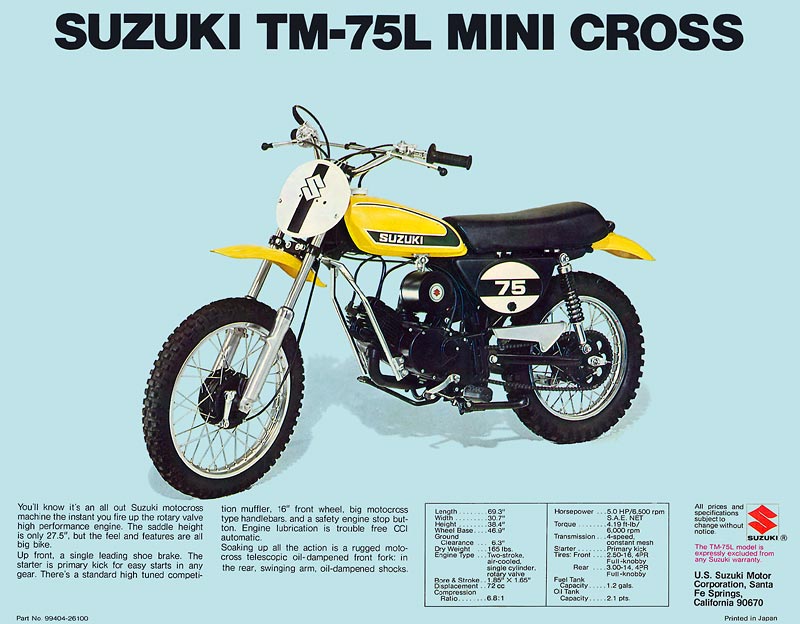
As a young boy, I was “that kid” who would take everything apart, often leaving a formerly functional alarm clock in a hundred pieces in a shoe box. I loved figuring out how things worked and how components worked together as a system. When I was 10, I spent one winter completely disassembling and reassembling my Suzuki TM75 motorcycle in my bedroom (my parents must have had so much more patience and understanding than I do as a parent). It was rebuilt by spring and ran like a champ. Beginners luck?
By then, I was hooked – I enjoyed working with my hands and fixing things. That was a valuable skill to have while growing up, as it provided an income and led to the first company I started at the age of 18. There was always a fair degree of trial and error involved with learning, but experience and experimentation led to simplification and standardization. That became the hallmark of the programs I wrote, and later, the application systems I designed and developed. It is a trait that has served me well over the years.
Today, I still enjoy doing many things myself, especially if I can spend a little time and save hundreds of dollars (which I usually invest in more tools). Finding examples and tutorials on YouTube is usually easy, and after watching a few videos for reference, the task is generally manageable. There is also a sense of satisfaction that comes with a job well done. And most of all, it is a great distraction from everything else that keeps your mind racing at 100 mph.
My wife’s 2011 Nissan Maxima needed a Cabin Air Filter, and instead of paying $80 again to have this done, I decided to do it myself. I purchased the filter for $15 and was ready to go. This shouldn’t take more than 5 or 10 minutes. I went to YouTube to find a video, but no luck. Then, I started searching various forums for guidance. There were plenty of posts complaining about the cost of replacement, but not much about how to do the work. I finally found a post that showed where the filter door was. I could already begin to feel that sense of accomplishment I was expecting in the next few minutes.

But fate and apparently a few sadistic Nissan Engineers had other plans. First, you needed to be a contortionist in order to reach the filter once the door was removed. Then, the old filter was nearly impossible to remove. And then, once the old filter was removed, I realized that the width of the filter entry slot was approximately 50% of the width of the filter. Man, what a horrible design!
A few fruitless Google searches later, I was more determined than ever to make this work. I tried several things and ultimately found a way to fold the filter where it was small enough to get through the door and would fully open once released. A few minutes later, I was finally savoring my victory over that hellish filter change.
This experience brought back memories of “the old days.” In 1989, I was working for a marketing company as a Systems Analyst and was assigned the project to create the “Mitsubishi Bucks” salesperson incentive program. Salespeople would earn points for sales and could later redeem those points on Mitsubishi Electronics products. It was a very popular and successful incentive program.
Creating the forms and reports was straightforward, but tracking the points (which included generating past reports and adjusting activity from previous periods) presented a problem. I finally considered how a banking system would work (remember, there were no books on the topic before the Internet, so this was essentially reinventing the wheel) and designed my own. It was very exciting and rock solid. Statements could be accurately reproduced at any time, and an audit trail was maintained for all activity.
Next, I needed to create validation processes and a fraud detection system for incoming data. This was rock solid, but instead of being a good thing, it became a real headache and source of frustration.
Salespeople would not always provide complete information, might have sloppy penmanship, or engage in other legitimate but unusual practices (such as bundling and adjusting prices among items in the bundle). Despite that, they expected immediate rewards, and having their submissions rejected apparently created more frustration than incentive.
So, I was instructed to turn the fraud detection dial way back. I let everyone know that while this would minimize rejections, it would increase the potential for fraud and the volume of rewards. I created a few reports to identify potentially fraudulent activity. It was amazing how creative people could be when trying to cheat the system, and how you could quickly identify patterns based on similar types of activities. By the third month, the system was trouble-free.
It was a great learning experience from beginning to end. It ran for several years after I left – something I know because I was still receiving the sample mailing with new sales promotions and “Spiffs” (sales incentives) every month. My later reflection made me wonder how many things are not being created or improved today because it is easier and less risky to follow an existing template.
We used to align fields and columns in byte order to minimize record size, overload operators, and other optimizations to maximize space utilization and performance. Our code was optimized for maximum efficiency because memory was scarce and processors were slow. Profiling and benchmarking programs brought you to the next level of performance. In a nutshell, you were forced to understand and become proficient with the technology used out of necessity. Today, these concepts have become somewhat of a lost art.
There are many upsides to being easy.
- My team sells more and closes deals faster because we make it easy for our customers to buy, implement, and start receiving value from the software we sell.
- Hobbyists like me can accomplish many tasks after watching just a short video or two.
- People are willing to try things they may not have tried before if getting started were not so easy.
However, there may also be downsides for innovation and continuous improvement, simply because ‘easy’ is often considered ‘good enough‘.
What will the impact be on human behavior once Artificial Intelligence (AI) becomes a reality and is in everyday use? It would be great to look ahead for 25, 50, or 100 years and see the full impact of emerging technologies, but my guess is that I will see many of the effects in my own lifetime.
Non-Linear Thought Process and a Message for my Children
I have recently been investigating and visiting universities with my eldest daughter, a Senior in High School. Last week we visited Stanford University (an amazing experience) and spent a week in Northern California on vacation. After being home for a day and a half, I am in Texas for a week of team meetings and training.
On the first night of a trip, I seldom sleep, so I listened to the song “Don’t Let It Bring You Down” by Annie Lennox, a cover of a Neil Young song. That led to a YouTube search for the original Neil Young version, which led to me listening to “Old Man” – a favorite song of mine for over 30 years. That led to some reflection which ultimately led to this post.
I mention this because it is an example of the nonlinear or divergent thought process (generally viewed as a negative trait) that occurs naturally for me. It helps me “connect the dots” faster and more naturally. It is a manner of thinking associated with ADHD (again, something generally viewed as negative). The interesting thing is that to fit in and succeed with ADHD, you tend to develop logical systems for focus and consistency. That has many positive benefits for me – such as systemic thinking, creating repeatable processes, and automation.

The combination of linear and non-linear thinking can really fuel creativity. The downside is that it can take quite a while for others to see the potential of your ideas, which can be extremely frustrating. But, you learn to communicate better and deal with the fact that ideas can be difficult to grasp. The upside is that you tend to create relationships with other innovators because they think like you, making you relatable and interesting to them. The world is a strange place.
It is funny how there are several points in your life when you have an epiphany, and things suddenly make complete sense. That causes you to realize how much time and effort could have been saved if you had only been able to figure something out sooner. As a parent, I always try to identify and create learning shortcuts for my children so they reach those points much sooner than I did.
I started this post thinking that I would document as many of those lessons as possible to serve as a future reminder and possibly help others. Instead, I decided to post a few things I view as foundational truisms in life that could help foster that personal growth process. So, here goes…
- Always work hard to be the best, but never let yourself believe you are the best. Even if you truly are, it will be short-lived, as there are always people doing everything they can to be the best. Ultimately, that is a good thing. You need to have enough of an ego to test the limits and capabilities of things, but not one that is so big that it alienates or marginalizes those around you.
- Learn from everything you do – good and bad. Continuous improvement is so important. By focusing on this, you constantly challenge yourself to try new things and find better (i.e., more effective, more efficient, and more consistent) ways to do things.
- Realize that the difference between a brilliant and a stupid idea is often perspective. Years ago, I taught technical courses, and occasionally someone would describe something they did that seemed strange or wrong. But, if you asked questions and tried to understand why they did what they did, you would often identify the brilliance in that approach. It is something that is both exciting and humbling.
- Incorporating new approaches or the best practices of others into your own proven methods and processes is part of continuous improvement, but it only works if you can set aside your ego and keep an open mind.
- Believe in yourself, even when others don’t share that belief. Remain open to feedback and constructive criticism as a way to learn and improve, but never give up on yourself. There is a huge but sometimes subtle difference between confidence and arrogance, and that line is often drawn at the point where you can accept that you might be wrong or that there might be a better way to do something. Become the person people like working with and not the person they avoid or want to see fail.
- Surround yourself with the best people that you can find. Look for people with diverse backgrounds and complementary skills. The best teams I have ever been involved with consisted of high achievers who constantly raised the bar for each other while simultaneously creating a safety net for their teammates. Those teams grew and did amazing things because everyone was very competitive and supportive of each other.
- Keep notes or a journal because good ideas are often fleeting and hard to recall. Remember, good ideas can come from anywhere, so keep track of the suggestions of others and make sure that you attribute those ideas to the proper source.
- Try to make a difference in the world. Try to leave everything you “touch” (job, relationship, project, whatever) in a better state than before you were there. Helping others improve and leading by example are two simple ways of making a difference.
- Accept that failure is a natural obstacle on your path to success. You are not trying hard enough if you never fail. But you are also not trying hard enough if you fail too often. That is very subjective, and honest introspection is your best gauge. Be accountable, accept responsibility, document the lessons learned, and move on.
- Dream big, and use that as motivation to learn new things. While I funded medical research, I learned about genetics, genomics, and biology. That expanded to interests in nanotechnology, artificial intelligence, machine learning, neural networks, and interfaces such as natural language and non-verbal / emotional. Someday I hope to tie these together to help cure a disease (Arthritis) and improve the quality of life for millions of people. Will that ever happen? I don’t know, but I do know that if I don’t try, it will never happen because of anything I did.
- Focus on the positive, not the negative. Creativity is stifled in environments where fear and blame rule.
- Never hesitate to apologize when you are wrong. This is a sign of strength, not weakness.
- And above all else, honesty and integrity should be the foundation for everything you do and are.
Hopefully, this will help my children become the best people possible, ideally early on in their lives. I was 30 years old before I had a clue about many of these things. Until that point, I was somewhat selfish and focused on winning. Winning and success are good things, but are better when accomplished the right way.
 Where Ideas, Experiences, and Lessons Learned Intersect