
leadership
The Power of Storytelling
Discussions of data and goals in business are common, but not always engaging. Worse, they become routine and are ignored. Without a vision, heart, and excitement, motivation wanes, and the likelihood of success diminishes.

Stories evoke emotions, and emotions often trump logic when it comes to getting buy-in and creating excitement. Stories help with visualization, and visualizing success has been shown to enhance goal achievement. Think about the power of good TED Talks to help you understand and retain ideas.
Steve Jobs realized that people are drawn to engaging stories that evoke emotion. He created relatable scenarios that helped people understand the benefits of a technologically advanced solution without having to dive deep into the technology. He spoke about things that were fun, exciting, and useful. He was visionary, but just as important, he could share that vision and create demand. Relatability and engagement, when done right, create an emotional attachment that drives action.
When my team and I were selling a leading-edge vector analytics database years ago, our Marketing team and other experts wanted us to focus on what later became known as “speeds and feeds.” Our product was faster and more advanced than our competitors’, but our message was undifferentiated from theirs. That is not a good place to start when your competitors are larger and better known.
I created a weekly webinar that we called “Why Fast Matters.” We started by discussing common issues around the complexity and inflexibility of Star Schemas, Fact Tables, pre-aggregation, specialized hardware, and more. The focus was on agility that created a tangible business advantage while saving money. One of the stories I would tell was around a beautiful, multi-layered cake. It is a thing of beauty, taking a lot of time and skill to create. It was also fragile and expensive.
The story concluded like this:
“Now, picture yourself taking a bite of that amazing cake with your eyes closed. Think about how rich, flavorful, and amazing it is. Then someone hands you a fork, and you take another bite. It is just as amazing. You open your eyes and see a plated piece of the amazing layer cake alongside a cupcake. They were both delicious, and with your eyes closed, the results were the same. But one was complex and fragile, and the other was simple, quick, and inexpensive. There is a time and place for each, but when you are betting your success on an outcome, do you really care how you get there?”
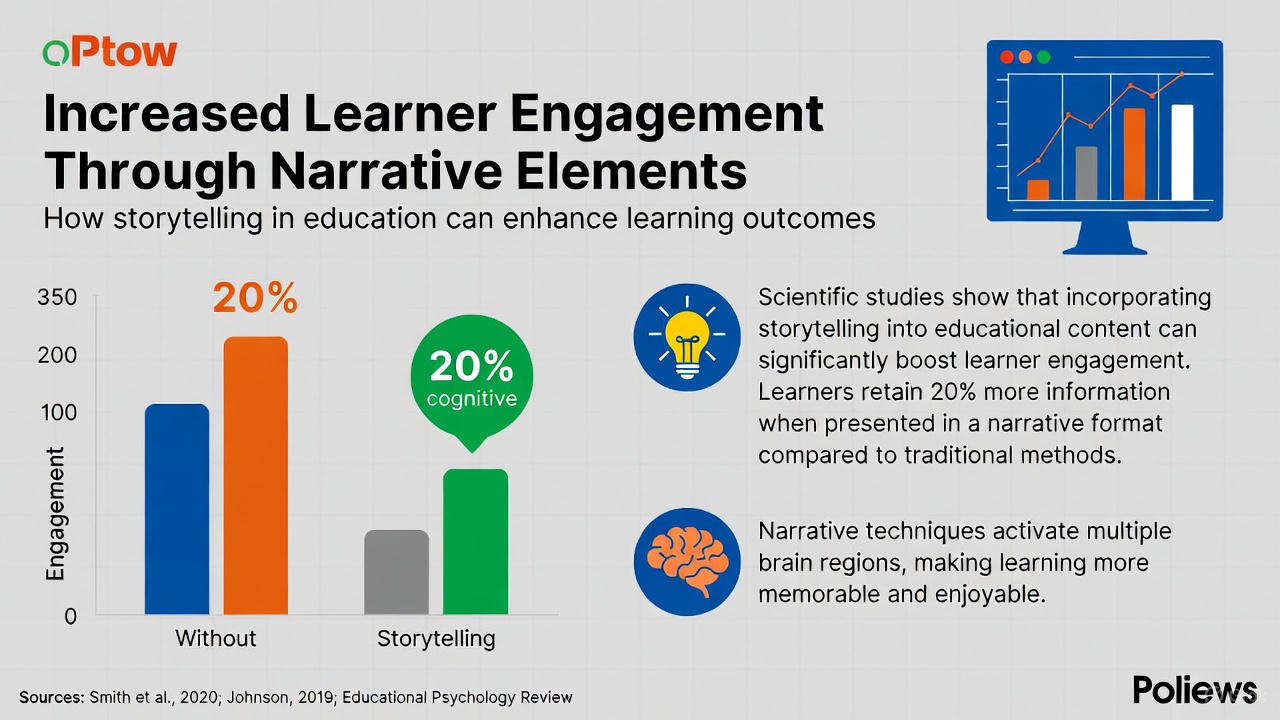
We closed with a brief explanation of the technology, real-life proof points, and a call to action to prove its effectiveness in their environment using their data. The close helped demonstrate that this was not just a made-up story, but rather, something that could become their own success story. This was a straightforward approach to getting people to try something they might never have considered otherwise.
Essentially, you are shifting the audience’s mindset from how something gets done (means objective) to what matters and why it needs to be done (fundamental objective).
People tend to have preconceived ideas about how the solution should work, often based on what they are familiar with. Once the audience visualizes their desired outcome, they become more open to different approaches.
I have successfully used these approaches with more complex products, such as an advanced Kubernetes platform, object databases, a multi-platform data integration product, and the world’s first commercial JDBC driver. It is also an effective way to motivate teams. Create a vision of successfully executing a plan, how good it feels to achieve your goals, and what it could mean for each person—an area they develop as their minds elaborate and personalize the story.
Some of the most effective and engaging people that I have known are skillful storytellers. Not everything has to be a story, but when you use it at the right time, it can mean the difference between moving closer to your goal and being just one of many ideas or solutions.
You may not be the next Steve Jobs (I’m certainly not), but you could easily stand out from your peers and competition. Share your story in the comments below!
Getting Your Piece of the PIE

Whether you are selling, consulting, or managing, a foundational approach has consistently helped me succeed. I call it PIE – an acronym that stands for Perspective, Insight, and Experience. When applied effectively, these three elements provide a robust framework for solving problems, winning clients, and leading teams to remarkable outcomes.
Over the years, I’ve taught this methodology to my teams, and it’s been a critical driver of their success. While I usually reserve it for a small circle, I believe it’s time to share it more broadly. I built this methodology and other structured approaches/methodologies as part of developing high-performance teams. They provide the foundation for rapid qualification and faster wins.
Approaches like these are required for consistent, reliable, and scalable organic growth
Perspective – Broaden Your View to Stand Out:
To truly differentiate yourself in any field, you need a broad, informed perspective. This involves understanding the larger environment in which you operate: the market, competitive landscape, customer needs, technological advances, and regulatory shifts. A dynamic perspective evolves as you gain new experiences and encounter different approaches to solving similar problems across other businesses or industries.
This requires a broad understanding of the environment, market, competitive landscape, legal and technological changes, and more. It also grows and changes as you experience new and different things—especially when different approaches to similar problems are taken. It is how you start to stand out in the eyes of your prospects, customers, and team.
Earlier in my career, I taught technical courses. Usually, two or three people stood out. At least one wanted to prove they were better and smarter, and usually, one discussed strange approaches to solving problems. When you dug into those strange approaches, you often found something creative and brilliant coming from a different perspective on the problem. Curiosity and a desire to improve often drove their innovative approaches.
In business, perspective becomes your differentiator. When you can see things from a broader, more holistic viewpoint, you position yourself as someone who can offer more than just solutions—you offer foresight, adaptability, and creativity. You become the lighthouse that guides your clients around tricky situations and to a better destination.
Products create interest. Perspective creates confidence.
How to Apply This:
- Stay informed about industry trends, not just within your niche but across related sectors.
- Engage with diverse thinkers, challenge your assumptions, and be open to unconventional ideas.
- Regularly reassess your strategies in light of new information or shifts in the business environment.
Here is a post that discusses perspective as the starting point.
Insight – The Power of Seeing What Others Don’t:
Insight is one of the most valuable assets you can bring to any business interaction. Too often, people are trapped by existing tools, processes, and perceived constraints. Insight lets you cut through these limitations and spot opportunities for improvement that others miss.
Here’s where perspective plays a role in insight: the broader your view, the better you can generate actionable insights that can transform a business. My most successful deals and projects were not won because I followed the status quo—they were won because I brought fresh ideas to the table. By reframing the problem and presenting a path to a better solution, I created value that competitors cannot match.
How to Apply This:
- Question assumptions and typical approaches. Ask yourself, “Is this really the best way to solve the problem?”
- Look for inefficiencies, bottlenecks, and areas of waste in processes. These are often hidden opportunities for innovation.
- When engaging with clients or teams, offer insights that reframe their challenges and provide a path to improved outcomes by focusing on the “what” rather than the “how.”
Here’s a post that delves deeper into insightfulness.
Experience – The Foundation of Wisdom and Credibility:
Experience is the foundation that supports both perspective and insight. It’s the repository of lessons learned—both successes and failures—that shape your approach to problem-solving and innovation. The more varied and in-depth your experience, the better equipped you are to offer valuable insights and strategies.
Consulting, in particular, is fertile ground for gaining diverse experience. By working with multiple clients across industries, you gain exposure to a wide array of challenges and solutions. In sales, this experience translates into powerful stories that illustrate your ability to help clients achieve better outcomes. The more experience you accumulate, the more confident you’ll become in your ability to deliver meaningful results through transferable competence (taking skills and lessons learned from one domain and applying them to another).
How to Apply This:
- Reflect on your past experiences—what worked, what didn’t, and why. Use these lessons to guide future decisions.
- Build case studies from your experiences to demonstrate your expertise and credibility when engaging with clients or stakeholders.
- Continuously seek out new challenges that stretch your capabilities and expand your knowledge base.
As Albert Einstein wisely said, “The only source of knowledge is experience. You need experience to gain wisdom.” But it’s not just about accumulating experiences—it’s about leveraging them. Your past successes build confidence in your abilities, while your failures provide invaluable lessons that help you avoid costly mistakes in the future.
Acting Like a Startup
Over the years, I have heard comments like, “We operate like a startup,” “We act like a startup,” and “We are an overnight success that was 10 years in the making.” These statements are often euphemisms for “We are small and not growing as quickly as we would like.”
There are numerous estimates of startup and failure rates in their first few years. One of the best descriptions I have found is from Failory. Investopedia and LendingTree have similar but differing takes on the statistics and root causes. The net result is that failure is much more common than success, especially over time. So, “acting like a startup” is not necessarily good, even when true. Instead, you want to “act like a successful startup!“
Understanding the various causes and the data on success and failure should become significant inputs to business plans focused on long-term success. As a Founder, there are several points that I believe to be key to success:

- You have specific expertise that is in demand and would be valuable to an identifiable number of prospective customers. How would those customers use those skills, and how would they quantify the value? That understanding provides focus on what to sell and to whom.
- A detailed understanding of the market and key players is needed to hone in on a niche to succeed.
- Understand your strengths and weaknesses, then hire the most intelligent and ambitious people who complement your weaknesses and strengths.
- Understand how to reach those potential customers and the messaging you believe will compel them. Find a way to test and refine those assumptions as necessary – before you go all in. Remember, Marketing and Lead Generation are very important but also expensive, so it pays to get this right the first time.
- Have a plan for delivering on whatever you sell before you get your first sale. A startup needs to develop its track record of success, beginning with its first sale.
- Cash flow is king. It is far too easy to run out of money while looking at an excellent balance sheet because of receivables. Understand what matters and why.
- Founders need to understand the administrative side of a business – especially the financial, legal (especially contract law), insurance, and taxes. Find experts to validate your approach and fill in knowledge gaps.
- Consistency leads to repeatable success. You standardize, optimize, and automate everything possible. Wasted time and effort become wasted opportunities.
- Finally, there needs to be sufficient cash on hand to fund the time it takes to find and close your first deals, deliver and invoice the work, and then receive your first payments. That could easily be a 3-6 month period.
Those are the foundational items that are reasonably tangible. What is not as concrete but equally as important are:
- Having or developing the ability to spot trends early and identify gaps that could become opportunities for your business.
- An agile mindset allows you to pivot your offerings or approach in order to refine your business model and hone in on that successful niche. Don’t fall into a sunk-cost fallacy.
- Foster a sense of innovation within your business. Always look for opportunities to deliver a better product or service, improve the efficiency and effectiveness of your business, and create intellectual property (IP) that adds long-term value.
- Focus on being the best and building a brand that helps differentiate you from your competition.
- Become a Leader, not a Manager (lead people, manage processes). Create your vision of success, set expectations for each person and team, and help eliminate roadblocks to their success. Trust your team to help you grow and replace members quickly if it becomes clear they are not a good fit.
Steve Jobs once said, “It doesn’t make sense to hire smart people and then tell them what to do; we hire smart people so they can tell us what to do.” To grow, you need to choose the best people you can afford, guide them, and trust them to perform in the best interest of your company. That is true in any size organization.
Winning is hard, so focus on the journey. Making your customers’ lives easier and allowing your employees to be creative while doing something they are proud of will lead you to your destination. But when things start going well, don’t sit back and convince yourself you are successful. Instead, feel the pressure of the competition – they are out there – and continue to focus on ways to improve and grow.
Success means different things to different people, but longevity, growth, profitability, and some form of contributing to the greater good should be dimensions of success for any vision.
Never Panic!
Whether it is an unexpected problem at an inconvenient time or an all-out crisis, panic is never a good way to solve problems, regardless of your position or role. It is especially bad when you are in charge of people or brought in for your expertise. Fear is a distraction, and panic leads to a myopic view of the problem. That hinders creativity and fosters dread, and those are not the ingredients for a solution.
The point in my career when this became readily apparent was when I was working for a small software company. We had a new product (Warehouse Management System) and were launching our third deployment. This one was more complicated than the rest because it was for a pharmaceutical company. In addition to requirements like refrigeration and lot control, there was a mix of FDA-controlled items requiring various forms of auditing and security, and storage areas significantly smaller than previous installations (think very small packages of medicine versus pallets of one product). It was a challenge, to be sure.

A critical component, “Location Search,” failed during this implementation. About 10-12 people were in the “war room” when my boss, the VP of Development, began to panic. He was extremely talented and usually did an excellent job, but his reaction negatively affected everyone else in the room. The mood quickly worsened.
I jumped in and took over because I didn’t want to be stuck there all weekend, and because I wanted this implementation to succeed. I asked my boss to go out and get a bunch of pizzas. Next, I organized a short meeting to review what we knew and what differed from our prior tests, and I asked for speculation about the root cause. The team came up with two potential causes and one potential workaround. We organized everyone into three teams and attacked each item independently and in parallel.
We identified the root cause, which led to an ideal fix a few days later, and a workaround that let us finish user acceptance testing and go live the following day. A mindset shift fostered the collaboration and problem-solving needed to move forward.
But this isn’t just limited to groups. I was a consultant at a large insurance company on a team redesigning their Risk Management system. We were using new software and hardware, and wanted to ensure the proper environment variables were set during the Unix login process for this new system. I volunteered to create an external function executed as part of the login process. To keep the code clean, I added an “exit” at the end of the function. It worked well during testing, but once it went into production, the function immediately logged people out as they tried to log in.
As you can imagine, I had a sinking feeling in my gut. How could I have missed this? This was a newer system deployed just for this risk management application, so no other privileged users were logged in at the time. Then, I remembered reading about a Unix “worm” that used FTP to infiltrate systems. The article stated that FTP bypassed the standard login process. This realization allowed me to FTP into the system and delete the offending function. In less than 5 minutes, everything was back to normal.
A related lesson learned was to make key people aware of what happened, noting that the problem was resolved and there was no lasting damage. Hiding mistakes kills careers. Then, we created a “Lessons Learned” log, with this as the first entry, to encourage people to share mistakes and lessons learned in order to avoid them in the future. Recognizing that mistakes can happen to anyone helps people plan better and keeps them from panicking when problems occur.
Staying calm and focused on resolving the problem is a much better approach than worrying about blame and the implications of those actions. And most people appreciate the honesty.
As the novelist James Lane Allen stated, “Adversity does not build character; it reveals it.” Maintaining your composure and sense of calm (“equanimity”) makes chaos more manageable and helps develop resilience within the team. That is key to thriving in any high-pressure environment.
The Value Created by a Strong Team
I participated in an amazing team-building exercise as a Board Member for the Children’s Hospital Foundation of Wisconsin. We were heading down a path that would lead to a decision on whether to invest $150M in a new addition. The CEO at the time, Jon Vice, wisely determined that each committee needed strong teams to thoroughly vet the idea from every possible perspective.

The process started with being given a book to read (“Now, Discover Your Strengths” by Marcus Buckingham & Donald O. Clifton, Ph.D.) and then completing the “StrengthsFinder” assessment using a code provided in the book. The goal was to understand gaps in perception (how you view yourself vs. how others view you) so you could better understand your strengths and weaknesses. Then, teams were created with people having complementary skills to help eliminate weaknesses from the overall team perspective. The results were impressive.
Over my career, I have been involved in many team-building exercises and events – some of which provided useful insights. However, most failed to combine the findings meaningfully, provide useful context, or offer actionable recommendations. Key areas that were consistently omitted were Organizational Culture, Organizational Politics, and Leadership. Those three areas significantly impact value creation vis-à-vis team effectiveness and commitment.
When I ran my consulting company, we had a small core team of business and technology consultants and leveraged subcontractors and an outsourcing company to take on more concurrent projects, as well as larger, more complex ones. This approach worked for three reasons:
- We had developed a High-Performance Culture that was based on:
- Purpose: A common vision of success, understanding why that mattered, and understanding how that was defined and measured.
- Ownership: Taking responsibility for something and being accountable for the outcome. This included responsibility for the extended team of contractors. Standardized procedures helped ensure consistency and make it easier for each person to accept responsibility for “their team.”
- Trust: Everyone understood that to be effective and responsive, they needed to trust and support each other and trust each other’s judgment. If there was a concern, we focused on context and process improvements to understand what happened and implement changes based on lessons learned. We avoided personal attacks for the good of the entire team.
- Empowerment: Everyone understood that decision-making involves risk, while also recognizing that delaying an important decision could be costly and create more risk. Therefore, each member was responsible for making good decisions as needed and communicating changes to the rest of the team.
- Clear and Open Communication: The team was very transparent and honest. When an issue came up, they tried to resolve it with that person first, then escalated if they couldn’t reach an agreement and decided to seek the team’s consensus. Everything was out in the open and done in a constructive, collaborative spirit.
People who were not a good fit would quickly wash out, so our core team consisted of trusted experts. A friendly competition helped raise the bar for the entire team, but when needed, the other team members became a safety net for each other.
We were all focused on the same goal, and everyone realized the only way to succeed was to work together. Win or lose, we did it together. The strength of our team created tremendous value – internally and for our customers that we sustained for several years. That value included innovation, higher levels of productivity and profitability, and an extremely high success rate.
This approach can work at any level but is most effective when it starts at the top. When employees see their company leaders behaving this way, it provides a model and sets expectations for everyone under them. If there is dysfunction within an organization, it often starts at the top – by promoting or accepting behaviors that do not benefit the whole of the organization. With a strong and positive organizational culture, the value of strong teams is multiplied and becomes an incredible competitive advantage.
- ← Previous
- 1
- 2
- 3
- 4
- Next →

