
leadership
Good Article on Being an Entrepreneur
Nearly every morning, I start the day by reviewing news on business, technology, and finance/markets. Occasionally there is a general interest article that I stumble across. Today it was a short article about Curt Culver, Co-Founder of Culver’s Restaurants.
Several great points seem like common sense in hindsight but are often well out of focus during the “heat of the battle” as you build your business. Mr. Culver touches several of them:
- The Importance of having the proper Work / Life Balance
- For me personally, this was one of the toughest aspects of growing my business. I worked 100+ hours a week, traveled at least 50% of the time, and was often “not there,” even when spending time with my family.
- My habits also set expectations for others on the team, and I later realized this also created strife at home.
- The turning point for me was when my youngest daughter, then 4 years old, told her twin brother and older sister, “Daddy really does love us; he just works all the time so that we can live here and have all of this stuff.” It was painful enough to hear that, but it was a wake-up call about what is really important in life – people (especially family and friends), not “stuff.”
- For me personally, this was one of the toughest aspects of growing my business. I worked 100+ hours a week, traveled at least 50% of the time, and was often “not there,” even when spending time with my family.
- The Need to Develop others on your Team
- From past experiences, I understood the need to hire the best people you could afford – people with complementary skills (not just clones of yourself) and who were better than you in at least one aspect. That diversity added value, while the similarities made it easier to “get on the same page” quickly. From there, it was important to understand their goals and work together on career planning early – something that adds value to both parties.
- One of my goals in developing my team was to have everyone understand the big picture and empower them to make good decisions for the business.
- While most of this happened, my goal was for each and every person to think and act like an owner of the business. That level of engagement and accountability only happened with my most senior person, who was also my first hire and owned a small part of the company.
- The moment when I recognized success was during a mission-critical ERP system upgrade for our largest customer – a multi-billion-dollar semiconductor reseller. I sat in on project and team meetings, reviewed reports, and asked a few questions, but that was it. It was a very proud and empowering moment for me.
- The weekend of the pre-migration test, I received a call telling me that everything had been successful and that the migration was going forward the next weekend.
- The following weekend I received a nightly summary email, and on Sunday afternoon received a call telling me that the new system was operational and supporting production with ease.
- Culture
- Mr. Culver states, “Culture is all about people.” From my perspective, that is mostly true, but my experiences show other important dimensions of culture.
- To me, your company’s cultural identity starts as something aspirational and later grows into the glue that bonds every member of your team. It helps bring out the best in everyone, including camaraderie and support that come from working with people you like and trust.
- There were two unexpected consequences of actively focusing on culture, which were:
- We quickly transformed into a High-Performance Organization. Everyone pushed to continuously “raise the bar.” There was healthy competition, but each team member was a “safety net” for others. Winning as a team mattered far more than winning as an individual.
- New hires who were not a good fit were recognized quickly and usually quit within the first 2-3 weeks. I only had to terminate one person who wasn’t a good fit during the probationary period.
- There were two unexpected consequences of actively focusing on culture, which were:
- Having a Support System
- Mr. Culver addresses failure and the importance of family in supporting you in times of need.
- One of the biggest lessons I learned was that nothing that I did or accomplished with my company would have been possible without the support of my wife, children, parents, and in-laws (the latter two providing financial support during the early years in times of need).
- With understanding comes humility.
These are lessons learned that can be applied to any size organization and, in my opinion, are a great investment in your company’s future growth, value, and longevity.
The Downside of Easy (or, the Upside of a Good Challenge)
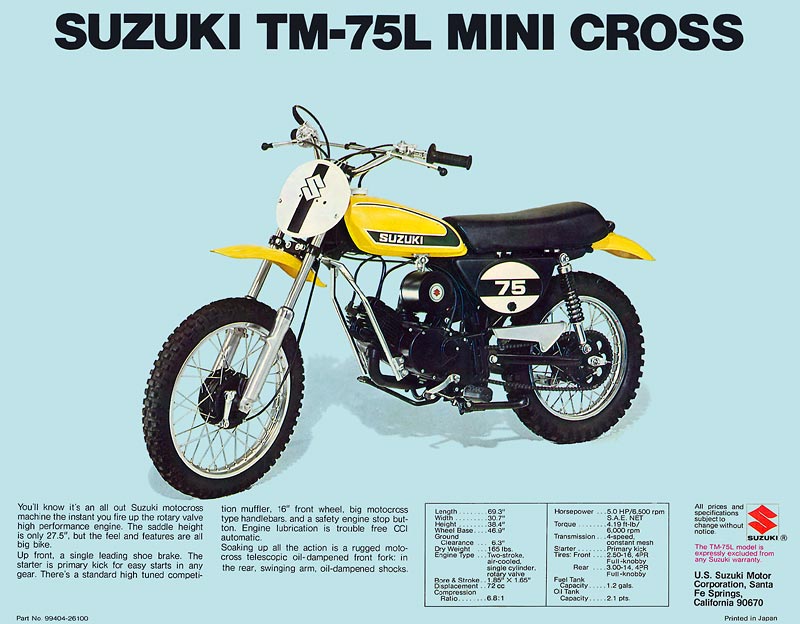
As a young boy, I was “that kid” who would take everything apart, often leaving a formerly functional alarm clock in a hundred pieces in a shoebox. I loved figuring out how things worked and how components worked together as a system. When I was 10, I spent one winter completely disassembling and reassembling my Suzuki TM-75 motorcycle in my bedroom (my parents must have had so much more patience and understanding than I do as a parent). I rebuilt it by spring, and it ran like a champ. Beginner’s luck?
By then, I was hooked – I enjoyed working with my hands and fixing things. That was a valuable skill to have while growing up, as it provided income and led to the first company I started at 18. Learning always involved a fair degree of trial and error, but experience and experimentation led to simplification and standardization. That became the hallmark of the programs I wrote, and later, the application systems I designed and developed. It is a trait that has served me well over the years.
Today, I still enjoy doing many things myself, especially if I can spend a little time and save hundreds of dollars (which I usually invest in more tools). Finding examples and tutorials on YouTube is usually easy, and after watching a few reference videos, the task is generally manageable. There is also a sense of satisfaction that comes with a job well done. And most of all, it is a great distraction from everything else that keeps your mind racing at 100 mph.
My wife’s 2011 Nissan Maxima needed a Cabin Air Filter, and instead of paying $80 again to have this done, I decided to do it myself. I purchased the filter for $15 and was ready to go. This shouldn’t take more than 5 or 10 minutes. I went to YouTube to find a video, but no luck. Then, I started searching various forums for guidance. There were plenty of posts complaining about the cost of replacement, but not much about how to do the work. I finally found a post that showed where the filter door was. I could already begin to feel that sense of accomplishment I was expecting in the next few minutes.

But fate and apparently a few sadistic Nissan Engineers had other plans. First, you needed to be a contortionist in order to reach the filter once the door was removed. Then, the old filter was nearly impossible to remove. Then, once the old filter was removed, I realized the width of the filter entry slot was about 50% of the filter’s width. Man, what a horrible design!
A few fruitless Google searches later, I was more determined than ever to make this work. I tried several things and ultimately found a way to fold the filter small enough to get through the door, and it would fully open once released. A few minutes later, I was finally savoring my victory over that hellish filter change.
This experience brought back memories of “the old days.” In 1989, I was working for a marketing company as a Systems Analyst and was assigned the project to create the “Mitsubishi Bucks” salesperson incentive program. Salespeople earned points for sales and could later redeem those points for Mitsubishi Electronics products. It was a very popular and successful incentive program.
Creating the forms and reports was straightforward, but tracking the points (including generating past reports and adjusting activity from previous periods) was a problem. I finally considered how a banking system would work (remember, there were no books on building banking systems readily available before the Internet, so this was essentially reinventing the wheel) and designed my own. It was very exciting and rock solid. Statements could be accurately reproduced at any time, and an audit trail was maintained for all activity.
Next, I needed to create validation processes and a fraud detection system for incoming data. This was rock solid, but instead of being a good thing, it became a real headache and source of frustration.
Salespeople would not always provide complete information, might have sloppy penmanship, or engage in other legitimate but unusual practices (such as bundling and adjusting prices among items in the bundle). Despite that, they expected immediate rewards, and having their submissions rejected apparently created more frustration than incentive.
So, I was instructed to turn the fraud detection dial way back. I let everyone know that while this would minimize rejections, it would increase the potential for fraud and the volume of rewards. I created a few reports to identify potentially fraudulent activity. It was amazing how creative people could be when trying to cheat the system, and how quickly you could identify patterns based on similar activities. By the third month, the system was trouble-free.
It was a great learning experience from beginning to end. It ran for several years after I left – something I know because I was still receiving the sample mailing with new sales promotions and “Spiffs” (sales incentives) every month. Later, I wondered how many things aren’t being created or improved today because it is easier and less risky to follow an existing template.
We used to align fields and columns in byte order to minimize record size, overload operators, and other optimizations to maximize space utilization and performance. Our code was optimized for maximum efficiency because memory was scarce and processors were slow. Profiling and benchmarking programs brought you to the next level of performance. In a nutshell, you were forced to understand and become proficient with the technology used out of necessity. Today, these concepts have become somewhat of a lost art.
There are many upsides to being easy.
- My team sells more and closes deals faster because we make it easy for our customers to buy, implement, and start receiving value from the software we sell.
- Hobbyists like me can accomplish many tasks after watching just a short video or two.
- People are willing to try things they may not have tried before if getting started were not so easy.
However, there may also be downsides for innovation and continuous improvement, simply because ‘easy’ is often considered ‘good enough‘ so people do the minimum required and move on.
What will the impact be on human behavior once Artificial Intelligence (AI) becomes a reality and is in everyday use? It would be great to look ahead 25, 50, or 100 years and see the full impact of emerging technologies, but I think I will see many of the effects in my own lifetime.
What do you think will happen?
It’s not Rocket Science – What you Measure Defines how People Behave
I previously wrote a post titled “To Measure is to Know.”

The other side of the coin is that what you measure defines how people behave. This is an often forgotten aspect of Business Intelligence, Compensation Plans, Performance reviews, and other key areas in business. While many people view this topic as “common sense,” based on the numerous incentive plans you run across as a consultant and compensation plans you submit as a Manager, that is not the case.
Is it wrong to have people respond by focusing on specific aspects of their job that they are being measured on? That is a tricky question. This simple answer is “sometimes.” This is ultimately the desired outcome of implementing specific KPIs (key performance indicators), OKRs (objectives and key results), MBOs (Management by Objectives), and CSAT (Customer Satisfaction), but it doesn’t always work. Let’s dig into this a bit deeper.
One prime example is something seemingly easy, yet often anything but: compensation plans. When properly implemented, these plans drive organic business growth through increased sales, revenue, and profits (three related items that should be measured). This can also drive steady cash flow by closing deals faster and within specific periods (usually months or quarters) and focusing on models that create the desired revenue stream (e.g., perpetual license sales versus subscription license sales versus SaaS subscription sales). What could be better than that?
Successful salespeople focus on the areas of their comp plan where they have the greatest opportunity to make money. Presumably, they are selling the products or services that you want them to based on that plan. MBO and OKR goals can be incorporated into plans to drive positive outcomes that matter to the business, such as bringing on new reference accounts. Those are forward-looking goals that increase future (as opposed to immediate) revenue. In a perfect world, with perfect comp plans, these business goals are codified and supported by motivational financial incentives.
Some of the most successful salespeople are the ones who primarily care only about themselves (although not at the expense of their company or customers). They are in the game for one reason—to make money. Give them a well-constructed plan that lets them win, and they will do so predictably. Paying large commission checks should be a goal for every business because properly constructed compensation plans mean their own business is prospering. It needs to be a win-win design.
However, suppose a salesperson has a poorly constructed plan. In that case, they will likely find ways to personally win with deals that don’t align with company growth goals (e.g., paying a commission based on deal size but not factoring in profitability and discounts). Even worse, give them a plan that doesn’t provide a chance to win, and the results will be uncertain at best.
Just as most tasks tend to expand to use all the time available, salespeople tend to book most of their deals at the end of whatever period is used. With quarterly payment cycles, most of the business tends to book in the final week or two of the quarter, which is not ideal for cash flow. Using shorter monthly periods may increase business overhead. Still, the potential to level out the flow of booked deals (and associated cash flow) from salespeople working harder for that immediate benefit will likely be a worthwhile tradeoff. I pushed for this change while running a business unit, and we began seeing positive results within the first two months.
What about motivating Services teams? What I did with my company was to provide quarterly bonuses based on overall company profitability and each individual’s contribution to our success that quarter. Most of our projects used task-oriented billing, where we billed 50% up-front and 50% at the time of the final deliverables. You needed to both start and complete a task within a quarter to maximize your personal financial contribution, so there was plenty of incentive to deliver and quickly move to the next task. As long as quality remains high, this is a good thing.
We also factored in salary costs (i.e., if you make more than you should, you’re bringing more value to the company), the cost of rework, and non-financial items that benefited the company. For example, writing a white paper, giving a presentation, helping others, or even providing formal documentation on lessons learned added business value and would be rewarded. Everyone was motivated to deliver quality work products on time, help each other, and do things that promoted the company’s growth. My company prospered, and my team made good money to make that happen. Another win-win scenario.
This approach worked very well for me and was continually validated over several years. It also fostered innovation because the team was always looking for ways to increase their value and earn more money. Many tools, processes, and procedures emerged from what would otherwise be routine engagements. Those tools and procedures increased efficiency, consistency, and quality. They also made it easier to onboard new employees and incorporate an outsourced team for larger projects.
Mistakes with comp plans can be costly – due to excessive payouts and/or because they are not generating the expected results. Backtesting is one form of validation as you build a plan. Short-term incentive programs are another. Remember, without some risk, there is usually little reward, so accept that some risk must be taken to find the point where optimal behavior is fostered, and then adjust the plan accordingly.
It can be challenging and time-consuming to identify the right things to measure, the right number of things (measuring too many or too few will likely fall short of goals), and the incentives that motivate people to do what you want and need. Anything worth doing is worth doing well. Hopefully this post provided ideas on how to make that happen.
Are you Visionary or Insightful?
Having great ideas that go misunderstood or unvalidated is pointless, just as being great at “filling in the gaps” does little if what you are building achieves little toward your needs and goals. This post is about Dreaming Big and turning those dreams into actionable plans.
Let me preface this post by stating that both are important and complementary roles. But if you don’t recognize the difference between the two, it becomes much more challenging to execute and realize value/gain a competitive advantage.
The Visionary has great ideas but doesn’t always create plans or follow through on developing the idea. There are many reasons why this happens (distractions, new interests, frustration, lack of time), so it is good to be aware of that, as this type of person can benefit by being paired with people willing and able to understand a new idea or approach, and then take the next steps to flesh out a high-level plan to present that idea and potential benefits to key stakeholders. People may view them as aloof or unfocused.
The Insightful sees the potential in an idea, helps others understand the benefits and gain their support, and often creates and executes a plan to prototype and validate the idea – killing it off early if the anticipated goals are unachievable. They document these experiences, learn from them, and become increasingly proficient at validating the idea or approach and quantifying the potential benefits. They are usually very pragmatic.
Neither of these types of people is affected by loss aversion bias.

I find it amazing how often you hear someone referred to as a visionary, only to see that person could eliminate some of the noise and “see further down the road” than most people. While this skill is valuable, it is more akin to analytics and science than art. Insight usually comes from focus, understanding, intelligence, and being open-minded. Those qualities matter in both business and personal settings.
On the other hand, someone truly visionary looks beyond what is already illuminated and can, therefore, be detected or analyzed. It’s like a game of chess, where the visionary person thinks six or seven moves ahead. They connect the dots across various future possibilities while their competitor is still thinking about their next move.
Interestingly, this can be frustrating for everyone.
- The Visionary with an excellent idea may become frustrated because they feel an unmet need for understanding.
- The people around that visionary person become frustrated, wondering why that person can’t focus on what is important or why they fail to see/understand the big picture.
- Others view the visionary ideas and suggestions as tangential or irrelevant. It is only over time that the others understand what the visionary was trying to show them – often after a competitor has already begun implementing a similar idea.
- The Insightful, wanting to make a difference, can feel constrained in static environments, which offer little opportunity for change and improvement.
Both Insightful and Visionary people view themselves as strategic. Both believe they are doing the right thing. Both have similar goals. What’s truly ironic is that they may view each other as competitors rather than seeing the potential for collaboration.
A strong management team can boost creativity by fostering a culture of innovation and bringing these people together to work toward a common goal. Providing little time and resources to explore an idea can lead to remarkable outcomes. When I had my consulting company, I sometimes joked, “What would Google do?” to describe how amazing things were possible and waiting to be done.
The insightful person may see a payoff from their ideas sooner than the visionary person, because they focus on what is already in front of them. It may be a year or more before what the visionary person has described shifts to the mainstream and into the realm of insight – hopefully before it reaches the realm of common sense (or worse yet, is entirely passed by).
I recommend that people create a system to gather ideas, along with a description of the purpose, goals, and advantages of those ideas. Foster creativity and innovation by rewarding people for participation, regardless of what becomes of the idea. Review those ideas regularly and document your commentary. You will find good ideas with luck – some insightful and possibly even visionary.
Look for commonalities and trends to identify the people who can cut through the noise or see beyond the periphery and the areas having the greatest innovation potential. This approach will help drive your business to the next level.
You never know where the next good idea will come from. Efforts like these provide growth opportunities for people, products, and profits.
Investing in Others – Becoming a Mentor
I have been very fortunate throughout my career. There have been incredible opportunities, risks with big rewards, and lessons learned from mistakes and failures (e.g., one of the biggest early lessons is that most mistakes will not kill you, so you can find a way to recover from them). In hindsight, the people who saw something in me and invested in my career – my mentors – have been most valuable in shaping my career.
None of these people had to help me. It’s possible that they did so for their own benefit (i.e., the better I do my job, the easier it is for them), but I believe they were passing along a valuable gift. I was lucky to have received these gifts early in my career, as they have been invaluable both personally and professionally.

As a mentee, you may not recognize either the value of what you are receiving or the effort that has gone into providing that gift to you. You fully appreciate what others have done for you only years later.
In my first programming job, my manager (Jim) assigned me to work with various key people and would follow up to ask what I had learned. One day, he gave me my first project – something that was far above what a new programmer was tasked with. I was excited but anxious because I did not want to let my mentor down.
I only had six months of experience, and this was a big project for an important automotive customer (Subaru), the first fully customized customer loyalty coupon system for a major auto manufacturer in the late 1980s. It was a stretch for me, and the system had to be production-ready in six months.
Jim let me build it, checked daily at first to see if I had questions, and provided feedback and direction if I asked. Aside from that, he pretty much left me alone. He seemed more confident in my ability to succeed than I was at the time.
After two months, I thought I was finished. We reviewed everything, and Jim constructively picked apart my system, pointing out various flaws and discussing the logic and reasoning behind my decisions. We spent half a day on this exercise, and only years later did I realize he was helping me learn more than just validating the system design.
After another two months, we reviewed this system’s second iteration. He told me that while this version would work and would be acceptable from anyone else, I still had time remaining, and he was confident that I could do even better next time. He provided a couple of tips about high-level areas he focused on while designing and developing systems and left it at that.
When I returned with the third iteration of the system, he reviewed it, smiled, and said he could not have done it better himself. At first, I was proud to have completed my first independent project, but later I realized how much I had learned over those six months. This experience provided me with a lifelong benefit and the motivation to help others in a similar manner. My mentor was (and still is) a great leader!
As a manager, he had so many reasons not to give me the project, to just tell me what to do, and to not let me redo it (twice). From a short-term management perspective, what he did was wasteful. But, from a big-picture perspective, he was doing things that helped me create more value for the company for the 3-4 years I continued working there. The benefits outweighed the cost; Jim was wise enough to see that.
Several years ago, a young woman in Australia contacted me via LinkedIn, asking for suggestions on improving her skills to advance her career. I gave her many assignments over the course of a year, and she did amazing work. She advanced in her company, later relocated to another country, and then switched industries. She currently holds a high-level position and has been very successful. It made me feel good knowing that my efforts played a small part in her advancement.
From my perspective, it all comes down to how you view people and relationships. Are they like commodities that are used and replaced as needed, or are they assets that can grow in value? I like to think that I have helped several people’s “career portfolios,” which helps ensure that business is not a zero-sum game. Hopefully, those people will do the same, increasing leverage on the investments that started with Jim.
So, what do you think?

